What Do You Fight For
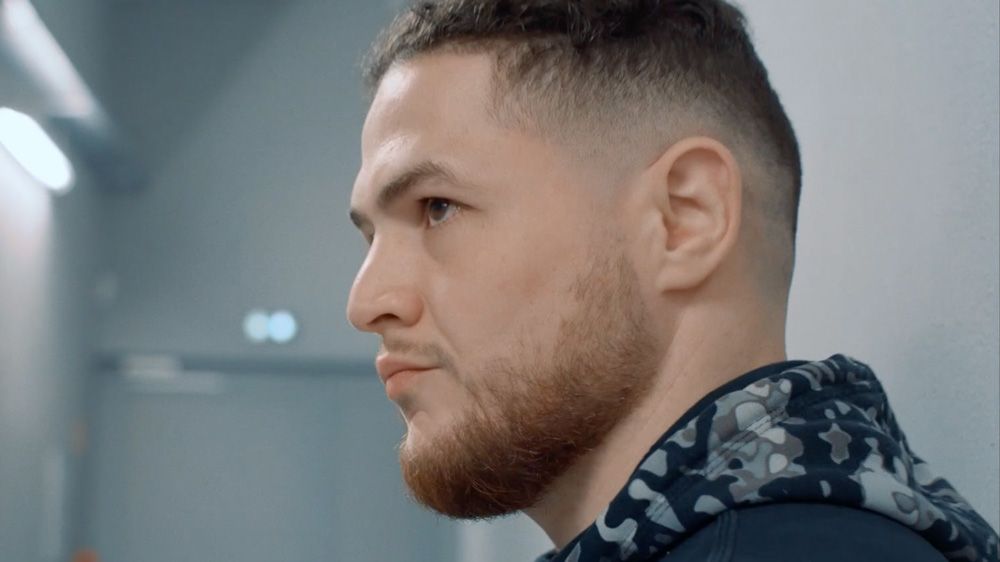
“Yacine and I became friends and we talked about it. The more he talked to me about the professional aspect of fighting, the more I liked the idea of following him and exploring that. It just grew in me and so I told him that I had this crazy idea. I have a film production company in Paris and he had a fight coming up, so can we follow him around and make a documentary about his next fight?”
“Yacine has been professionally fighting for several years, but started boxing when he was very young. His older sister was boxing which is what got him into the sport. So he is very experienced with 20 fights and was happy for me to follow him around. It is really rare, from what I have seen to have that level of access in the locker room before the fight, that we had. When I came to him with the idea, I told him that I wanted to follow him all the time. I knew that it would be a big commitment for him and I did not want to get in the way of his preparation. So I had to make sure that he knew the level of commitment needed from us both.”
“Initially we had a plan to follow Yacine for three months as he was going to have three fights in three months, but he ended up only having one fight because the other two opponents dropped out. So I had to rewrite what I had originally planned and came up with following him for 24 hours around his fight. I really had to ask myself want I wanted to discover, and how I would structure the whole thing as a narrative.”
“And so, it’s that level of professional fighting I wanted to show. You see the big names on TV, they have their own locker room before the fight, they are by themselves. But in this kind of smaller circle, they’re still professional fighters, but the locker rooms are shared - sometimes with 10 other fighters. This is why I knew I had to be discreet with my gear and almost hide in the corner.”
“I filmed the documentary on my Blackmagic URSA Mini Pro 4.6k. This was one of the first professional cameras that I purchased when I launched my production company. For this shoot I had three Samyang Prime lenses with me, I had the 24mm T1.5 MK2, the 35mm T1.5 MK2, the 85mm T2.2 MK2 and a mic. To be able to follow him, I knew I would have to move around a lot and the rig would have to be really light weight, so I kept the gear to a minimum.”
“The shoot went rather smoothly and the equipment worked perfectly. As this was on the first URSA 4.6k, there was no BRAW recording, and I didn’t want to shoot in cinema DNG, as I felt it would be too cumbersome dealing with all that data. So in the end, I decided to shoot in 4K Pro Res 444. I usually work in this resolution, so I was super comfortable that I would have enough latitude in Davinci Resolve to correct any issues during the color grade.”
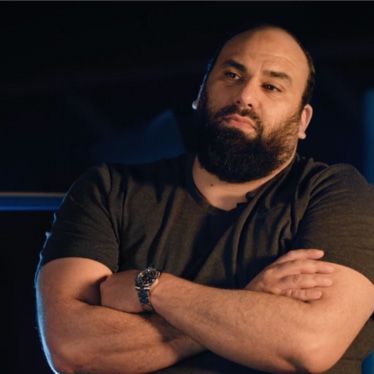
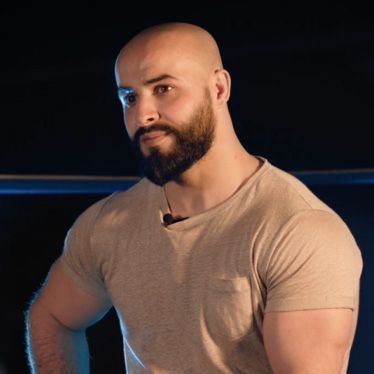
“The one thing that I was worried about was getting the access I needed to get the amount of coverage needed to make a film. I was fortunate that even the other fighters were ok with me filming. Most of the fighters knew each other, as they all fight on the professional circuit so they’re often running into each other at different events. So that made it easier.”
“All rounds were only two minutes, but when you are in it fighting, it feels like the longest two minutes of your life! I wanted to find a way to represent that in a visual way. Boxing is chaos, blurry and exhausting, so I was trying to find ways to film it, to show all of that on screen.”
“For the filming of the actual fight, I was ringside with his team, the coach and the doctor. I was really lucky to get that close, but that was actually one of my main concerns. I was limited with my lenses choices because I only had primes and not zooms. And I only had the one camera! So I was worried whether I could get the full intensity of the fight that I wanted, and could achieve the cinematic experience that I wanted. So I shot the first round in real time on the 35mm lens getting as much as I could. I then shot the second round on the 35mm lens in slow motion and the third round on the 85mm lens in slow motion.”
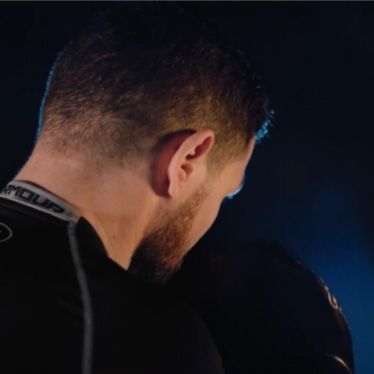
“In the end I was very happy with what I got. There were the obvious obstacles whilst filming, like the coach or the referee getting in the way, or the ropes in the way. I did miss focus a couple of times, but generally, I got plenty of what I needed. Given the idea was filming chaos, it didn’t matter that sometimes these things happened, because it all shows that boxing is chaotic and messy. Once the fight had finished I was relieved but not that worried. I was more worried about the footage before and after the fight.”
“Other than directing and shooting, I also edited the film using Blackmagic’s Davinci Resolve. As it was my first documentary film I was unsure how it would all come out. So I just thought that if it was good, then great. And if it was bad, then it was all on me. The edit itself took me quite a long time. I don’t normally edit my own stuff because I like to have that different perspective that another set of eyes bring to it. Editors often see stuff that I don’t, as I am so involved in it. And knowing how hard some of the shots are to shoot, I often just include those. But sometimes they just might not fit. And so I love that different opinion that an editor brings to a project.”
“The grade was also completed in Davinci Resolve, in fact the process was so easy because I was able to just copy my project onto a SSD and send it to my collaborator friends on this film. They simply just opened it and away they went. We were then able to share timelines. It was really that easy. The days of having to round trip and conform have gone. Fortunately, Resolve has all the tools that we needed.”
“When I look back on the experience of making my first documentary, I have to say it was eye opening. I found that I really like this format and just found that there is a beauty in being with people that trust you. You just create such a great bond with them. I also admired the connection that Yacine has with his team. There is a real love between them, which is something that you don’t normally think of with a tough guy fighter! It’s something wonderful to witness and I wanted to document all of those things for him.”