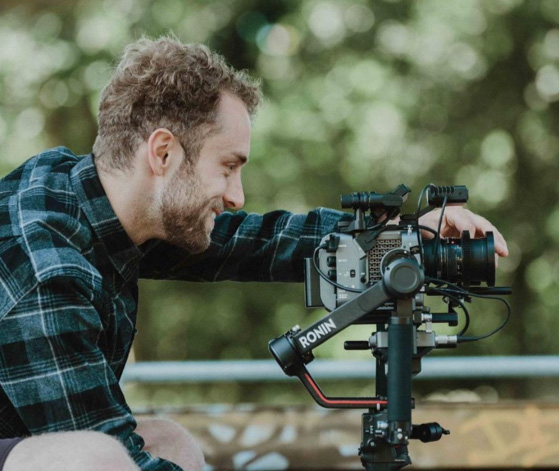
Through the Watchmakers Eye
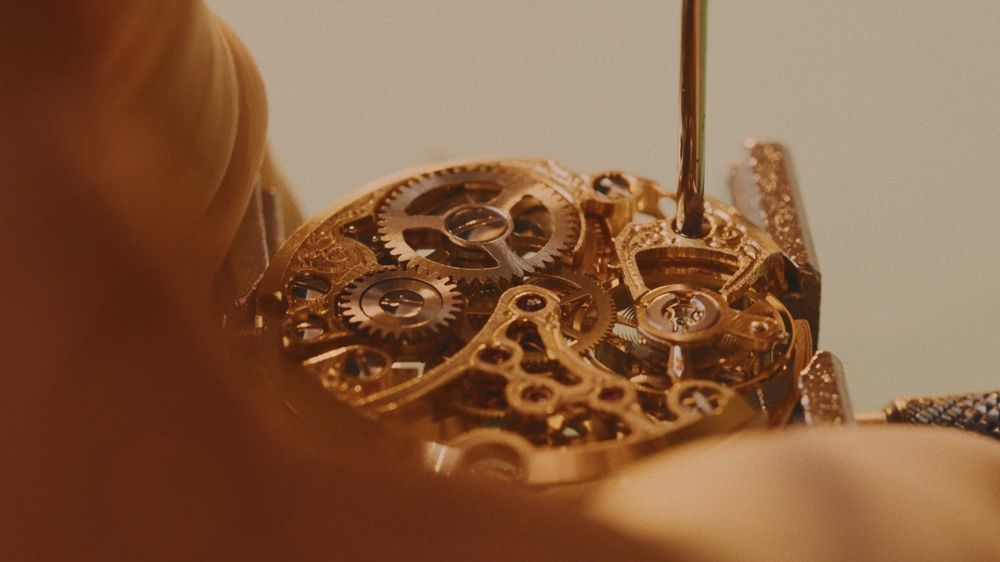
“Growing up, I don't think my father could ever have imagined he would be a watchmaker. My grandfather heard about a practical school for repairing watches at nearby Hoorn. Dad said, that when he was told about it, he agreed to check it out but it was the least motivating thing he could think of doing. But he did go and study watchmaking just before he was conscripted into the army for compulsory military service.”
“Because of his training, they had dad working on the cockpits of military aircraft instead of being in the field. He then went to work for KLM for a short time, before coming back to his first training as a watchmaker. Like all good artisans, he served his time working with other watchmakers and repairers, but didn't like the lazy way things were being done. He is a real perfectionist. So in the end he co-founded a watchmaker's business in the north of Holland where I grew up.”
“I started thinking I could shoot this project by simply reversing one of my wide angle lenses to be able to shoot in macro. I had played with this technique before using some inexpensive flanges and got some really interesting results. But I wasn't too sure if it would be good enough quality for this project. Great for bees and flowers, but I had doubts about shooting all of the mechanical bits in a timepiece.”
“And then I got an email from Laowa asking me if I wanted to test any of their lenses! I immediately thought of their 100mm macro. Then Zhongyi Optics reached out to me, asking if I wanted to try out their new Mitakon 50mm cine prime. I couldn't believe it. I now had 'the perfect set' of professional lenses for shooting this project on my Blackmagic Pocket Cinema Camera 6K.”
“My dad is a really laid back Dutchman who just loves his blues. You know, it has to be blues for him. So instead of a boring opening song for his project, I kept thinking of how I could use this 50mm 'bokeh monster' to start the music. I soon came up with this idea of shooting dad flipping a switch, which would start the slide guitar soundtrack. I didn't want to have any talking in this project, because it would take on too much meaning. And then the whole idea gets way too heavy. I just wanted this to be a selection of really cool shots with his kind of music.”
“So I was thinking about, how to really get the maximum I can get from this T1 cine prime. I wanted this dreamy, shadowy, shallow depth of field look that would also work together with the macro shots. So that was sort of the idea I had in my mind, for this short piece.”
“I used the Mitakon Speedster 50mm at T1 aperture (f.0.95) for the establishing shots of my dad at his work desk. It's actually a really impressive lens. But it's also extremely heavy and sturdy. For the first shots, I had the BMPCC 6K and 50mm cine prime on a manual Zeapon Slider. This slider was not made for such heavy glass and was extremely wobbly, and we had to tie the camera down with a bunch of extra connectors and screws just to keep it stable. I couldn't have done these shots digitally, because you have so much depth of field with this prime. By using the slider you actually feel like the camera is physically moving.”
“The only problem with this setup was that I didn’t have a follow focus for the 50mm prime or a slider motor for the Zeapon. This was really, not a great setup for this type of shot given how loose the camera was on the slider. But after a few takes we finally got the shots I was going for.”
“I’d never used a proper cine lens before. I have used plenty of vintage lenses, but I had never really used a large lens like this one. I loved having a 285 degree focus throw, which is nice, because you have so much more control over your focus point. I think that this is the major benefit of using this lens for me. Having a cine lens with a set focus throw was such a step up from the Leica and Zeiss lenses I usually use for commercial shooting.”
“When shooting at T1 there is a lot of light hitting the sensor. So we need to strip out all of the practical lights that I had setup for this scene. In the end we came back to just my dad’s desk light, but that kept flickering. Finally we taped an MC Aperture block light to his desk light, so that we could accurately control the light output.”
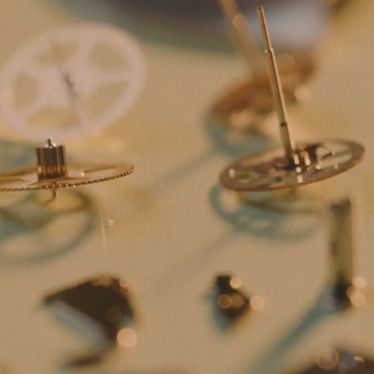
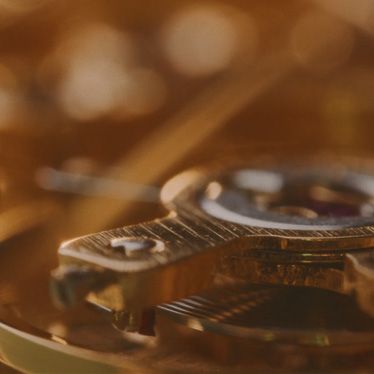
“After we hazed the room, the practical light really started to spread and became way more colourful than I wanted. And so I added back a tube LED light that we set to 2700 Kelvin to give the room a softer white light. I placed the tube at the back of the room to give you something to look at with more interest, or the room would have look too flat.”
“The great thing about using a T1 cine prime on the BMPCC 6K is that when your light is out of focus, it gets super spread out because of that depth of field. So you can do extremely interesting things. You can really go nuts on the creative side using different color lights. Because the light is not looking like the primary light source anymore, the light just leaks out around the room.”
“So you can really start to paint with it. I just thought it was insane, with what I could now do with light. And that’s something you absolutely cannot achieve on a slower lens. The highlight roll off with BMPCC 6K has always been legendary, but when you put a T1 cine prime on the front, that camera really comes to life in a way I hadn’t seen before.”
“Obviously this is a fully manual lens, as is the Laowa 100mm macro. So having something like false color setup on your camera is an absolute must. The BMPCC 6K has an awesome false color setup that I use to do all of my exposure settings. It is so nice and logical and it’s a no brainer to use. It even has RGB histograms for when you want to be super accurate so you can actually see which light levels are clipping. You have a lot more control now, especially when you’re working with different colored lights. You can see immediately whether you are pushing your reds, greens or blues too much.”
“I also had the shutter at 180, which is what I usually use. And I always shoot at 400 ISO whenever I can. Whenever I am in a super low light situations, I will go as high as 1250 ISO. Because I only ever shoot in Blackmagic RAW, if the shot is too dark, then it is super easy and quick to change that shot in DaVinci Resolve to be whatever you want it to be.”
“This was all shot in 6K Blackmagic RAW. I pretty much always shoot in 6K constant quality. So I always do Q5, because in my opinion it is the best middle ground between quality and file size. I shot this mostly at 25fps. One of the macro shots of the watch was at 50fps, because it was moving so fast that we need to slow it down, just to see the watch movement. I shoot at a higher frame rate sometimes when you need more frames to be able to stabilize shots. But I am generally not a big fan of slo-mo for the types of things I shoot. I usually shoot at 25fps and just settle for doing more takes to ‘iron out the wobbles’ when using a slider or gimbal. So that is basically how I shoot.”
"So when it came to the macro shots of the watch and the mechanics, I was a little hesitant about switching to the Laowa 100mm, which is known for being a super sharp lens. After being so surprised by the beauty of the 50mm T1 with all of that creative control over depth of field. I shouldn’t have been concerned, because these lenses matched beautifully when shooting in Blackmagic RAW.”
“The first macro shot we setup just blew our minds. When we were all looking at the locked off shot on the director’s monitor, we were all surprised. Even my dad, who looks at these things in macro everyday, was too! The lens was so close to what we were shooting and the control we had over the focus and fall off, was incredible. It was so easy to make every shot super interesting, just by playing with the focal point on the watch.”
“The watch dad was working on was a very expensive Rolex or Omega. So the components were beautifully crafted from quality metals, that had great reflective qualities to the them. I could actually shine a light right through them and all of the shapes and shadows jumped out at you. I didn’t have any bi-colored lights, so we just messed around with gels until we felt the color was the right look for each shot.”
“As we were watching these shots on the monitor, I kept thinking how crazy it was to be just messing around like this, and coming up with such really cool shots. We were all amazed at what you could do with these two lenses on the BMPCC 6K.”