The Hand of India
“The project didn’t really come to me, but rather, I went to it! For a long time in my filmmaking career, I didn’t shoot many passion projects because I was always waiting for an idea or script to be ‘perfect‘ before I began production. Due to this mindset, I spent a lot of time blaming external things for the fact that I wasn’t making many passion projects - I didn’t have enough budget, I couldn’t build a crew etc. As a human being, you improve every day, in everything you do, so pursuing ‘perfection‘ is near impossible, as your idea of what perfection changes from moment to moment.”
“So in 2017, I decided that I was no longer going to aim for ‘perfection‘ in my films; I was just going to make films. If I made a bad one, I was ok with that. I’d just do my best to make a better one next time. This attitude lead me to pick up a little camera and go out in the world to find a film, which in turn, has lead me to create some of my best work and become a better filmmaker in the process.”
“The main difficulty was finding a narrative to tie everything together, that gave greater meaning to the images and scenes within the film. Whilst also reflecting some of my own, personal ideals AND having reference to circumstances in my own country. It took me around two months to cut the film, spread across a two year period, due to paid projects taking priority. The difficulty was in the sporadic nature of the editing process; finding a week in which I could work on the film, then sometimes, not coming back to it for months, meant that it was difficult to get into the flow of the project. But in the end, it seemed to work out fine.”
“I didn’t have any references, in the sense of, I didn’t compile specific references before shooting the film. However, as a filmmaker, my life is a continuous process of subconsciously collecting inspiration from every part of my experience. I suppose, if you were to ask me what my biggest influences were in create a piece of travel orientated content, it would be the work of Leonardo Dalessandri, Brandon Li and Eliot Rausch.”
“The film was shot in a variety of locations, including Jodhpur, Jaisalmer, Agra, Pushkar, Delhi and Varanasi, to name just a few. For the scenes within the film that are set during Holi, my girlfriend and I traveled to Banke Bihari Temple in Vrindavan. Hindu’s believe that Vrindavan is the birthplace of Krishna, making the Holi festival there, one of the biggest, most religious celebrations in the entire country.”
“The idea of Holi (at least, as it was told to us), is to cover yourself and the people around you with colourful paint; the vibrant colour of which, represents the coming of Spring. At the end of the day, everybody washes away the paint, symbolising the washing away of ones past sins. Maybe it’s was to do with the fact that people believe they will wash away their sins at the end of the day, or maybe it was because a lot of people are intoxicated during this festival. But either way, our time in Vrindavan, during Holi, contained a number of violet and sexual attacks towards both me and my girlfriend, which was both a mental and physical challenge to endure.”
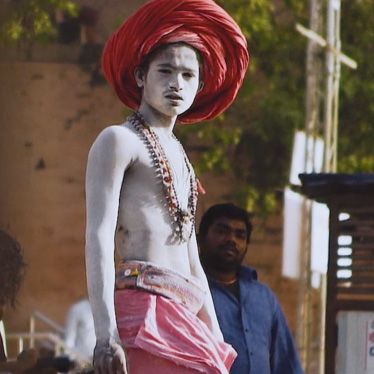
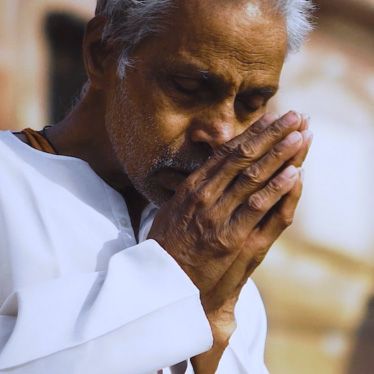
“Festival goers seem to experience a collective hysteria in this town, during Holi. It allowed us to immerse ourselves in some of the most incredible sights and experiences of our time in India. But we found that this hysteria can also come with a darker, more violent and sexually frustrated side, the negative effects of which, are still present in our lives today.”
“There are a number of hyper lapses, paired with high movement tracking shots and a fair amount of simple VFX transitions to tie them all together, but nothing that didn’t come completely natural to me during the editing process.”
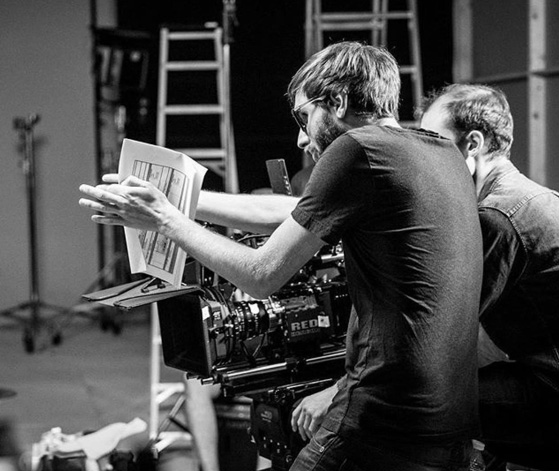
“Having spent a few years working on big crew commercial projects, in 2017 I set myself the challenge of stripping everything back, in order to find my natural style as a filmmaker. The entire film was created using just a Sony A7sii, a Canon 24-70mm f2.8 lens with a Metabones adaptor, an rusty, old Glidecam 2000, a DJI Mavic Pro and a 2015 15″ MacBook Pro. All of the other films that I shot during that year, including Annapurna Sky and Under The Rope, as well as the films that I am yet to complete, about Japan and S.E. Asia, were all shot using this simple equipment and this stripped back approach.”
“I did all of the post work for this project myself. From selects, to offline, VFX, sound design, grade and online, all from my little MacBook Pro. Working alone like this can be very liberating and creative, but it can also be isolating and filled with doubt. That’s why, for other projects, it’s sometimes better to work as a team. A quick-cut, sensory, visual documentary project like this takes a very long time to cut. In that time, it’s easy to become numb to what it is you’re making. Luckily for me, I have a good network of very creative friends, who are able to cast their eye over a project and give critical feedback, as to what they did and didn’t like. Although I’m not always able to make all of the changes they suggest, due to creative or narrative circumstances, their feedback helps immensely, in finding holes that need filling within the project.”
“I did everything. That’s not to say that I do that for all my projects - some projects see me sitting behind a monitor, simply directing those that are much more specialised than myself, at their individual crafts. But in the pursuit of discovering an unfiltered idea of who I am as a filmmaker, for this project, it was important that I did everything myself.”
“I enjoyed it immensely! Anybody who has been to India will know that it can be both a challenge and an inspiration. But either way, it’s an adventure. During my time in there, my main goal wasn’t to make a film, but rather, to experience and attempt to understand an ancient culture that is very different to my own. For me, that was the main project and it made me a better person.”