The French Saddler
“I have recently been shooting with a vintage 58mm Soviet Hélios-44-2 lens that was modified by Iron Glass in the Ukraine. Like a lot of videographers and cinematographers, I have also fallen in love with this incredibly affordable lens. Mostly I use it for portraiture setups, so I am using it in a way that I can predict how it will behave.”
“But to really understand how to use vintage lenses, you have to set yourself a project to test yourself and your camera. When shooting with the Hélios-44 for my professional work, if it’s not working for me, then I’ll simply swap it out for one of my cine primes! But with this shoot, I wanted to use only the Hélios. I wanted to discover how well this lens could perform with difficult lighting conditions.”
“Hollywood cinematographer Greig Fraser made the Hélios-44-2 famous when he used it on feature films such as ‘Batman’ and ‘Dune’. But that was with the very best lighting setups imaginable! What I wanted to do was to see how this lens performed in a run-and-gun type of shoot, where perfect lighting was always going to impossible.”
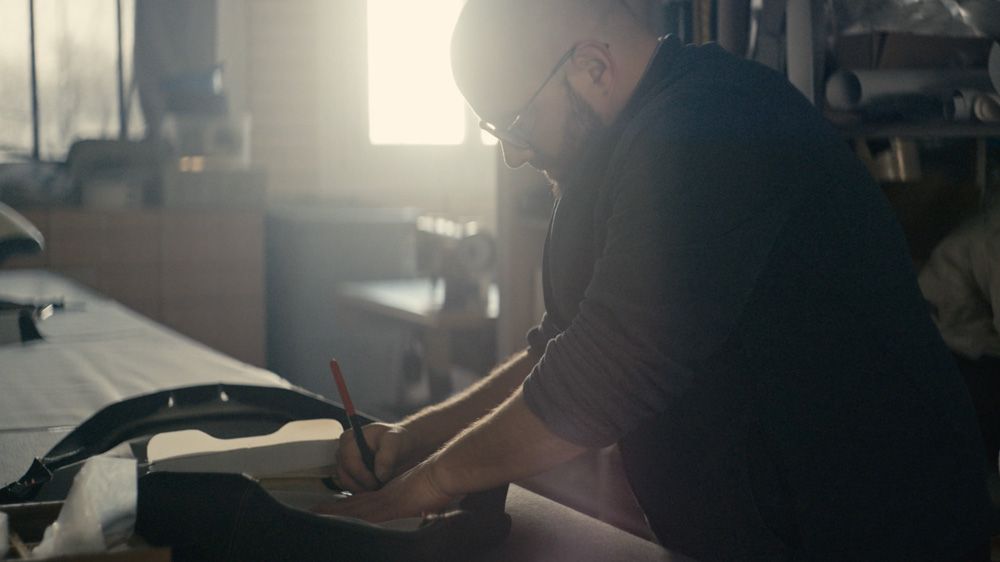
“I had been thinking about some documentary projects where the Hélios could be an interesting choice of lens. One of my friends mentioned that his brother-in-law is a Saddler, and he had this really cool workshop in the South of France. When I first met Leon at his saddlery workshop, he just so happened to have his 13-year-old daughter visiting. And so that is how the story for this project came together!”
“Soviet Hélios lenses have had a lot of hype over the past few years. The vintage Hélios-44-2 has a particular design flaw that gives it this swirling bokeh when used correctly. Recently, I have been shooting on the very latest Blackmagic Cinema Camera 6K, which has this massive 43.18mm image circle, similar to an ARRI LF! So I really wanted to see what a large Full Frame sensor could capture using a vintage Helios which is a 58mm lens.”
“Although this lens produces some beautifully creative shots, you have to manipulate the light and your subject matter to bring out its best. To really make the lens swirl, I found that I needed to be close to the subject, shooting at f2 or f2.8 to get the full effect of the bokeh. The out of focus area in the background really needs to be about 5m away, and it works best when there are dust particles in the air. Which wasn’t a problem in a workshop like a saddlery!”
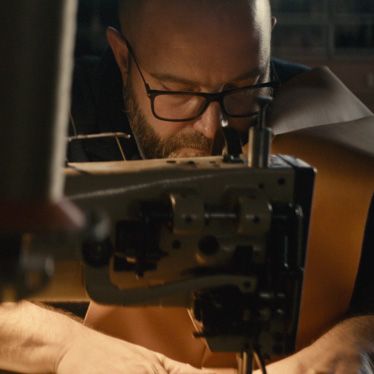
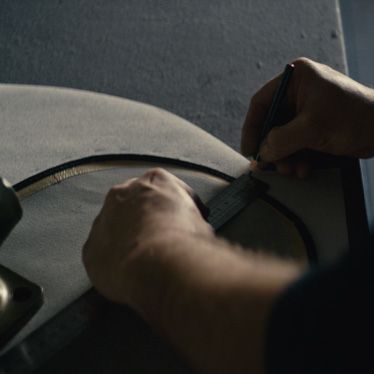
“One of the things that I quickly noticed with the Hélios-44, is that the bokeh swirl mostly happens towards the outer edges of the lens. Because this swirl was originally a design flaw, you really want to be shooting on a large full-frame sensor camera such as the BMCC6K. The Hélios is not a sharp lens, so you’ll really need to get the subject right in the middle of the lens, even when shooting at f4 or f8! It really is a creative lens that can give you some amazing images when used on the right camera.”
“What was great about the saddlery workshop, was that it had one large window as a single light source. I shot this in the South of France near where I live in the month of March, where the sun sets around 7 pm. I had decided to shoot late in the afternoon because this was the best time for the natural light to come streaming through the window. And so I really had to work very quickly to get all of the scenes shot with the available daylight.”
“The other thing I discovered with the BMCC6K’s larger sensor, is that it seems to capture a lot more light than my BMPCC6K Pro (S.35). So even though it was shooting inside a workshop with fading daylight, I was able to safely stay at ISO 400 at f2. I thought I may have had to drop into the second ISO later in the evening, but I was surprised I could still shoot at ISO 400!”
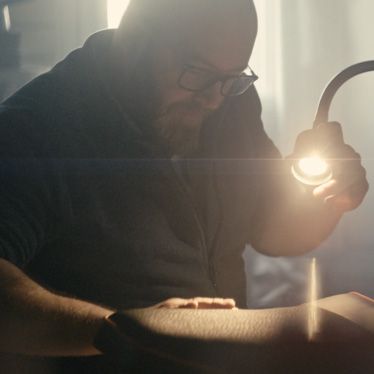
“The BMCC6K also has a Super 35 mode at 4K, but when I cropped into the Hélios-44 the bokeh was reduced dramatically. So I would definitely recommend shooting using a full-frame camera to get the best from this lens. You can see the quality of the shots you get when the light and the subject is right up close. The scenes I love the best, are the ones where the light on his sewing machine gave me a second light source to expose with. Because the Hélios-44 naturally shoots a little flat, I found that this pancake lens would come alive as soon as I had multiple light sources.”
“The other unique characteristic of this lens, that I forgot to mention, is the fishing line inside of it. A lot of people use the Hélios-44 as a ‘poor man’s substitute’ for an anamorphic lens. The way they achieve the classic anamorphic flare is by using a fishing line stretched across the inside of the lens.”
“You can see the effect of the fishing line in the shot where I have the camera in front of the window, and I am framed in on the sewing machine lamp. You can see this beautiful thin horizontal flare that goes right across the frame. With this shot, I was playing with the foreground being out of focus, to create this really pronounced separation with the Saddler and his daughter in the background.”
“This shoot was such a great idea for a lens test. The location was fantastic. The subjects for the film were really interesting people, and the lens I was using, was vintage and unpredictable. So the best recipe possible for a fun shoot, I think!”