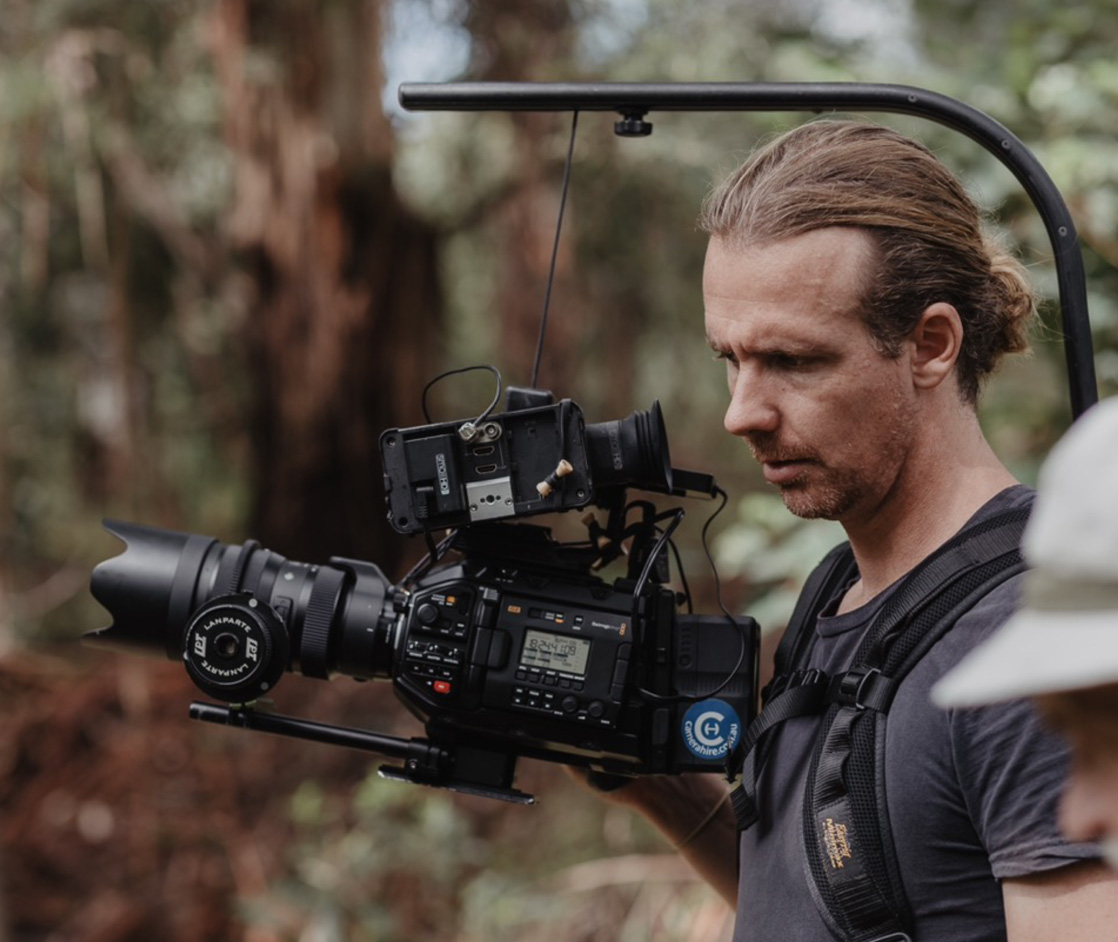
The Chase
“Mitch is a super humble guy, who happens to be a professional surf lifesaver. So rescuing people for a living makes him super comfortable with the ocean and big waves. He is super fit and just keeps himself healthy, so that he can chase super big swells whenever possible.”
“Mitch has one of those personalties that everyone likes. He is incredibly well known globally for his bodyboarding and now has a bunch of sponsors who help to support him. He just represents the very best of the ‘amateur sportsperson’, who is amazing at what they do because they love it. That’s Mitch, and that’s why I thought this film would be a great idea.”
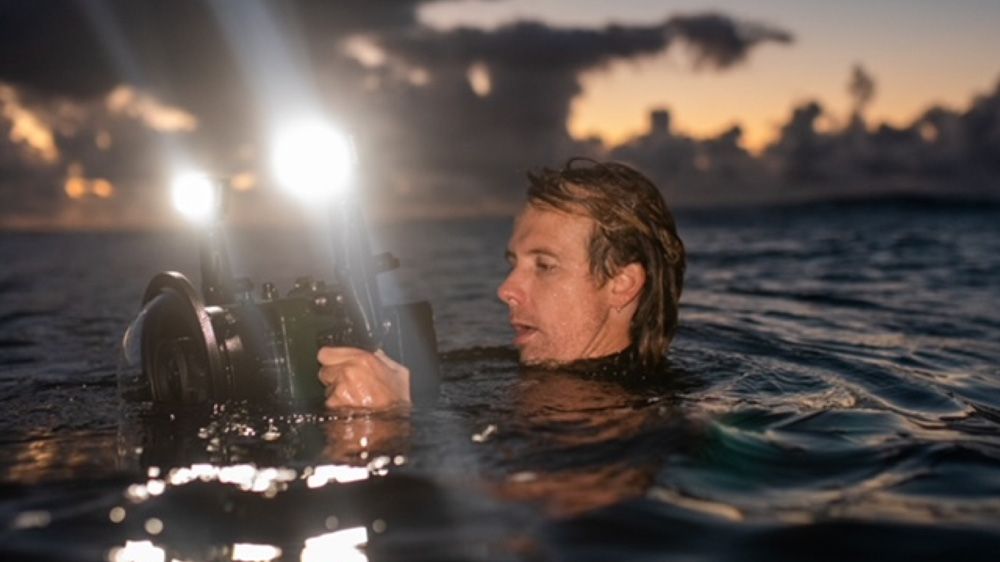
“We started shooting a bunch of footage in 2017 in different locations before the Covid pandemic. The first really cool location was the Cook Islands. I had a big production job here in Sydney, when we could see a massive swell heading towards the Cook Islands. So as soon as the commercial finished, we both jumped a plane the very next day with our boards, Blackmagic Pocket cameras and my Salty Underwater Housing.”
“We do this race of chasing big waves a lot, so it’s nothing unusual for us to see a swell forming and then book a plane ticket to somewhere amazing. The really cool thing is that we are part of a larger community of wave chasers, so at anytime you’re at the airport you’re guaranteed to meet with a bunch of friends following the same swell.”
“The Cook Islands is one of the most beautiful places I’ve been to. Because the islands are quite flat, they produces short-heavy breaking waves. The reef passage just wraps around the island. There are these little gaps and channels into the lagoons which create these awesome waves for bodyboarding.”
“The waves hit this ledge coming out of deep water. So there is nowhere for all that water to go, other to implode in on itself. So they’re thick lipped and beautifully photogenic waves. They can be quite difficult waves to surf, but they are simply perfect for bodyboarding. We spent eight days getting some amazing footage in the Cook Islands.”
“The following year we did exactly the same thing, this time flying to Tahiti. Teahupo’o has some of the heaviest waves in the world, so as a location, it is on the bucket list of every big wave surfer in the world. It was one of the most spectacular places I’ve been to, just because it is this incredibly mountainous island that just pops up out of the middle of the ocean.”
“I guess the first thing to say about Teahupo’o, is it has a big reputation for menacing waves. It’s the kind of place that you can’t take lightly. The mechanics of this wave are interesting. Only 1/3 of a mile offshore the sea floors drops off to a staggering 1,000ft depth, which means all of the ocean’s energy comes at you in these waves. There is nothing to slow them down. So you have to be very confident when you dive into these types of waves.”
“Teahupo’o is at the most southern tip of the island, and so you see some of the most beautiful sunsets imaginable from the water. Everything just glows orange and golden. It’s truly one of the most magical places to shoot in the world.”
“This place is famous for its crazy stepped waves, which make surfing these monsters crazily difficult. The other thing with Shipstern, is it’s about a two hours hike up steep terrain into the Tasmanian wilderness. So you’re pretty much exhausted by the time you finally arrive having carried your board and all of the camera gear needed for shooting.”
“The waves at Shipstern are mean. They are legendary for being some of the heaviest slabs on the planet. There are big nasty fish in these waters too, including Orcas and Great White Sharks, plus you’ve got to swim a really notorious channel just to get out to the waves; and all in freezing cold southern waters. This place is a mental experience.”
“The way the Bluff is shaped, means there’s a lot of really powerful water sweeping across Raoul Bay. When the ocean hits the rocks here, it creates its own ledge with notorious steps in the wave. When we were first filming Mitch, he got into serious trouble with one of these waves.”
“He just couldn’t paddle quick enough against the power of the wave, as he was still way too deep into the wave. This wave jacked up on him, and he got stuck behind this massive step that had him vertical. And then it just threw him off with absolutely no hope of controlling his bounce when landing. When he came down his legs were almost behind his head! It really knocked him about.”
“The whole wave just exploded around him. I just happened to be filming that very moment, so it all made great cinematography. But it had us very shaken by what can happen here; even to someone as experienced as Mitch. These waves are unpredictable and you can find yourself in a really scary scenario, very quickly.”
“We’ve just recently returned from a second trip back to Shipstern after the Covid lock downs ended here in Australia. One of our surfing friends nearly drowned there in a monster wave. Fortunately we had jet skis on standby that pulled him from the water and got him to medical attention. So these are very serious waves to enter. It was a poignant moment for us all.”
“After our first trip to Tasmania, the pandemic finally reached Australia and different parts of the country had different lock down laws. With all of the state borders closed and my commercial work starting to slow down, I figured now was the time to finish this film.”
“At this particular moment, I could afford to shoot more interviews and develop my story, based on how it had unfolded over the last few years. Bodyboarding and surfing magazines were beginning to pick up on what we were trying to achieve and people in the community were talking about our adventure. So that really lit a fire under us both to continue to develop film.”
“A mentor of mine once said, if you tell enough people that you’re going to do something, then you have the liability of ‘having to do’ that thing. So that’s a good way kick yourself in to action. Once you have the idea, then go and tell your network, and the people you most fear judgment from. And then, you’ll have to do it… and do it well!”
“Because Mitch and I both grew up surfing on the Central Coast of NSW, when the hard lock downs finally came, remarkably we found we could still travel up and down the coastline surfing our favourite spots. And so the rest of the film focuses on our favourite locations right here in NSW.”
“One of those places is Cape Solander. The waves here can be notorious, because the waves break from very deep water right up onto a shallow rock self. On the day Mitch and I were shooting, the swell direction was coming straight onto the rock shelf, which makes the wave even more dangerous than it already is.”
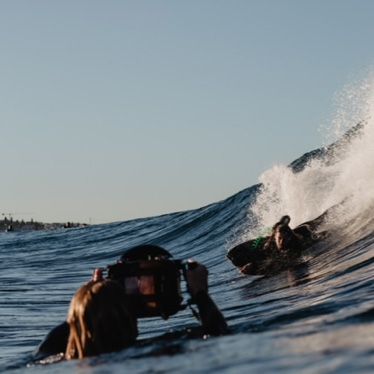
“We had another really experienced bodyboarder (Chris Deller) with us, who jumped off the ledge ahead of me. He missed his timing and was immediately picked up and smashed back down onto the rocks. After which we had to drag him out, with him going to hospital with some injuries.”
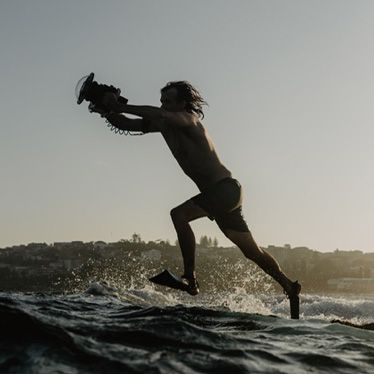
“So getting into the water was a real dilemma for me. Having to run and dive into the waves while trying to swim with a camera body in my right hand, can be seriously dangerous in these conditions. For everyone else on surf craft, they have the advantage of extra buoyancy and could skip over the wave on their boards. As a swimming camera operator, you’re constantly battling against the current to avoid being sucked into the impact zone.”
“This is also a really ‘sharky place’ too. I have had a number of friends who’ve had encounters here with Great White Sharks. So that also plays on your mind when you are submerged up to your ears with legs dangling in the water. It took me half an hour or so, before I could even commit to diving in. A lot of what we do is a mental challenge.”
“I decided to shoot using my Sigma 18-35mm on a Blackmagic Pocket Cinema Camera 6K using my Salty flat port. It was a good choice as it gave me enough distance to get full coverage of the wave, while still getting in close enough for Mitch’s rides. This bit of footage was later nominated for Movement Magazine’s, Wave of 2020, which was pretty cool.”
“In that scene from the film, you can see in the foreground Lance Morgan, who is an incredible fish-eye photographer. He works with a much smaller rig and can dive under the water and positions himself really close to the surfer, holding the camera high with just one hand. He is so good, he can point the camera above his head, get the shot and then pull back safely under the waves with critical timing. It’s really impressive to watch.”
“But when you are shooting video, you don’t have that sort of freedom. You have to line your shot up, and then use your peripheral vision to gauge what is happening with the waves and other surfers coming at you. That’s where having the biggest screen possible on a camera, is so important to getting the perfect shot.”
“Another scene from the film is the wave where Mitch and I grew up surfing on the Central Coast. But it’s one of those spots where you have to make calculated decisions, really, really quickly. Especially when the waves are this big. There are countless stories of bad things that have happened to people with this particular wave, let alone, at the size they were on this day.”
“These massive lumps of water wrap right around the rock shelf, and then quickly drain out well below sea level. So when you are trying to get out, or come back in, you have to get your timing right or you’ll break your neck. Just to get into the water you have run 170ft in flippers across this incredibly slippery rock shelf, with white wash coming at you from all sides. And then there are the sink holes all around the edge of the shelf, that you can’t afford to fall into.”
“So you have to run at full pace with a heavy camera, leaping off the rock shelf just before the next brick wall of water hits the coastline. And then the swim from the rock shelf out to the wave itself is in very deep water. And all you’re thinking about, is what’s swimming beneath you. Especially at 6am, pre-sunrise on a cold winter’s morning!”
“On this particular day, the waves were really huge. And not surprisingly, everyone was enjoying them from the cliff top rather than surfing them. There was no-one in the water but Mitch and I. It was a big decision to take to the water that day, but I didn’t want to die wondering what this wave looked like up close at this size.”
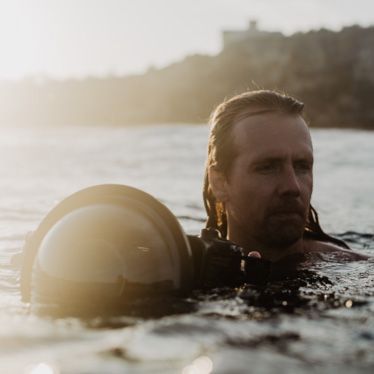
“The plan was get Mitch bodyboarding a couple of big waves. But in the end they were too big for the swell direction and he only found a couple that were actually surf-able. The waves would suddenly jack up out of nowhere, and then throw so wide and shallow. So maintaining any type of critical line to surf a wave like that, you’d have to be a magician.”
“I could tell these were going to be cinematic shots. And I kept thinking, I’ve got to capture them properly. I had to make sure I was on my right exposure and don’t, blow my highlights! I remember vividly setting up for this shot. It was early morning at sunrise and the light ramped up very quickly. And then the sun just popped up instantly. So in moments like these, I am just going back to my false color on my BMPCC 6K, time and time again, double checking before each wave.”
“Your setup has to built bullet proof, because you’re putting yourself in harm’s way to get these sorts of shots. So most of the time, you’re just trying to relax and not panic. Just trying to get into the right position and not mess up your settings. There’s a lot of water moving around you, so just focusing on your shot is super complicated.”
“When I had finished shooting, Mitch and I then headed back to shore. But because of the massive sweep of waves, there wasn’t anything I could line up with. And getting prepped to come in at exactly the right place and at the right time is so critical. Because I couldn’t see anything, I had to find my way in by constantly looking at the cliffs, the waves, and the rock shelf.”
“As the current was so strong and I was losing energy quickly while having to swim and support the weight of the camera and housing. Mitch then leant me his board for extra buoyancy and he was able to find a quick moment to bodysurf into the rocks. I continued to paddle against the rip, while getting pulled further out to sea and dodging the 10ft clean-up sets.”
“A window of opportunity emerged where some waves started lining up to break in the position of where I was, and I attempted to catch the first one with the camera tucked under my chest. Unfortunately, due to the size of the wave and lumpy water surface, I hit a bump of water not long after taking off, and the camera housing was thrown straight into my face.”
“It smashed out a tooth upon impact and I was subsequently thrown off my board and rolled violently under water, copping the remaining waves in the set on my head. I managed to keep kicking towards the shoreline, knowing that I had to come in ASAP, and eventually beached myself onto the rocks. So I was pretty lucky to get back to shore in one piece. But I did get the shot, so I’m pretty stoked about that.”
“The Chase had been a constant event in both mine and Mitch’s life through out the pandemic and the lock downs. Then, just as one of the waves of the pandemic died down and the restrictions lifted, life returned to normal for a short while. And so we were able to do a sneak premier in December 2020 at a cinema here. It turned out to be a great opportunity to bring the bodyboarding community back together again.”
“The whole project has been a fantastic success. Just after the Covid restrictions ended here, The Chase was immediately picked up in France by a distributor. It has now been picked up by Amazon, and both Hawaiian and New Zealand Airlines are showing it in flight, which is super cool. I keep getting photos of the back of a plane seats from people watching it all over the world!”
To watch the entire film please visit - https://vimeo.com/ondemand/thechasebodyboarding