The Banshees of Inisherin
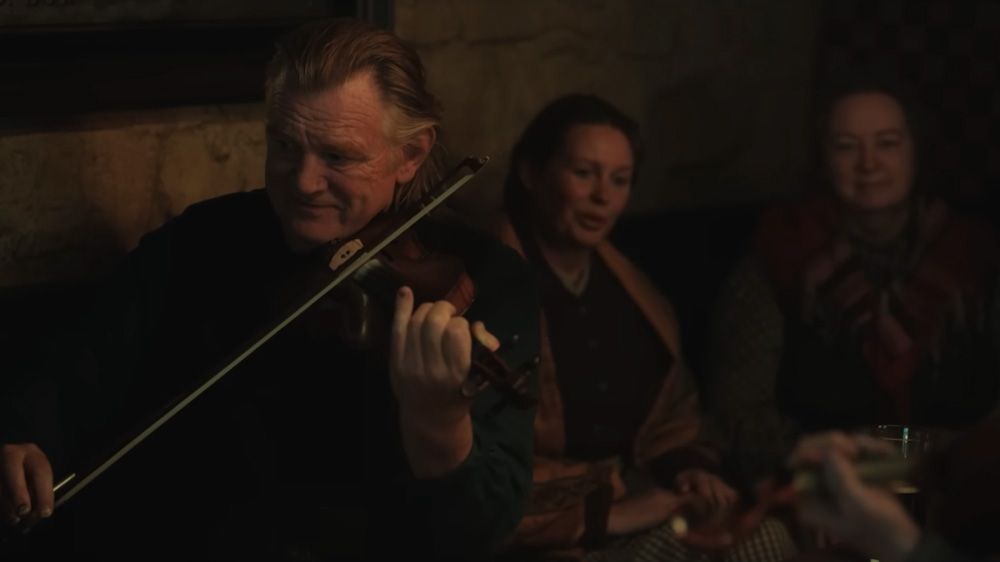
“The whole story of ‘Banshees’ for me, actually feels like you’ve just walked into a local pub and there’s a storyteller by the fireplace, telling this dramatic tale about two best friends. The storyteller then goes into all of the details of the friendship, like some great fable. As we were shooting ‘The Banshees of Inisherin’, I said to Martin it felt more like a Western to me. Almost like a showdown between two gunfighters.”
“I have worked with Martin McDonagh before on ‘Seven Psychopaths’ and ‘Three Billboards Outside Ebbing, Missouri’, so I do understand where his scriptwriting and directing is coming from. He doesn’t just write the words and then it all just happens like some directors do. He’s incredibly detailed with his vision for each film and writes specific parts for his characters and the locations they exist in.”
“For example, when he wrote the script for ‘Three Billboards’, he wrote the part of Mildred for Francis Mc Dormand and the location for the town of Ebbing was very specific in its layout. And that was the same for ‘Banshees’ where Martin wrote this script in incredible detail for all of the locations.”
“Obviously when you are writing for the stage, you don’t have the advantage of putting your actors into a bigger environment like the coastline of Galway and exploring the subtlety of close ups . And so on the stage, what the actors are saying and doing has to be damn good for it to work. I know people who have seen this film over and over again, simply because Martin’s words are so beautifully written.”
“On first watching the Irish accents can be difficult to tune into, particularly if you’re not native to Ireland or the UK. I remember the cast did discuss whether they should speak with the local Galway accent. To be honest, I couldn’t really tell the difference but I do remember there was a long conversation about the authenticity of the accents the actors were using. I think that’s what makes working with Martin so interesting. It is all of these small details he layers into every part of his film. For example, even the seemingly random animals on the island were all scripted and storyboarded. I followed his storyboards very closely. Just as the words come from a deep place within Martin, so to do his visuals.”
“Animals featured very strongly in this story as they bear witness to the humans on the island tearing themselves apart. They are the observers of the tragedy that unfolds around them. Martin told me, one of his favourite films is ‘Night of the Hunter’ where the animals give hints to the unfolding story. As does Martin with his use of the farm animals.”
“For example, when Jenny the donkey dies, there is this wonderful shot of Colin Farrell inside his cottage with a cow looking through the window. Martin had imagined all of these scenes within his storyboards, with these important details drawn. For me, it was a little reminiscent of his scripting of the dogs in ‘Seven Psychopaths’, and so the animals are all incredibly important to the story.”
“I do think with this particular film, the relationship the characters have with their animals is in fact a kind of backstory. These relationships show how strong the bonds of friendship would have been; before things spiralled out of control. I think Martin was rather clever in the way he brings all of these relationships together, both animals and humans.”
“Shooting on an island off the Irish coastline, also added to the experience for me. We could only start production at the end of the tourist season so we could have the island to ourselves. And because of the Covid outbreaks, it was a long time before we actually started shooting.”
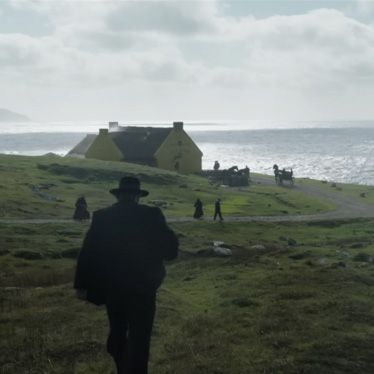
“One of the benefits of being on the Island for such an extended period, was that we could build all of the sets ourselves. And so we built the pub and cottages on the cliffs facing the ocean, to match Martin’s vision. The existing cottages on the island were sensibly set back from the Atlantic Ocean. No one would ever think to live that close to the sea, because you’d be blown away in winter!”
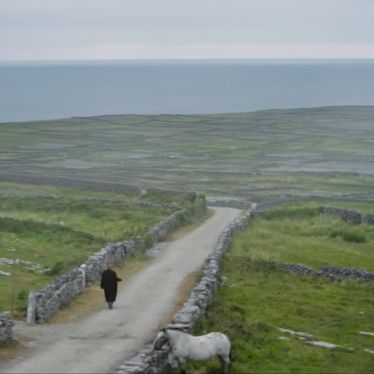
“There was only one hotel on the island with twenty rooms and a bunch of ‘glamping’ campsites for tourists. When we brought the crew over we had to book them all. With so little accomodation we had to keep the crew to the absolute minimum. The other complication was the roads on the island were incredibly narrow and lined with stone walls. Because they were only wide enough to fit a car meant we couldn’t use our film production trucks. So I had to pair everything right back to the essentials in terms of gear and crew. Which was actually, rather liberating for me.”
“When I do massive productions like ‘Avengers’ there can be upwards of 100 trucks, which is crazy! With these massive productions, things become inflexible in how and when you can shoot something. Whereas on this film, we could be spontaneous when shooting if the opportunity presented itself. And because the cast was only three to four main characters at best, we could ‘up and move’ with the weather if we wanted to. And that’s how we got a real rainbow in one of the shots. We had the freedom with this production to take opportunities when they suddenly appeared.”
“For this film I used the Blackmagic URSA 12K as my personal camera, along with the Alexa Mini LF as our main camera. Goldcrest had already created a LUT for the Alexa, and because I had my dailies colourist with me we could create an offset for the LUT to use with the Blackmagic URSA. So the two cameras matched perfectly, even though one was shooting in Blackmagic RAW and the other in Arri RAW.”
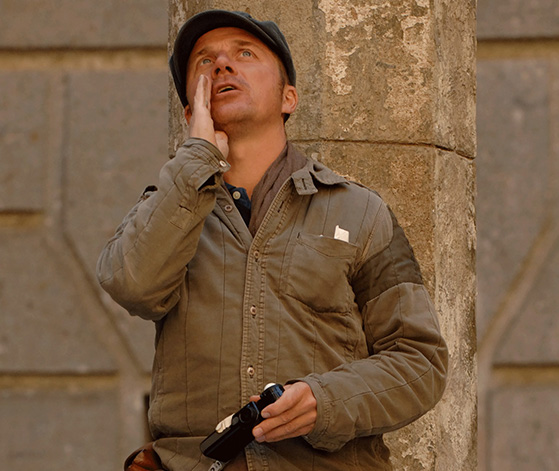
“While we were shooting, I would often steal some time to shoot landscape shots on my URSA 12K. I would usually do this driving back after shooting a location, or in the evenings on my days off. I had the rig paired right back, so I could have the camera sitting in the car ready to go.”
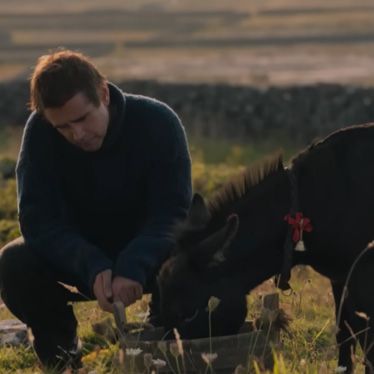
“I remember Martin joined me one evening, because he knew of these goats near the coast where we were staying. All I can remember is climbing across all of these stone walls with Martin carrying the tripod, trying to get to where the goats were at. They were incredibly friendly bumping into us all of the time, which was strange experience for a city boy like me.”
“To be able to shoot these important moments in the film, I had the URSA setup with a beautiful Century Optics lens and some vintage Cooke Panchros Classics. The zoom I used for this scene was a 17-35mm at T 3.1, which really was the perfect lens for the URSA’s super 35 12K sensor.”
“I've been banging on about Blackmagic’s cameras for a while, and I think they’ve got something special with this 12K camera. We did a negative pass for some of the footage which we scanned and then produced a film negative that went back into DI. And the footage looked even better off the 12K sensor. I just loved the softening on the edges we were getting.”
“When looking at footage, I have the benefit of seeing it on a big screen in a proper color grading theatre, not just on a small grading monitor. So we get to see everything in incredible detail. So I really admire what Blackmagic does with their cameras and making professional filmmaking accessible to a whole new load of people.”
“Through out my career, I have always tried to move between independent films and Hollywood features. Although I really enjoy the thrill of walking onto a massive set where you can project your creativity onto a big canvas , there is also something equally fulfilling working on a smaller canvas too. And so, I think it is very important to keep yourself grounded when you are a cinematographer.