The 90 Year Old Cyclist
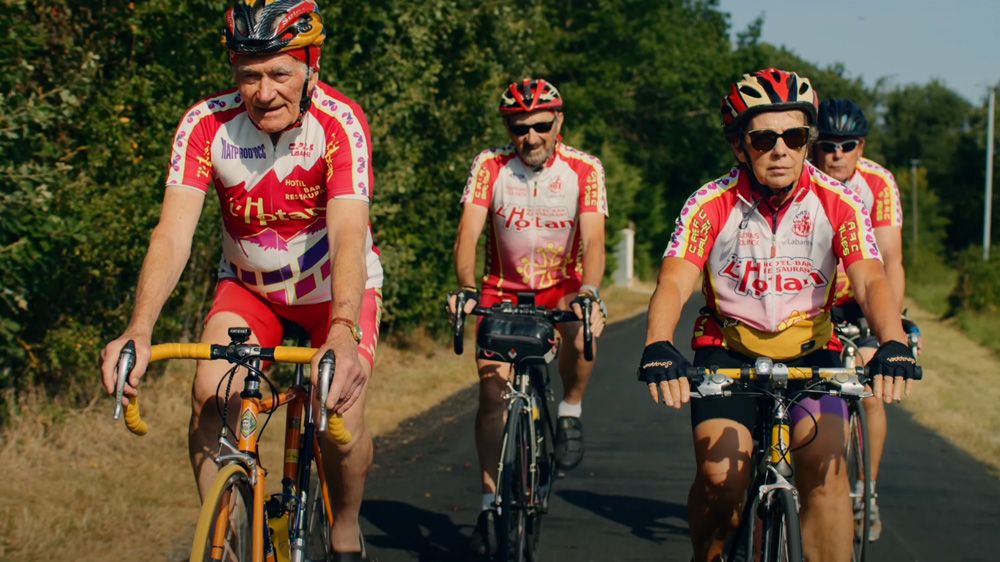
Florent talks about the cycling life of his 90 year old grandfather who is still riding everyday in the South West region of France. He shot this documentary with a professional crew and Blackmagic Pocket Cinema Cameras. Only a few months after posting his film on YouTube, it has already been seen by more than 400,000 people.
“I chose to produce a doco about my grandfather, because I thought he was a very interesting person that others might find interesting too! He is a very warm man, someone that talks a lot but doesn’t talk that much about himself. You really have to ask him a lot to get him to share. And so when I did my first doco about him ten years ago, I discovered things I didn’t know - such as where he was born!”
“When I shot the first doco, I did it because he was about to turn 80 years of age. We shot for three days back then and I didn’t use lights or proper sound recording, so it was fairly basic. For this doco celebrating his 90th birthday, I wanted to do it professionally with a proper crew, lighting and cinema cameras. Thankfully the response I got from the first documentary ten years ago, got a lot of interest so I knew his story would again, be interesting to a lot of people. Amazingly this new film has received more than 400,000 views, which is incredible for a 20 minute short documentary in French with subtitles on YouTube!”
“With this new doco, I didn’t want to make something that had style over substance. I really wanted to make the story as good as the visuals, and the visuals as good as the story. I think it’s important because these days we kind of get lost especially in the visuals. We approached this almost like a narrative piece. I knew that I wanted something that had a really cinematic look, but still needed to be ‘real’ as a piece of work.”
“I managed to get Alex Botton on the film crew, who is a fantastic DP who works on feature films and documentaries. We had also worked together before so we knew each others style very well. I brought him in, because I realized that if I wanted the documentary to have my desired look, I couldn’t be the director, editor and camera operator all in one.”
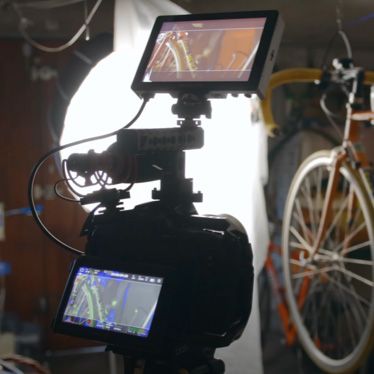
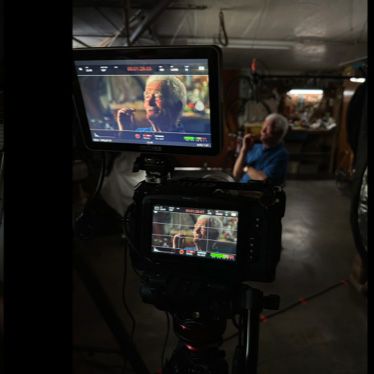
“Alex has a lot of experience, especially lighting the indoor interview scenes. I could just tell him how I wanted things to look in terms of the atmosphere and the overall mood and feel, and that was what I got. A new addition to last time, was actually getting a drone operator to work with me. Clement Hodgkinson has been working with me for many years now and we shoot together all the time. We ended up shooting over 3 hours of interviews in 6K using Blackmagic RAW with Blackmagic Pocket 6K Cinema Cameras. I felt so comfortable shooting Blackmagic RAW that we didn’t do any dailies because of time pressures. We would literally finish at midnight and go straight to bed, before shooting again in the morning.”
“I remember first sharing the frames in Facebook groups, Reddit and YouTube and the response to the imagery was really good. I soon realized that during long projects like this, you get plenty of time to share various images from the shoot for an initial reaction online. Getting this sort of feedback became really important for completing the last 20% of the documentary, which is always the most difficult part to get right.”
“Even though this was a longform film in French, it still got a massive number of views on YouTube, which is usually skewed towards shortform English speaking content. This showed me that there is still space for this kind of longer form film on YouTube, compared to other social media platforms like TikTok which is very heavily shortform orientated. I think this is very positive for YouTube creators like myself. I’ve even had other YouTube creators coming to me with concerns about the feasibility of posting longer form content such as documentaries.”
“I think my documentary is a good example of YouTube’s ability to fairly promote different length content. Although I suppose it was an impressive story in itself, because you don’t normally see a 90 year old cycling thousands of kilometers on a bike! I don’t think I could do that, that’s for sure.”
“The difficulty with long form docos is they aren’t ideal for social media. That was my concern, with using crazy transitions just to immediately capture the audience’s attention to keep them interested. I soon realized I couldn’t do that in a way that would fit with the story and the flow I was going with. Especially with video editing, you always notice when an edit is good and you’ll also notice when an edit is really bad. And so it took me three days of reviewing the footage just to create the perfect introduction for this film.”
“For example, I had difficulty with the part where my grandfather talks about being mentally and physically strong enough at the beginning of the film. I couldn’t find that footage without going through all the interview shots, because it was at the very end of our 50 page interview. It took a lot longer than expected because the sentence in real life, was maybe only 8 seconds in total.”
“I also remember the slow motion footage where we had the wheel going around, where I put the titles for the sponsors. I had already assigned a music track suitable for this part of the film. So when I finished this one scene, I was so excited to have the first few minutes of the film completed. This introduction almost acted as a mini trailer, allowing me to find the style I wanted for the rest of the film.”
“The beginning was perfect, because the visual scenes actually go with what I wanted to say, right from the start with this film. The documentary ten years ago started with my grandfather riding towards the camera followed by him in his garage. Although I thought I should do exactly the same start again, I just loved the grass blowing in the wind as the start or this second version of the film.”
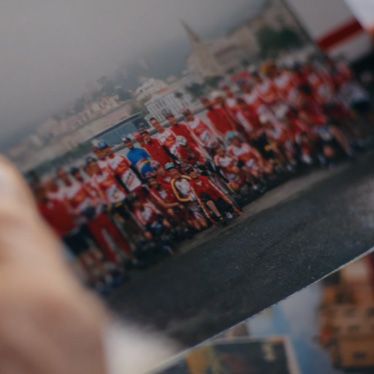
“The documentary tends to go back and forth between serious stuff to more light hearted scenes. It was interesting changing the rhythm and transitions between different emotions of the film. It really does give you an in-depth insight into a person’s life. It was something visually interesting to look at as well. I feel like the viewer really gets to know my grandfather as I know him. I also hope that this documentary really encourages bike riders out there to ride a little bit longer! “
“We had a few difficulties filming with my grandfather. For example, we could only shoot in the early and late hours of the day due to the heat. More specifically, we made sure not to shoot between 11:00 am and 3:00 pm. Although my grandfather impressed me with his fitness, he is still 90yrs old. Honestly, I was more tired than him doing some of this shoot, even though we were asking him to do the same thing over and over again with the same stretch of road.”
“He had travelled quite a lot of kilometers over the few days we were shooting. Although he didn’t look tired, the rest of us had to continually rest in the shade due to the heat here in summer. This was one of the hottest years France had ever had in recorded history, and here was my 90 year old grandfather happily riding about in the fields.”
“I have to confess that my grandfather actually fell off his bike within the first few minutes of us shooting. We thought that was the start and finish to the film, right there and then. He rode off the edge of the road unexpectedly, straight into a bunch of bushes. I remember Clement, my camera operator was freaking out, because of my grandfather being 90 years old! After the crash, my grandfather immediately jumped out of the bush smiling. He explained that he couldn’t unclip his feet from the toeclips on the pedals, and that the best option was to do a controlled crash into the bushes. So a disaster was averted at the very beginning of us filming!”
“I am really proud of this film and I think it is a great inspiration for anyone who loves cycling. I am so proud of my grandfather, because he is such an impressive gentleman.”