Gale - Stay Away From Oz
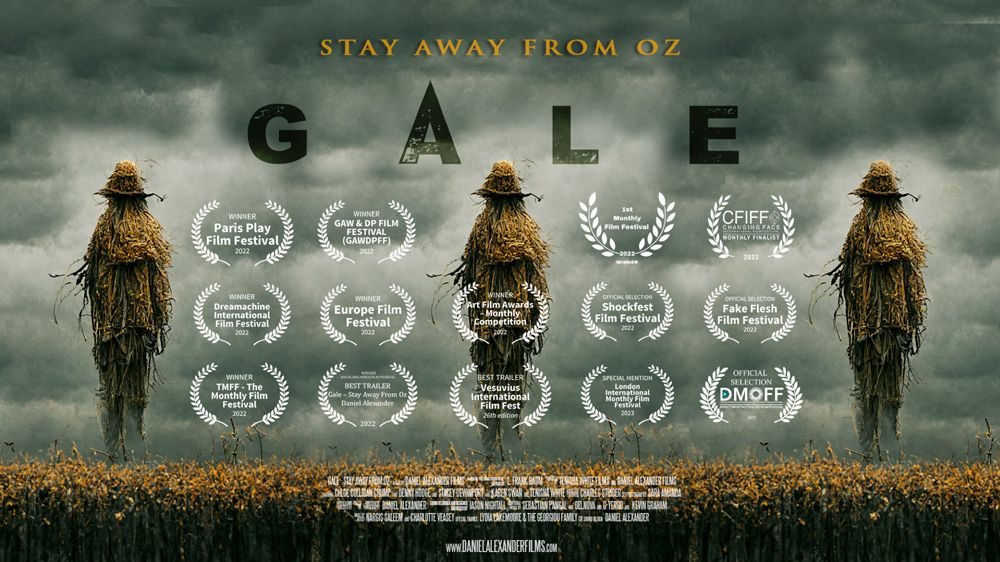
“With so many horror elements already embedded in the Oz-story, I kept thinking about how to bring the narrative into the modern-day with my own horror twist on it. And being the kind of filmmaker I am, I am not the sort of person that waits around for someone in Hollywood to finally read my script. With all of the avenues open to filmmakers these days, there are more creative ways to get a film financed. I am a very hands on filmmaker, so I thought, let’s see what traction we can get by building something ourselves!”
“And so I decided to put together a concept trailer of the film that I would like to make. But with my own creative twist, because I wanted to do things a little bit differently with this story. I wanted to showcase the idea for the film, of course, but I also wanted to retain ownership of the creative journey. Essentially, I wanted to be able to tell this as my own story.”
“So many times when you ‘pitch a script’ to the movie industry and it starts to get attention, the original creators get cut out of the loop. So part of the challenge of doing this film was to prove to people that I have the ability to create something for the world stage. I knew what I wanted to make. But a long-form version was going to require financial funding, which I didn’t have.”
“So I started to think of what I could make myself with the equipment I already had access to. I have a professional Blackmagic URSA Mini Pro 4.6k G2 digital film camera. Already owning that camera meant, I had what was needed to shoot a Hollywood-quality trailer. Being able to shoot my own visual representation, meant that I could get much closer to taking what was inside my head and developing a cinematic expression for that idea.”
“Having worked with this camera for awhile now, I know what it can do inside and out, and how to get the best from the camera shooting in Blackmgic RAW. So instead of waiting for the necessary funding to make the film I’d ideally want to make in the future, I decided to create a shorter version of the film with the tools I had to hand right now.”
“I was extremely confident in the filmmaking tools I currently have, so I set about creating a shot- form version of my idea. Having experience in lighting, and a high degree of knowledge in color grading with DaVInci Resolve, meant that I could get my cinematography closer to the end image I had in mind for this film. So with literally no money, I was able to take my Blackmagic URSA Mini Pro and just start shooting my own version of the Wizard of Oz story as a horror film.”
“I wanted this version of the Oz-story to be a psychological thriller that explored the natural horror element that were already in embedded in the Wizard of Oz. I was absolutely fascinated with this idea of Dorothy being this woman, who has gone through a life of trauma. I wanted to take the audience on a journey that would challenge the question of whether Dorothy’s journey to Oz was real, or not! Or was the whole journey just a bi-product of a mental illness that was hereditary, that was now inherited by her granddaughter? I wanted these to be tangible thoughts for anyone watching this film.”
“In my day to day world, I direct as well as being a cinematographer. With most of my friends being in the industry, meant pulling together a professional crew was never going to be a problem. I had plenty of people close to me who could help bring this idea to life, such as Tenisha White, who co-produced it with me and Jason Nightall, who was the sound recordist and engineer.”
“I put out a casting call amongst my friends, pretty much saying, ‘listen, I’m doing this project, who wants to get involved?’ I didn’t actually say what it was about at the time. I didn’t want to publicly mention that I was doing something based on the Wizard of Oz. I figured it would be impossible for people to believe in their own vision for this narrative, if they kept referring back to earlier versions of the Oz-story.”
“So when I first got together the crew and cast, I deliberately decided not to do rehearsals. Instead relying on the actors to pull from the scripts, what they needed on the day of shooting. It was bit of a journey of faith in everyone. But they’re all professionals, so I knew it would all come together in the end. We then planned out a day of filming and shoot everything inside of 10 to 12 hour in a single day!”
“We had access to a beautiful house in a rural part of England that was loaned to us by Lydia Lakemoore and her family. We decided to use that house for pretty much the whole location for the trailer. The idea for using the same location, was to contain the project given our limitations. Ultimately, the goal was to get this out. Along with certain production quality that would attract attention from the right ‘industry players’ and major production companies.”
“Once we knew we had the house as the location, I asked Lydia to send me pictures of each of the rooms. Leading up to the actual shoot, I studied those rooms and I blocked out the movement. I blocked out where the lights were going to go, where the camera was going to move and ways that we could augment certain issues. I just literally went into a tunnel of just saying, ‘okay, we only get one shot at this’. So I was just studying it like a playbook, so I knew when we were in each room, where camera would go and where the dolly tracks and lights would need to be.”
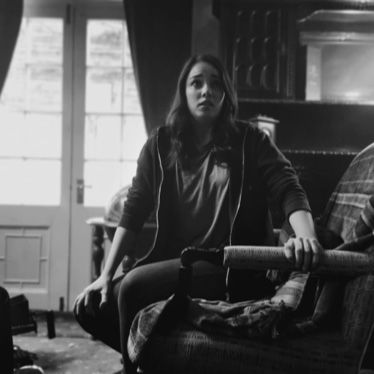
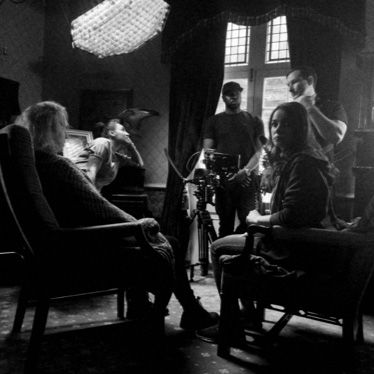
“I then started to put together a schedule. This is something that I would normally get my 1st AD to do. But because it was a very personal project and we only had the one day to shoot, I figured I need to be right on point with it. I got it right down to knowing how many takes I could do before we moved on to the next room. Again, this was all about knowing my limitations with this shoot.”
“For the look of the film, that was also something that I needed to craft out. I know it sounds weird, but it was a mixture between the way that I saw it in my head, versus what I know I could pull from the camera. I wanted something that was dark and yet something that still looks modern. It wasn’t a free for all with exposure and saturation, as I wanted it to have a very specific tone and to be quite moody. So that went into a lot of my technical approach.”
“For most scenes, I’d use one light as I was going for a very specific tone. I wanted to create something, that even if it did feel imperfect in places, it still felt deliberate. The reason for using a single light for most of the scenes, was because in my head, I saw the light having the key light doubling up as a backlight. It was a very deliberate choice to put that light in a position where it may not light a face in the traditional way. I think there were only two instances where I might have bounced the light back-in, or had the light directly above the actors to create a certain kind of look.”
“It was very much a case of sculpting with one light with an egg crate on the light in most circumstances to control the spill. I also put one or two flags around the room to help control where the light was going. So as to make sure that the lighting had a very purposeful look for each of these shots.”
“The camera for me, is what made the filming process so easy in the sense of trying to get the look that I wanted. I know that camera inside out now and I know my shooting profiles. I created a custom LUT for this film that I loaded onto the camera. This meant that I could get close to the look I had inside my head. It was just convenient to do it this way. We recorded straight to a hard drive which meant we could offload and quickly review the footage between shooting. The whole process just worked so well, for the way I needed to work. Which was working quickly, and yet, still getting the look that I wanted without too much hassle!”
“We shot everything with just two lenses, a Sigma 18 to 35mm and a Sigma 50 to 100mm. Most of the time I shot using a ProMist filter, but I opted to not have any filtration whatsoever because I wanted everything clean. By having a completely clean image, allowed me to have total control during the color grade in DaVinci Resolve. I wanted to manipulate things from a flat starting point. And those particular Sigma lenses don’t have much character in terms of their look, anyway.”
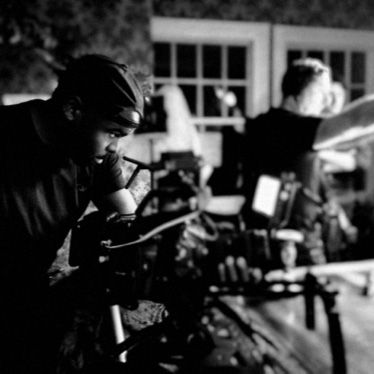
“The final look was so important to me, so I wanted it to be flat to start with. I don’t want anything to be too warm or too cold, or to have a bit of that vintage characteristic. I just wanted flat images so I can create my own look from scratch. I also shot everything at 4.6K at Q0 compression in Blackmagic RAW to give me the most creative freedom.”
“The main visual effects in the movie is when Dorothy Gale turns into a demon or a witch, which I created in After Effects. It’s something that I’ve been playing around with from other projects in the past. Like understanding how to manipulate faces with different kinds of filters, and then understanding how to track that as well. And weirdly enough, all of Dorothy’s face where it distorts, is done in After Effects. Except for the eyes which I found a lot easier to do in DaVinci Resolve. I just literally masked around the eyes, blacked them out and then tracked the movement backwards and forwards.”
“Other than the shots created in After Effects, everything else was done in DaVinci Resolve, including the sound. I personally edited the film and did what I could with the sound, but I am definitely not a sound guy. I do understand good sound, but my sound guy Jason, must have absolutely hated me because my timeline was an absolute mess. I had things all over the place, with 15 tracks with random bits and pieces and crude bits of reverb on certain things. It was a complete nightmare. I started sourcing royalty free sounds from a bunch of different platforms.”
“And so I’m putting in rises and crescendos next to explosive hits and stuff, where I want them to be. But in the end, they were just overpowering each other. Thankfully Jason fixed it all. There was certain things that he actually took out and made it sound stronger, which just made it better. For example, there’s a scene where Emily puts her hand on Dorothy’s hand for the first time, and she says that I’m your granddaughter. And then there’s a kind of explosive sound in the sound design. I didn’t even envision that. That was Jason, helping to sell that particular moment.”
“So the trailers done now and I initially put it out on YouTube. I’m not even a YouTube person and don’t even have a YouTube channel, or anything like that. I’ve always used Vimeo for client checking, but I thought this was perfect trailer for YouTube. That was the whole point of us doing a trailer in the first place; was to get attention.”
“I noticed it got 1,000 views in a day or two, which I thought was nice. And then it blew up when it landed on Tik Tok. The whole thing was just person after person, doing reaction videos to the trailer. Which helped it go viral. And then within a couple of days, it had 2.3 million views. And then outside of Tik Tok and YouTube, it started to land on all of the major horror platforms such as Bloody Disgusting, Dread Central; and then Universal Horror has just been tweeting about it.”
“I’m now getting calls from distribution agencies saying can we buy the rights? And is it actually finished? So we have now partnered with an American company called ‘Chilling’ who are the number one audio horror platform in the world and are now branching out into live action and this will be their debut project as we go into further development."