Nokia's NY41x41
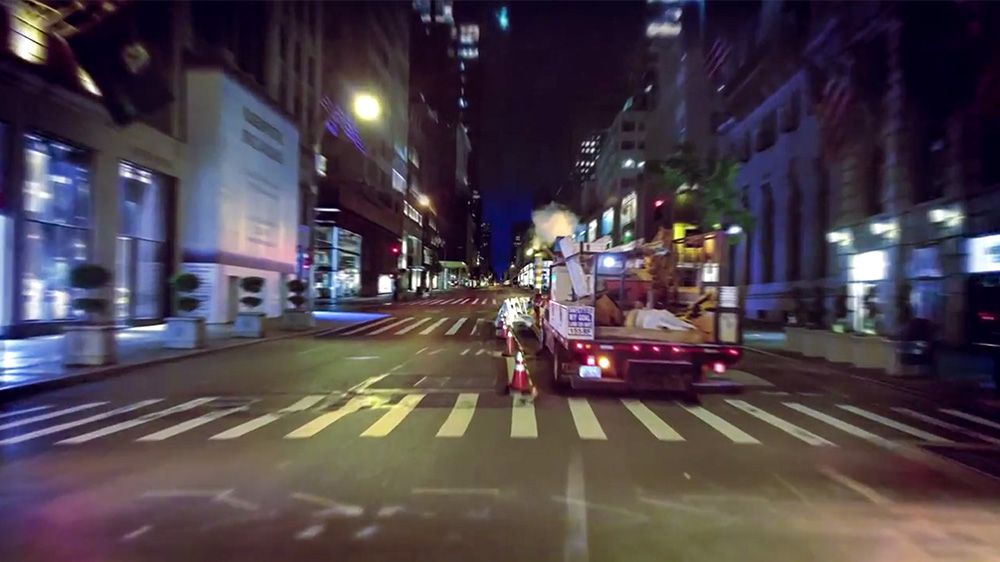
"The concept was pretty straight forward where we have an image within an image, repeated 41 times. The idea was to do the whole piece using exactly 41 photographs. I then worked out that one New York city block was the perfect distance to photograph, so the whole thing we ended up being shot over 41 city blocks."
"I played with the camera for a couple of days and I soon realized it was all going to have to be fairly linear. You can re-zoom and re-crop one photo using one entire city block, so you can effectively travel one city block per image. The still photograph expands as you zoom in, and within that shot, is the center for the next city block; which then expands and fills up the screen. Then you just keep doing this for 41 city blocks!"
"I choose 5th Avenue to shoot, because you pass by Central Park and finish at the ‘flat iron’ building at 23rd Street, which is an iconic New York building. My initial shoot was done during the day, which meant we were running out into the traffic, setting up the tripod, trying to align the horizon-line while people and taxi cabs were flying all around us. There was so much visual noise during the day, that the concept wasn’t really working. So I decided to come back and try again in the middle of the night."
"If this project wasn’t difficult enough, I also decided to align the shoot with the sunrising over New York in the morning. So we started shooting at 3am, and then had this rushed timeframe to shoot all 41 blocks so that we could arrive at the ‘flat iron’ building at sunrise! If we spent too much time on one block, then we would have missed the exact moment of the sunrising at 7am. We had to keep a continuous steady flow between shooting each block, so that the transition between night to day appeared seamless."
"Before shooting the night to day scene, I honestly didn’t know if we could make it work. I wasn’t sure if I was setting myself up for a post nightmare here! I had the Nokia client with me on the shoot, so I basically had only one shot at this project."
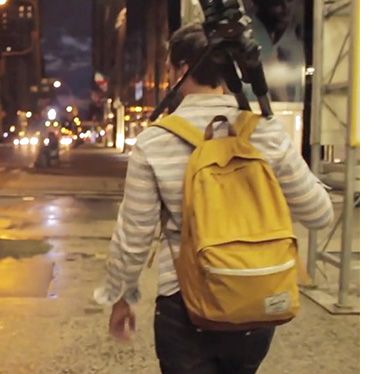
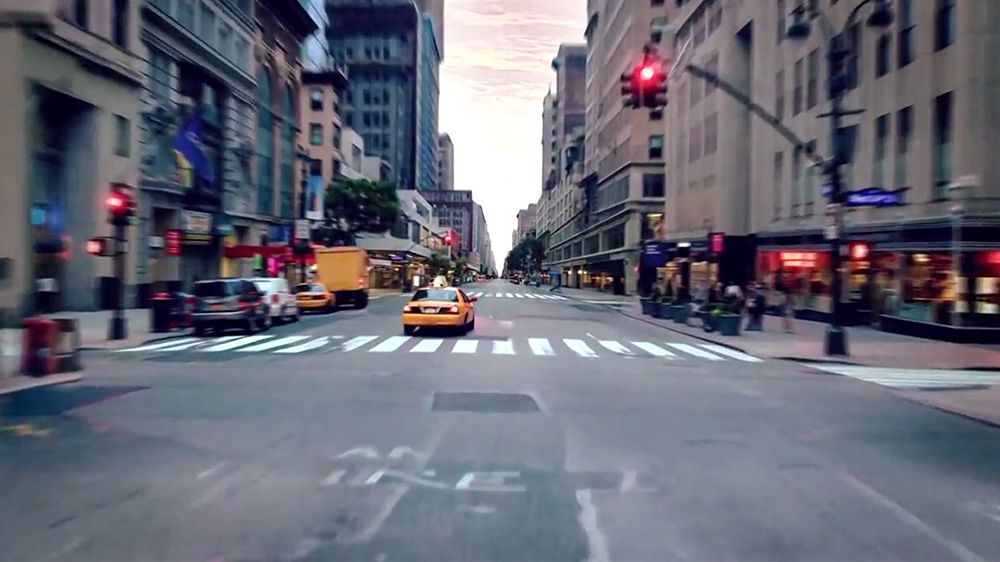
"I have to admit I was nervous agreeing to this concept, making an image within an image 41 times was so intense. There are so many logistical things that had to be figured out to be able to pull this thing off! The camera shoots really wide angle so the buildings that are far off in the background remain pretty consistent until you got really close to them. With this technique, we were getting repeated iterations of the same building in every shot, so much of this video was about painting out those duplicate images."
"There was this one photo with a road crew right in the middle of the street, which I thought was going to mess the whole thing up. In fact, I wish that there were more moments like that as it adds to the life of the city quite a bit. It turned out the whole thing was actually pretty straight forward. We shot the construction crew a block away using the zoom, so they actually appear to be frozen. Then after that shot, we ran to the next block, so I don't think they had any idea of what we were doing. I think that scene worked out so well because you can still see the horizon line between the workers."
“Tom Ford was such an amazing director to work with. Remarkably, this was also his debut film, so we were both having to learn a lot in a very short period of time. This film had to be shot in 23 days, which was a big risk. I guess not knowing what you are going into sometimes, makes you braver and more likely to succeed. We didn’t know how to be cautious, so we backed our own abilities and took some big risks which paid off.”
“The great thing about shooting a Hollywood film, is that you can hire incredible talent. For me, my best choice was in hiring Jim Plannette as my gaffer. Jim has to be one of the most legendary gaffers in the film industry I think, having worked on ‘Braveheart’, ‘Oceans Eleven’, ‘The Road’, ‘The Artist’, ‘ET’; he has done an incredible amount of really good films. Since working with Jim on ‘A Single Man’, I have shot another four films with him as my gaffer. This film had an incredibly good crew and cast, so it was an amazing collaboration to work on.”
“Working with Tom was a fantastic experience. He was all over this film as the director, but also was the writer and the co-producer along with Bob Salerno. We didn’t need to storyboard the film, because Tom was very confident in what he wanted. We had our shot list and plan, and then we adapted things as each scene demanded. With actors of the quality of Colin Firth, Julianne Moore, Nicholas Hoult and Matthew Goode we were able to really let them do what they do best.”