Mis-Drop
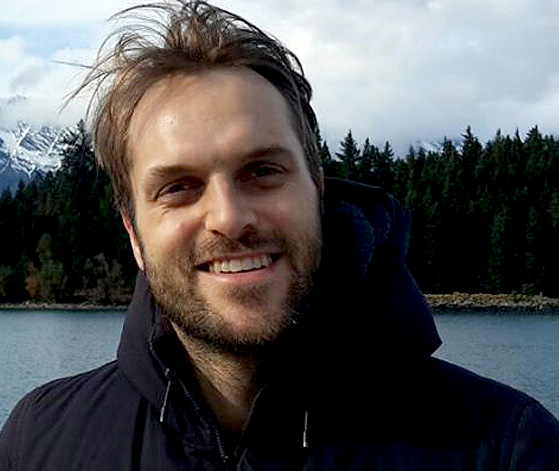
"That’s the thing about the New Zealand film industry, there is this incredible spirit of collaboration here. And there’s an entire eco-system that has been created of people with the skills to achieve things at the highest level. Particularly in Wellington, with facilities that can support them - thanks largely to Peter Jackson."
"In the end, this entire film project rested on the capabilities and creativity of people willing to help out, and for the most part gift their time and talents. From the actors to the crew, to the unit truck, camera hire and a number of post facilities all threw their weight behind the project to give it some of the best production values we could."
"I had always wanted to write a script and direct. So for a number of years I wrote scripts that I thought ticked all the boxes for the local film commission in New Zealand. Hoping that if I wrote something that they liked, I would get funding to make my first film. I was short listed on a number of occasions, but nothing ever seemed to get across the line."
"After a couple of years of writing scripts, I got a good contract on a local TV series as a boom operator. I decided to use the income to self fund a short film. And if I was going to spend my own money I was going to make it a scifi!"
"But I didn’t want it to feel cheap. I love the film Aliens and wanted to do something at that level of production value but knew that with my budget it would be impossible unless I restricted what the audience could see. That was how I came up with the idea to do it in one shot with the camera itself as part of the overall story.This way it could just get glimpses of things that were happening around you, thereby restricting the amount of CGI and then the rest could be told through sound."
"Once I had the boundaries for what this story could be, then the script came together very quickly. One of my friends, an actor who voiced one of the soldiers, helped me out with the dialog, with another friend, who was a short story writer doing the chant the soldiers sing. The whole idea is based around a paratrooper who is dropped onto a colony planet some 300 years in the future. The story is told through a live-camera that is recording the events leading up to, and culminating in, the ‘Mis-drop’."
"To carry the story, I needed a lot of off-screen dialog – which meant recording a guide-track with a bunch of actors - that I could then play to our main character when we shot the film. The only problem was that I couldn’t get everyone together at the same time."
"Because I had to record most of them separately, a friend and I stood in for all of the other characters for the first few recording sessions. I would then edit the real voices in for the next recording, slowly adding each voice as I captured them until I had everyone in the guide track. In the end it took six or seven people to create the combined soldiers’dialog, speaking in a range of western accents."
"My casting agent on this film was Yvette Reid and she found the soldier, the pod technician and the pilot for me. To help with the casting session, I wrote a page and a half of dialog which was never going to appear in the film, it was just for the actors to play off. This pretend scene, was to give them context and to help them to develop their characters without overworking the script itself."
"The final shoot was only couple of days, with the soldier inside the pod. We had a small LCD monitor setup in front of the actor in the pod, so that he had the correct eyeline for when he was talking to the female pilot. We shot them simultaneously and had the two actors talking to each other through their mics with the prerecorded soldiers playing through their headphones, which were all part of their costume. The female pilot was actually positioned in the loading dock of the studio as we shot, and there were even a couple of cars that drove right through her audio."
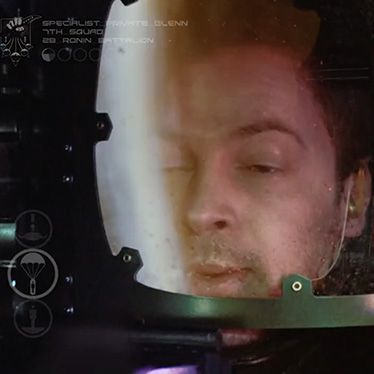
"Making the pod feel real was always going to be critical for this film. Because there was no glass in the soldier’s visor, I had to comp all of the reflections to make it seem real. You are starring at his face for 8mins, so those reflections really had to work well."
"The whole thing turned out to be a huge compositing job with one of the shots even running up to 4,000 frames!To create the illusion of the glass we curved the reflection of the LCD screen and then curved the background and layered them in front of his face. Then added a dust layer, and lit the whole thing to look like there was bubble glass in his helmet."
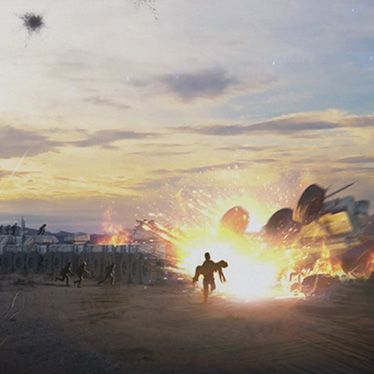
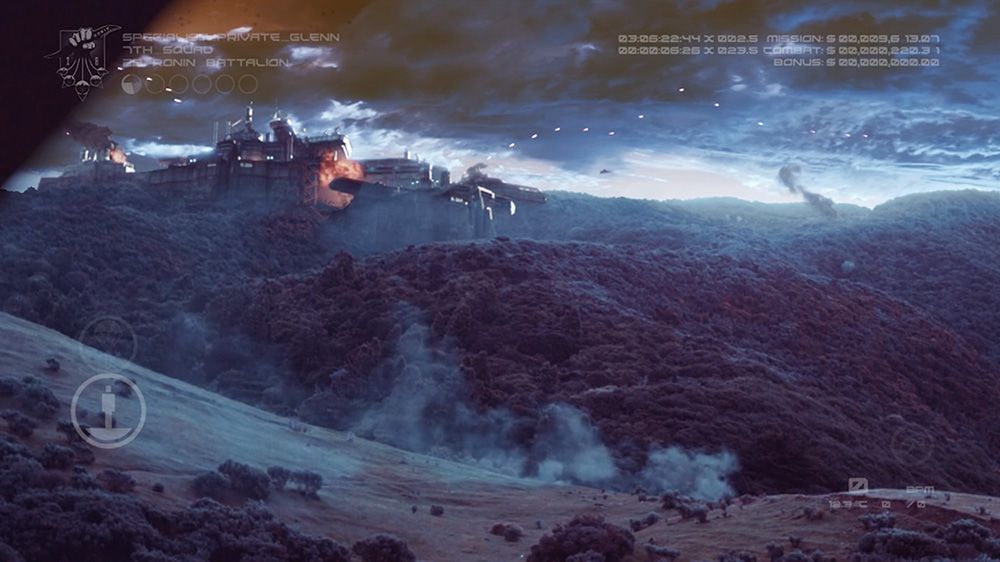
"Before the film, I worked in the sound department on-set and knew little about post-production or compositing. I knew that this film was going to need something big in the first and last scenes for the audience to buy into essentially a guy in a mid-shot for 10 minutes, and that meant some serious CGI. This was beyond my abilities or funds, so to be able to complete this project I would need to get some post-production assistance. But to do that I needed something approximating my final vision that I could show everyone and so I had to learn how to composite on the computer."
"The guys at Workshop FX and Park Road Post were both hugely generous, working on this project whenever they could. Park Road Post worked on the film for about two and half years, whenever they had spare time providing me with excellent graphics and assets that I then comped into the film. And eventually, through working on the film myself, I up-skilled enough that they ended up employing me as a VFX artistand I got to work on the Hobbit movies, which was totally unexpected!"
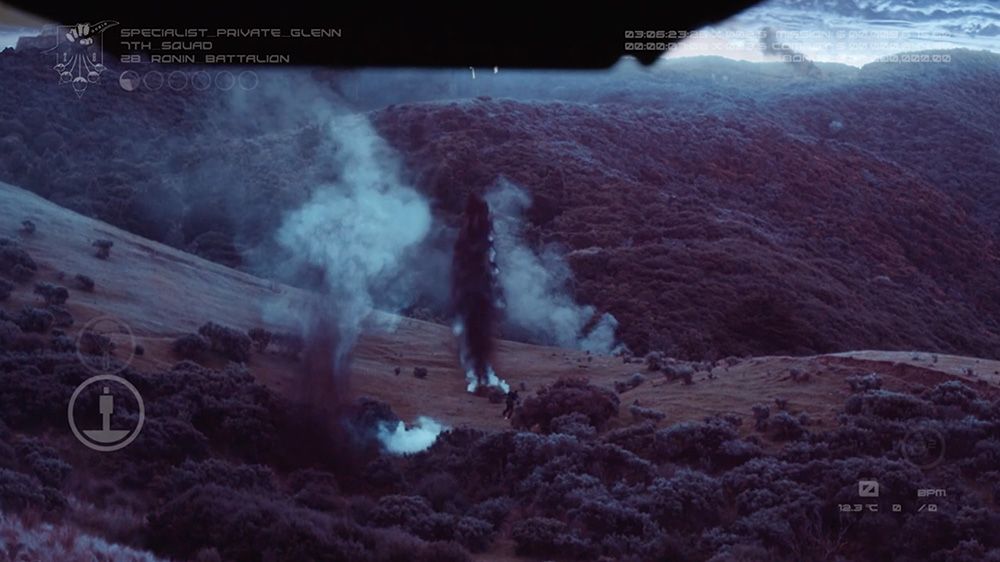
"Trevor Brymer’s team at Workshop FX, built all of the big scenes for me. Trevor is brilliant at VFXlighting, so he dived into the scifi environments. The loading bay scene was entirely their CGI, except for the pod technician and some people in the background who were comped in later. I gave Trevor a very basic concept and he and his team, then created an entire world for me. They did everything from the loading bay and the majority of the assets for the end scenes. Trevor then came back in the final weeks to help me finish the compwhere the soldier drops from the sky into the war zone."
"In the end, this film took me four years to finish.The time it took all came down to a lack of money really. We would spend weeks working on it, and then nothing would happen for months until Park Road Post had some more free time again. And that’s how it went on for years; so it was a very long process. Though it did have a bit of a sprint at the end when I borrowed some more money to help finish the comp and get the sound design done. I guess that’s the thing about doing an independent film. It all comes to down to your commitment to your vision and how hard you are prepared to work to make it into a reality."