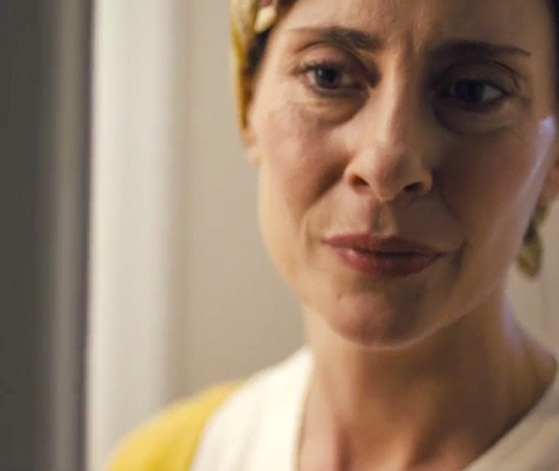
Hikari
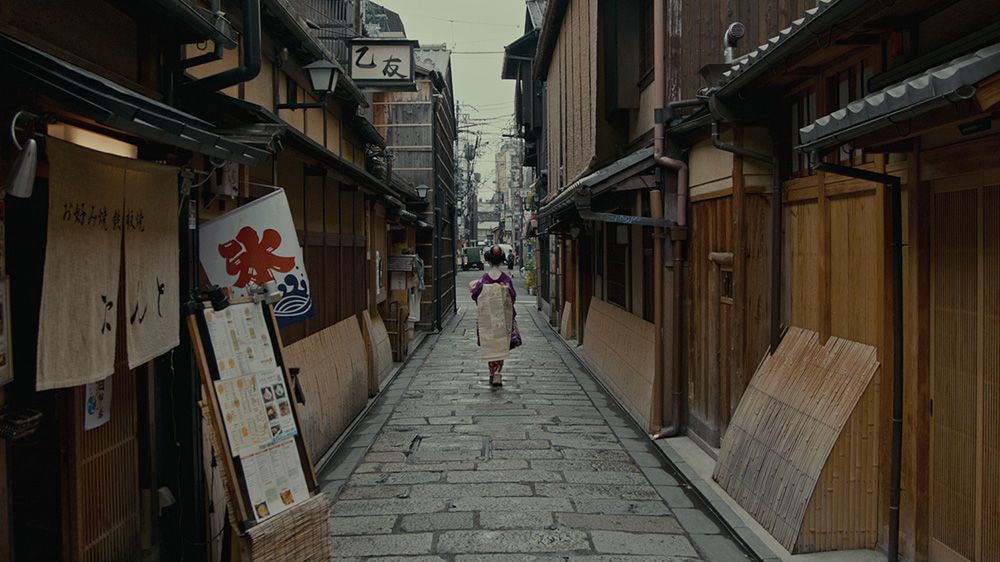
“How we first came to Japan was for a commercial job we were doing for Major League Baseball and Chevy four years ago. After finishing our shoot in Tokyo, we really wanted to go and see Kyoto and do some shots there for fun. When we returned home, we both made the comment that we would probably never get to go there again. Then literally, another opportunity to shoot another Major Baseball League project came up this year!”
“Knowing how beautiful Kyoto is from our last visit, we decided to shoot something special while we were there again. Although we didn't know that this piece would become a tribute film to Hikari-san and her life. The first thing we noticed about the countryside in Japan, is it looks like a painting most of the time. When we first took the Bullet Train we literally had a camera trained out the window the whole time on burst mode! You just see all of these beautiful little towns ‘woosh-by' with the most amazing picturesque mountains in the background.”
“One of the things you notice when travelling in Japan, as apposed to places like Amsterdam where they speak English, is you end up having a very unique travel experience. It feels like you have a very creative experience in Japan because everything has to be so visual. When no one speaks English, everything soon becomes completely visual. For example, when you walk down an alleyway and you see all of these signs you don't understand, you have to use them as a visual piece of information. It's interesting going somewhere where you don't understand things through language, but only through their visuals. We found the whole thing a really cool experience.”
“Because you're no longer using the English language, we also started talking in very simplistic sentences to each other. You become so accustomed to working out the easiest way of explaining things all of the time. To be able to communicate without English really heightens all of your creative senses.”
“When we were first in Japan, we hired a translator who then introduced us to some people, including the Geisha House featured in the film. When we first met them, we went through this incredible introduction ceremony in order to choose which girl we wanted to work with. In this case, we were working with a Maiko, which in Shinto, means a shrine maiden.”
“You soon notice in Japan that they have so many more interesting career paths than we do. I remember reading about a Japanese guy who was studying to be a rock garden artist who was totally shocked that we don't have rock garden designers in America. Whereas in Japan, everywhere you go there is an amazing rock garden that has been designed by someone creative. It's very interesting to see the types of careers that only exist in Japan.”
“This time in Kyoto, we simply used a phone app to communicate with our talent. We would speak something into our phones that would come up in Japanese. They would then speak Japanese into it and it would come up in English. It was basic enough for us to be able to communicate with people. Anytime we were working with talent though, we would still have to act something out first, even though we had the phone app. So in a way, it was still a visual process to communicate.”
“The other incredible thing about Kyoto, is how clean and safe it is. We could have set up our film cameras right in the middle of the street and would have been fine with it. It was just so clean, that you would literally be fine just leaving camera gear on the sidewalk. It's a truly amazing place to visit.”
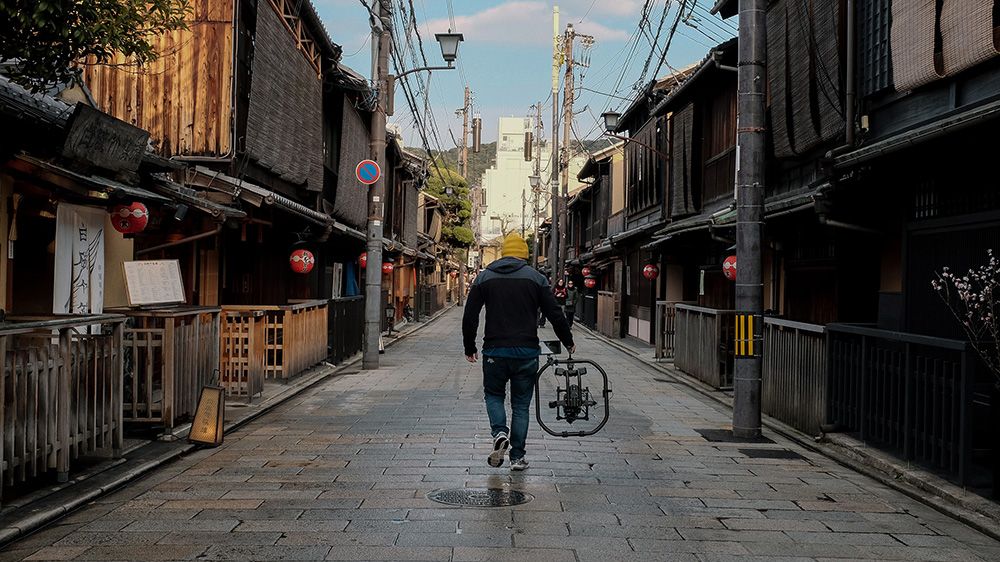
“The first time we were in Tokyo, we rented a van to carry all of the camera cases and gear. But by the time we arrived in Kyoto, we found that the cabs there were to small for all of our stuff and we had to take two cabs everywhere! When we returned for this trip, we knew to pack much lighter leaving much of our gear in storage in Tokyo. We planned to take only the essential stuff to Kyoto so that we could be far more mobile. In the end, we were literally able to just bicycle around the place shooting footage as we road along. Casey soon became really good at shooting off the front his bike, so all of his experiences riding around as a kid finally came to some good use!”
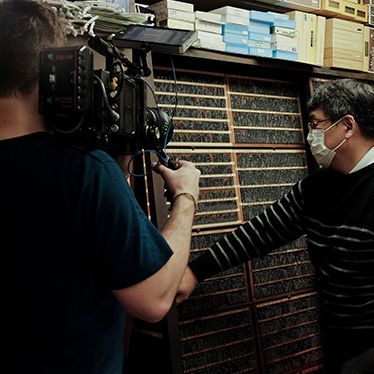
“With all of this amazing footage, we wanted a great Japanese voice over. And so, that's how Hikari-san first came into our view, while we were researching all of this beautiful Japanese poetry. We then became totally obsessed with her online videos which she spoke using ASMR, which is like gentle whispering. Listening to the way she reads poetry gives you a sense of euphoria. The whole ASMR thing was so cool. It had such a calming effect, that I wanted to reach out to her and let her know about our film.”
“Her AMR readings are about ten minutes long, so we wanted to know if we could use one of her readings and how we could edit it to make it shorter. Going through her videos to find her contact details, we found these really recent comments that didn't make much sense to us.”
“Because you’re no longer using the English language, we also started talking in very simplistic sentences to each other.”
“And then there was this post, with a link to an article that explained that she had just committed suicide. From suddenly find something as positive and wonderful as her poetry readings and then to learn that she had just taken her life, was crushing. All of the excitement and energy we had for this project was gone in an instant. But those posts and tributes to her, said how her voice will forever live on.”
“After reading that, we both felt that we should make this film for her. That whole experience created this kind of absence for us personally. We really felt like we had lost her as well. It turns out that suicide in Japan is rather common, but that families rarely talk about it. Families are still ashamed of suicide. So in the end, we though better of using her actual voice instead choosing a Japanese voice-over to read one of the poems she loved the most.”
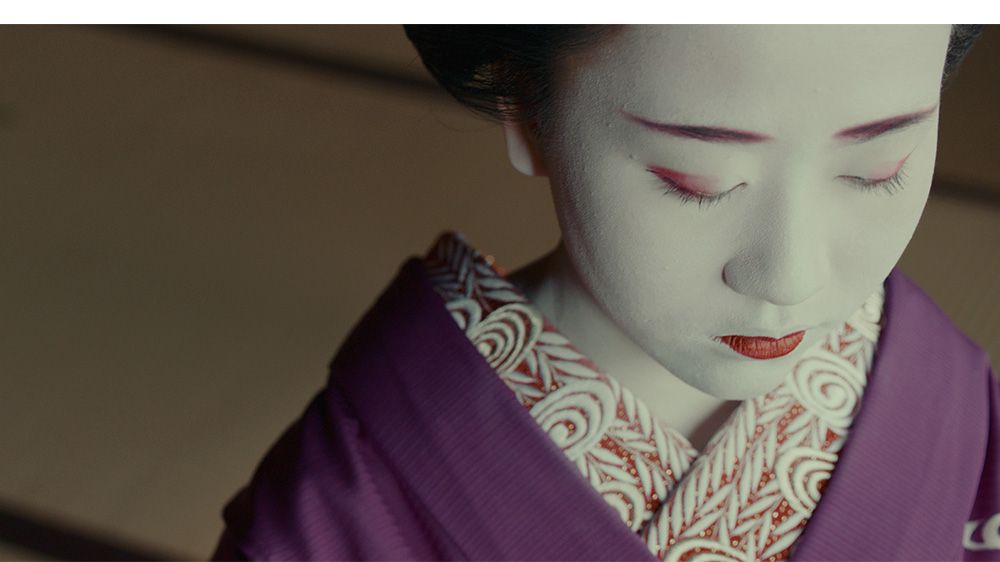
“We found our Japanese voice talent through a website, where you can put out a casting call and people simply send in their auditions. A lot of Japanese people have home recording studios, so you can simply hire them remotely. In the end, we had about fifteen people wanting to do this for us.”
“The voice over person watched all of Hikari-san's videos, which she used to get into the right headspace to do the whisper voice. Our voice-over talent was also Japanese and she commented on how powerful Hikari-san's messages were. She said that she felt truly honored to be part of this tribute film. Her response to Hikari-san's readings really surprised us. And from that point on, we felt that we were starting on something here, that could be very meaningful.”
“Hikari-san had so many poems that she had recorded, but the ‘Epitaph for the Poet’s Tomb’ seemed to have most meaningful under the circumstance. We first heard of its author, Shuntaro Tanikawa through Hikari-san’s videos. We later learnt that he is an incredibly famous poet who writes about modern life in Japan. His stuff is really powerful and we could both see why Hikari-san was so drawn to his poetry. The ‘Epitaph for the Poet’s Tomb’ is really a eulogy and so it reads incredibly well in either English or Japanese.“
“The interesting thing about this project is that we didn’t go to Japan with any sort of idea on what to create. The whole thing happened back to front. We just wanted to enjoy Kyoto. It wasn’t until we came back home, that whole process took on a bigger meaning. Until we found about Hikari-san’s death, we didn’t really have any firm ideas on what this film would be. It wasn’t until we had the ‘Epitaph for the Poet’s Tomb’ that we could start to work out the edit. And from that point on, it all happened very much in reverse.”
“This project has just kept on evolving for us. It has been an emotional journey because we were making a film for someone who doesn’t exist anymore, but they were still having an impact on our life in a creative way. We hope that if she had seen this video, then maybe, she may not have taken her life. We don’t know the struggles she was going through, but if she had known how positively people were responding to her readings, then maybe, that could have helped her.”