Heading Away from the Ledge
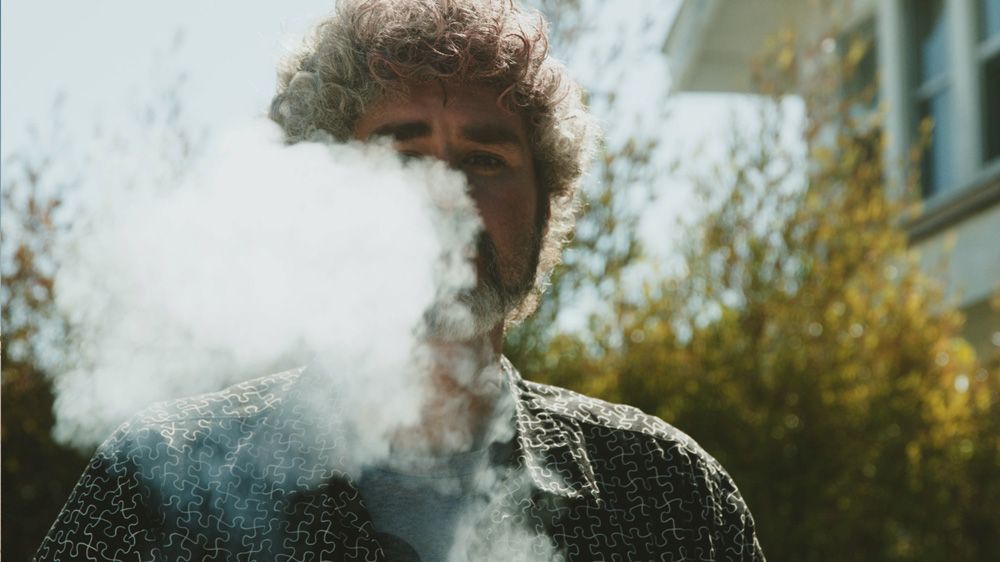
“So this story is obviously really close to me. It’s about my brother and my family. I knew for a long time that is story should be told, not only because its unique and powerful, but because these issues are very pertinent at the moment: homelessness, drug addiction, mental health. I knew that it’s a great story and I knew it should be told, but I was initially reluctant because I didn’t want to get too close to the fire, it was too close, and it would just hurt too much. I felt that at the time there was too much going on with my brother, it was too active of a situation and were just constantly putting out fires.”
“But in around 2019 we got to a place where my brother was doing really well, he was sober. He was in his own apartment and everything was relatively stable, so I thought that it was a good safe time to step in and start capturing the story. I also felt like I had the energy and capacity at that moment (due to some spare time because of COVID). So all the elements were lining up and I took the opportunity and started filming. Well, if you watch the film, you’ll see that my brothers situation fell apart really quickly, which threw me into the exact situation I wanted to avoid, but ultimately it made for a better film.”
“I ultimately wanted the audience to have a fly on the wall look in to our world. A world that is actually not that uncommon, unfortunately. I also wanted people to understand that when you see a homeless person on the street, you understand that there’s a whole family behind that person, there’s a whole world behind that person. They are there not because nobody cares, a lot of people care, it’s just that they’re one step out of the grasp of their family who still love them. I also wanted people who have family members or friends or whatever in this situation, to feel like they’re not alone. Sometimes you feel like you are in your own personal hell, and you feel like the rest of the world is functioning and everything’s great, and your little world is terrible. So I was hoping people would watch the film and say, “oh, that’s like my brother, that’s like my whatever” and feel like they’re not alone.”
“In terms of getting my family on board, they were willing, especially my mom, she has always wanted me to tell this story. My Dad, he just goes with the flow. I didn’t get any pushback from them at all, they were happy to be on camera. My family are unconventional people, basically everything’s out on the table, information just kind of flows through. So I think because of that, they just felt comfortable.”
“With that said, I had to do the film without a crew as even with a small crew there, it would have been a completely different film, and probably not a good one. The film is extremely intimate. They’re talking to me, they’re talking to the camera, and there’s maybe sometimes no wall between those two things at times. So it feels extremely intimate. Most of the moments wouldn’t have existed if I did it any other way, a crew on site would have altered or blunted the authenticity. So that was a challenge going in and continued to be the challenge throughout the whole film. I’m trying to capture audio and trying to capture good video, I’m also trying to interact with these people as my family where there is normal conversations going on. How do I separate myself to capture this, but also be involved? It was very difficult.”
“I do like documentary films. I’m not a big movie buff in general, documentaries is definitely where my passion lies and that’s the types of films I usually pull inspiration from. There’s a documentary called ‘Rich Hill’ that I really love and got a lot from. I am from the day and age where there were films like ‘Gummo’, that’s not a documentary but just these really kind of rough, kind of dirty, not about production quality necessarily, but about just capturing something as gritty and real as possible. The other side of me is in the corporate world, which is a complete opposite, it’s about capturing everything as beautiful as possible. So I have these dueling creative sides of me. But for this film I definitely wanted to go run and gun style and capture the story in all its rawness. This is not pretty stuff, and I wanted to show the authenticity of that. So the inspiration was what was happening right in front of me, and I didn’t want to alter it.”
“I live in the San Francisco Bay Area, my mom and dad are in Central California, and my brother lives in LA. The film was shot over a two year period of me going down to either my mom or my brother, or both, and capturing things. Because of the distance, the lack of budget, and having to fit the time in to my life, it took that long. The locations were the only challenging part because being in LA with a camera on the street, you feel vulnerable. Nothing happened fortunately, but there were definitely some uncomfortable moments when I felt in danger, or when I thought theft could occur. That’s when the Pocket 4K really came in handy, it let me fly under the radar.”
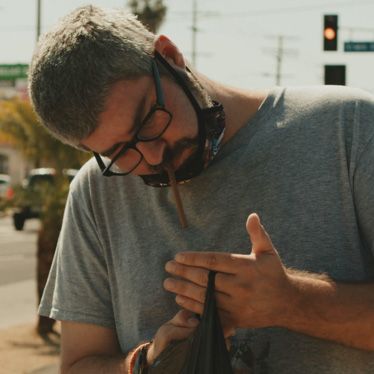
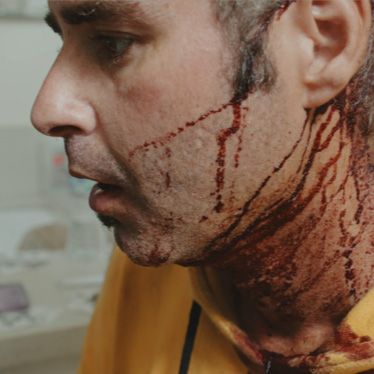
“It was all very run and gun. I used a tripod for a few of the interviews, but that’s it. The rest was as run and gun as you can get. Oftentimes I had the cameras, either a Pocket Cinema Camera 4K or the Pocket Cinema Camera 6K Pro, with a camera strap around my neck holding it out in front of me to stabilize. Or the beauty of the 6K Pro, I have the Electronic View Finder, so that helped a lot to be able to be more connected with the camera. So, it was literally as run and gun as you can get. It wasn’t ideal in any way, and I don’t conventionally shoot this way, but I wanted my rig to be as small as possible so I could always have it with me and be ready.”
“The Pocket Cinema Camera 4K was perfect for the run and gun stuff. It’s so small that I could go anywhere with it, I can go on the streets and walk around and nobody gave me any looks. In my professional world, I’ve rigged it out with all the usual bits and pieces many times and wowed many clients with this beautiful professional cinema setup. But with a battery grip or battery stuck in there and one lens, I’m capturing a documentary now. So it’s really versatile, which is fantastic. And with the Pocket Cinema Camera 6K Pro, it was the Electronic View Finder for me personally that makes it so fantastic. I grew up filming skate videos with a small ENG cameras with the eyepiece, that’s how I learned to film and it makes me feel connected to the camera. Nowadays, people are a lot more handgrip and a monitor, for me that just doesn’t feel organic. So having that EVF, I’m now part of the action and I’m completely plugged in and feel one with the camera. The 6K Pro has a list of amazing things, but the addition of that EVF was groundbreaking and changed it all for me.”
“Given that I had the camera as minimal as possible, being able to shoot in BRAW was a lifesaver. Oftentimes I was not able to pull proper white balance and had only practical light, so being able to manipulate the images in post was amazing. The highlight recovery in Resolve and the robust codec let me work with a lot more confidence. It is one of the main reasons I chose Blackmagic cameras, the BRAW codec is just beautiful and made post a lot easier.”
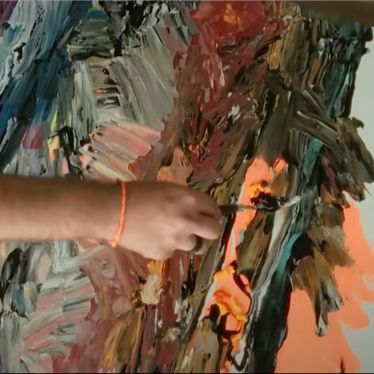
“I used Da Vinci Resolve for the whole project. I have been using DaVinci Resolve for about five years now. I fully run H2 Video on Resolve, so by the time I got to it for this film I knew it like the back of my hand. The only difference with this project compared to the corporate stuff, was there was a lot more media and had to deal with more tricky color grading situations. But it was completely seamless, I really can’t say enough good things about Resolve. I’m constantly telling everyone Resolve is the way to go, it is just so smooth and seamless, and the UI is wonderful. And when you add in BRAW, it’s really like what post production should be like. I felt like I was free to be creative again without being bogged down. Before I used Resolve, with other nonlinear editing systems, there was a lot of crashing and a lot of jumping between programs for color grading, audio, etc. All these things just get in the way, but Resolve frees you to be creative and stay immersed in the creative process.”
“As I said before, my family is very unconventional. I would imagine in most families there would be some strain caused by being on camera and exposed to the world in this way, but for my family, it really just made us closer. I spent a lot more time than I normally would with my family during filming and even though we were going through a lot of stuff, spending that much time together made us closer. It also allowed us to really kind of work through these things together as all we did was live and breathe my brother, and really get into the weeds of it all. We were able to go a little bit deeper, maybe bringing up more emotions or bringing up other things that haven’t been talked about, which ultimately can be healing. My dad still hasn’t seen the film, he’s just an unconventional guy and in his own little world. And for whatever reason, my brother loves the film, which is strange as I would imagine there would be more complex feelings about it. My mom, besides her thinking she doesn’t look good in the film physically, she is happy with it and loves the film.”
“I thoroughly enjoyed the process. Having a project of a large scope to work on as a creative, I think, just fills us with some kind of energy we don’t normally have. For me, I had a lot of pent up energy to be creative and to tell a story, something that matters, not just another YouTube video or corporate piece, but something with some meaning to it, something I can be proud of. So for me creatively, it was amazing. From an emotional stand point, it was challenging, as you would imagine. While filming I wasn’t really processing the emotions, but since then I have dealt with it in a healthy way. Through darkness comes light, I truly believe that. We muddled in the darkness for many years, and went even deeper during the 2 years creating this film, but ultimately the process has made us closer and with a clearer vision of our road ahead.”
“I am very proud of the film. I think with these types of projects you have to really look at your motivation. If the reason you’re doing it is for the million dollar paycheck or some big screening with the red carpet rolled out, you may be disappointed. I’m happy I did it, and I’m happy for the response that I’ve got. Many people have seen the film and said “wow, that’s like my brother, that’s like my cousin, that’s like my family” - that to me made everything worth it.”