Explorer - Lake of Fire
“Renan's background is definitely in climbing mountains. Once he got pulled into the National Geographic fold, both of us have kind of taken our skill set that we learned in the mountains and use it in a way that we can get into the some of these environments and show people these landscapes that they never really get a chance to see.”
“And so a lot of these projects that we work on, not every project, but a lot of the projects that require any amount of suffering, or working in kind of an extreme environment, hostile environments, I'll usually get a call from him. And I know that when I'm talking to him about a project, before I know anything about it, it's going to be simultaneously the shittiest project I've ever been on, but also an experience that not a lot of people get to experience. So I'm very grateful for it. It's a love/hate thing.”
“I think from a director standpoint, I know that when I've directed projects, I would rather have have the people that are filming for me use the gear that they're comfortable with, because that's how you're going to get the best stuff. I first got turned on to Blackmagic Design years ago, with the first Blackmagic Pocket 4k camera, I got that and started shooting some wild land fire stuff, as well as documenting a summit of Mt. Everest for a Disney project called “Lost on Everest. Since then, I just kind of stepped up to the Blackmagic Pocket Cinema 6K Pro.”
“From a lot of these expeditions, you're trying to document authentic interactions between the cast and the crew. And so you want the people filming to be just very comfortable with the camera that they have all the time. It's up, it's rolling in an instant, because it's such a dynamic environment that if you miss stuff it’s gone. And I know that when I miss stuff, I get really hard on myself. And so you just want to set yourself up for success.”
“Before any of those expeditions take off we have a rough story that we want to tell, so knowing who to focus on, what questions that I can ask to prod and probe to get the audio that we need. But again, they never go as planned. And so you're constantly adjusting and shifting and objectives sometimes don't get met and you just try and pivot and squeeze. Basically make lemonade out of the lemon, it's a very chaotic, hectic environment. I think that's what I enjoy about it is that you have this plan that never goes as you want it to, so you have to figure it out. It's fun.”
“The logistics and the pre production that goes into those kinds of projects are outlandish, on a scale that I can't really even comprehend. I'm not involved in any of the pre production, thank God, I'm more of the person that you go to when you want to get the shot that's incredibly difficult to get. So I'm fortunate enough to step back from that process, I roll into an expedition that's already planned and ready to go essentially. Oftentimes, it never goes as planned, so I'm there to just kind of see the plan and then when it changes, react and redirect.”
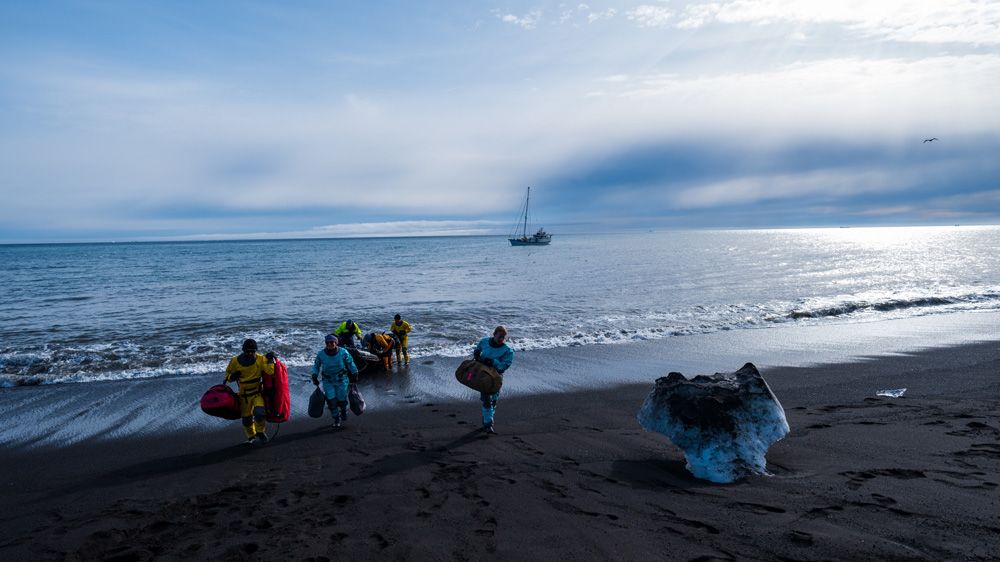
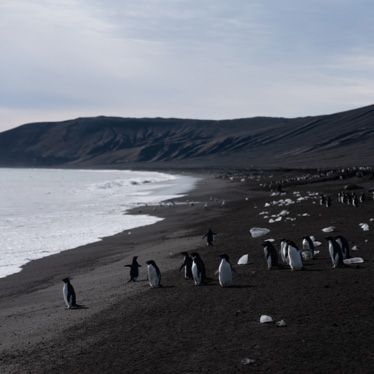
“I've never filmed in a more difficult environment than on Saunders Island. The bad weather was just consistent. One of the biggest issues was the winds and rime ice accumulating on the camera. Every time I would wipe the lens, within five seconds it was coated in ice. So it was this constant struggle of keeping the camera alive and trying to get the shots.”
“The camera has never failed me. The only issue I’ve ever had was up at 26,000 feet at camp 4 on Mt. Everest. An ND filter stopped halfway through the sensor so I had this black bar running through the image. I just put some heat packs on it and after about 30 minutes it was able to fix itself. I was surprised that It lasted as long as it did given the conditions."
When it comes to lenses for all my personal projects, I have a set of Leica primes that I like to use, just some old 80s Leica R's, that I think have a really interesting look. When I get on different projects, I don't use my own personal gear. We generally rent gear, like the Blackmagic Pocket 6K Pro, and then we'll rent a set of lenses, depending on the budget, we'll either use Fujion, Leica M, or even down to the Canon zoom lenses, it's kind of whatever the project allows. Not every project has climbing involved so I don't want to be carrying a huge pack. And so I try and minimize by using zooms, anything with an EF mount I think will works great.”
"I'm pretty comfortable in the mountains, there was an added element of the noxious gas at the top of the volcano. And so you're trying to kind of ride this edge of safety, what your body can handle while we were wearing masks. So ideally, you're fine if you were in that but at any point those could kind of malfunction and then you just have to get down as fast as possible.”
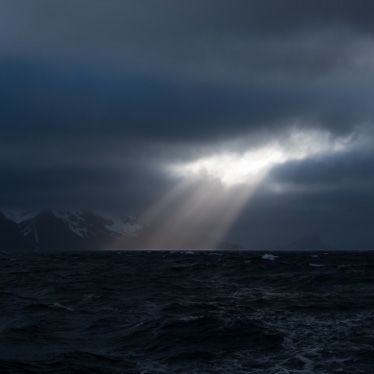
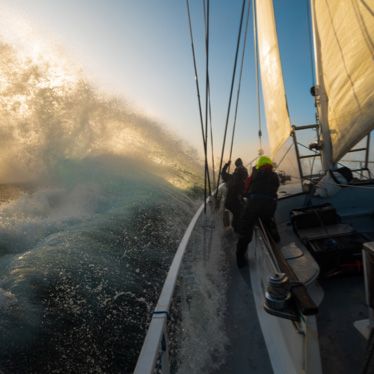
“We sailed through the drake passage to get there and it was a mess. Everybody got sick on the boat, all the scientists got sick. The camera crew was mostly good, I never threw up but I just kind of felt like I was on the cusp the entire time. So you know, you're not sick, but you're just thinking about it the entire time.
“The biggest difficulty for the whole shoot was getting off the island. To be honest the ocean is not my jam! I've spent a lot of time in the mountains, but when it comes to the ocean, that's a new thing for me. And when we got onto the island, we were able to anchor the boat, a ways off from the break and then take the Zodiac to shore then shuttled back and forth for gear and the rest of the crew. They got the Zodiac onto the shore then immediately have to spin it around, otherwise the waves that come in and tip it over, it was chaos."
“To get off the island we had to swim because the Zodiac couldn't get to shore, I can't even begin to explain how messed up this was. The Zodiac couldn't get to shore, but it could come and anchor out side of the break, but quite a ways off. They got a line to shore that we would then ferry luggage back and forth, we had a bunch of dry bags that we put the gear in and to get those to the boat it took all day and night. It was such a really long process. So by the time we were leaving, the waves were breaking substantially higher. There was three of us left on the beach and none of us had headlamps because we're dumb. All we could see was the Zodiac which had a big spotlight on it. We have to go into the ocean and it was terrifying.”
“So we radioed in and said we were coming in. It was pitch black, you just go in and immediately you're getting hammered. Because it was dark we could not get the timing right of the next set, so we just had to keep going and keep getting hammered. So you just go and you just get beat down and thank God nobody died or got injured.
“I think it's probably better that I just didn't know it was really dangerous, because I often find myself in situations where it's like, ‘alright, well I guess this is the only way and this is what we have to do.' I want to say that it was kind of getting into a situation that is typical on expeditions that I do, but not when it comes to the ocean. Adding the ocean element to it really kind of made it so I didn't fully understand what was going on.”
“I think I've now used Blackmagic cameras in every type of hostile environment you can imagine. Situations like filming wildfires where there is dirt, dust, and intense heat, then when you go to the islands where we were at, it's raining, it's snowing, it's freezing temperatures and at altitude. I think the user interface is very intuitive. You open other cameras and it's like you're just reading gibberish and you cant understand anything. And maybe the Blackmagic cameras don't have as many little quirks and bells and whistles but that's awesome. I don't give a shit about all this other stuff, because all I want is a camera that works in whatever environment I work in."