ESPN NBA Countdown
"We could do just about anything to showcase the team names, so it was a matter of building that into a great story. What ESPN wanted from us was to create a toolkit for the show, which uses a lot of visual elements from the season. They then use all of our footage as openers, rollouts, teasers, in-commercial and out-of-commercial type applications."
"Our role in all of this was to concept, edit, shoot and produce it, with ESPN doing all of the various edits for the promos. Each week they would then edit our footage into something to do with the teams that were playing in that week; so it becomes very specific in how the footage is used."
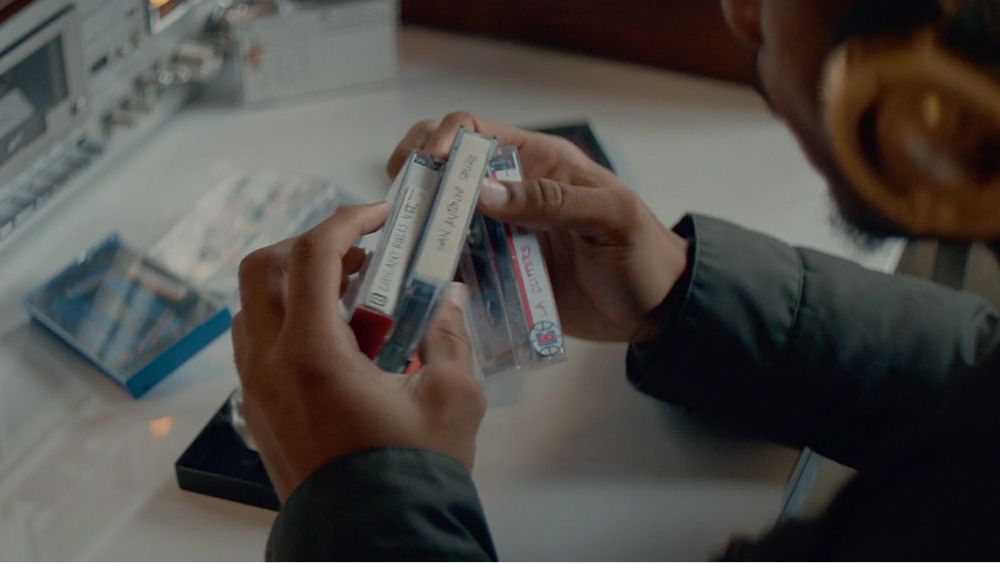
"Once we knew the shoot was actually going ahead, we asked everyone we knew if they had any old mix tapes we could use, before finally looking through thrift stores. Tapes were easy to get and very cheap too, but they were almost always white and boring looking. At one thrift store we hit the jackpot, where they had bunch of colored ones in really cool cases, so we amassed something like two hundred tapes or so by the end."
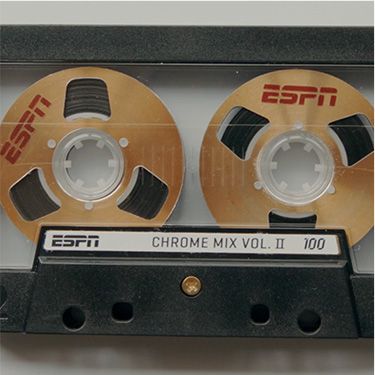
"We ended up with all of these different shades of blue and red tapes, and actually order some custom gold tapes from Japan. The gold tapes were actually dipped in 24crt gold to give it that amazing look. The funny thing was, that its not nearly as expensive as it first sounds! Turns out the Japanese are right into mix tapes for some reason, so they do this sort of thing all of the time."
"Our original plan with the mixtapes was to have the same type of tape, and then using a printing company, just print off a bunch of interesting stickers for the tapes. The idea was to have the same shape tape and then have all of these different stickers printed for us."
"Once we started selecting the tapes we wanted, we soon realized none of them were the same shape or size. Meaning every sticker was going to need to be custom designed and then cut out! In the end, we had to purchase a professional die cutting machine to do all of the different shapes for us. We made everything you see on the tapes, such as the little basketball logos and all of the team stickers. Everyone of them was designed to fit each tape exactly."
"In the end, there was about 400 hours work in this. It was such a complicated process having to pick out all of the negative spaces between the letters and logos. The learning curve was huge on this project in order to get these things to look right."
"At the same time, we had a friend come and stay at our house, so we we asked him to take a couple of the original stickers off the old mix tapes. Some of these tapes were from the 1970s, so the stickers were hanging on forever. In the end, he must have spent two whole days doing nothing but sticker removing! At last count, we created around 45 tapes, so it was a huge effort."
"ESPN were just blown away by these things. As soon as they realized we could custom make our own mix tapes, they had us doing them for DJ Premier and their sponsors, like Straight Talk Wireless and Mountain Dew."
"I don’t think any of us knew that there was this whole world out there of old 1970s and 80s mix tape designs, so once everyone knew how cool they could look, we were being asked to make them just for fun. I think we definitely became more detailed on this side of the project than what was really necessary!"
“We had a heap of fun sourcing old boom-boxes and front loading tapes decks from thrift stores and ebay for this piece as well. What we hadn’t counted on was how much a boom-box was going for – some selling for thousands! Because some of these things actually had to work, sourcing good ones for a reasonable price wasn’t easy.”“For the boom box setup, it didn’t matter if they worked, so we could get anything from Craigslist or from thrift stores, so long as it looked ok. All of these things are still in our loft, so we will have sell them off or give them away at some stage. In fact, our whole house, including our two car garage, and two storage units, are always full of props from the shoots we do!"
"This was also and intensive project in terms of cast, because there were so many people in it. However, we did get some lucky breaks early on. The break dancing crew, ironically came to us through our first AD, who was one of the leaders of that particular dance crew."
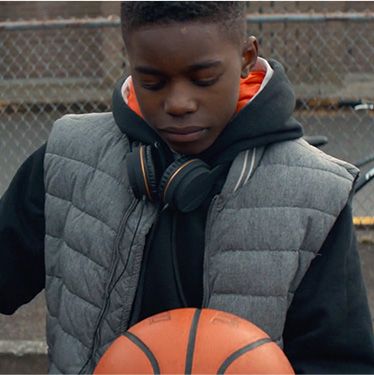
"Breakdancing is a huge community here in Seattle, so there were plenty of options for us. Jessica, who is the DJ in this film, is also part of another crew here in town, so finding the dancers was fairly simple. The kids playing basketball were more difficult though. We got in touch with the A Plus youth basketball foundation, who setup that part of the casting for us."
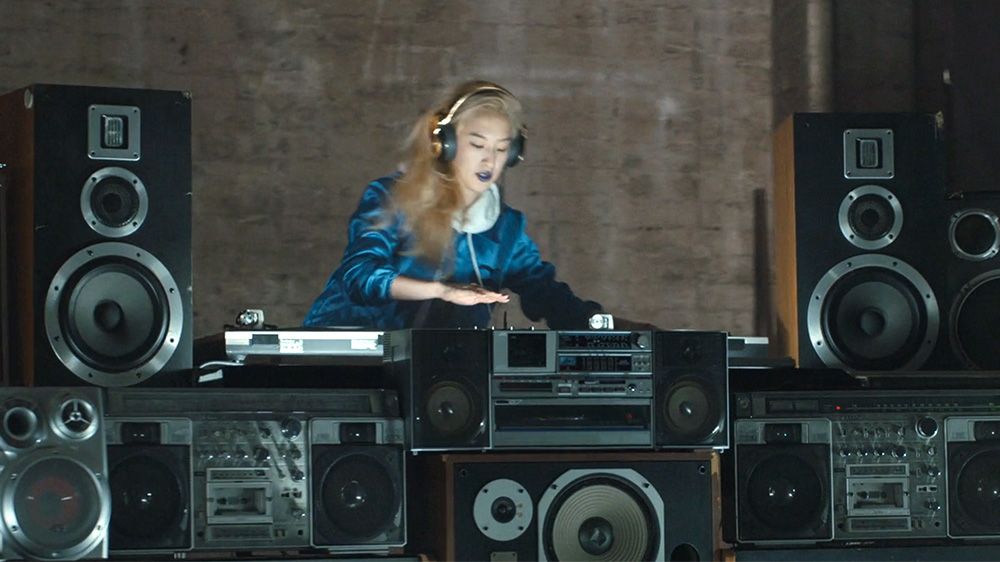
"The locations were also full on. For example, we scouted over 21 basketball courts because we were looking for something specific, that felt older but still looked nice. We also found this hundred year old warehouse in the center of Seattle, that was being used as a parking garage for a construction company. This location made the perfect space where we could build the boom-box set."
"We also wanted a residential cul-de-sac, where the kids could raise a basketball hoop. Again, we had to scout a ton of neighborhoods. The family who own the house on the left (the green one) in the final scene, we actually became really good friends with in the end. In fact, we hung out with them for New Years. So out of that location scout, we also got new friends as well!"
"This was a super fun project to shoot. It was also the first time we had shot with true anamorphic lenses - and we just fell in love with them. For us, it was all about accentuating what those lenses do best. When shooting into light, they give you some really cool things back, like these wonderful layers and reflections."
"We have always shot using an anamorphic format, but this was the first time we had captured in anamorphic and worked through the whole anamorphic workflow. That first night we viewed the footage in the VLC player, we both turned to each other and said, ‘we’re never shooting on anything else again!’. It was like being a kid in a candy store, having all of these wonderful lenses to work with. The 3 dimensionality of the lenses, just makes the human face look so damn good. It really is hard to explain how much better things look."
"One of the things I loved so much about the lenses was on the close ups, where they stayed really sharp. You can see this on the close up of the front loading tape deck, where the backlight VU is super clear. We also used diopters because the minimum focal distance was 3ft. With these things you could come in a lot closer and amazingly still hold focus."
"We also worked with Freefly again on this shoot, using their MoVI system which gave use some really dynamic shots. There is this super cool 15sec long take of Noah in the middle of the dancing scene, that is just another incredible MoVI shot!"
"We had three Alexa cameras on this particular shoot. One we shot hand held with the anamorphic lenses, with another on the MoVI and the third on a Freefly Terro remote controlled car. So it was really nice to be working with that size of crew, and have multiple cameras, with multiple ways of being able to capture everything we wanted."
"What ESPN were looking for from this shoot, was something that looked very visual and cool. Whereas for us, it was more like an art project where we were happy to invest something of ourselves into the shoot, in terms of hiring more cameras and days shooting. This project turned out to be a unique situation, where we could creatively play a lot more with the production."
"Because this piece is our director’s cut, we didn’t have a budget allocated for sound design or colorgrading, so we did this one entirely ourselves. We only had a sound recordist for the day we shot the kids indoors playing basketball. So all of the other sounds, we made ourselves."
"With sound design, one of the things we like to do is include sounds that you can feel. What we wanted, is for the audience to feel a sound as apposed to just hearing the sound. For example, when the DJ walks in, or the tapes are going into the decks, we have these very deep helicopter sounds and earthquake rumblings. And when the tape deck is closed, you should feel that moment not just hear it. There was a lot of base-layer stuff that was added so those feeling moments come through as well."
"This was also the first project we had colorgraded ourselves. We are used to going to a coloring house and using a colorist to achieve what we want. But in that situation, you are having to go through someone else’s brain to achieve the look you want."
"We knew nothing about DaVinci so we just watched as many how-to-videos as we could. We have had a lot of our worked graded in the past, so we of course knew the fundamentals. And because this was our director’s cut, we were more than happy to play around with things a bit."
"Once we were playing with the curves in DaVinc, it was just amazing! We knew how to use curves in Photoshop, so being able to jump easily across into DaVinci and having a 32bit float for the highest resolution color depth, was just truly incredible. Not having to worry about blowing out the image in just a few adjustments, meant that I could just soak into the whole thing. It was so much fun!"
"The benefit of doing so much of this stuff yourself, is you become better at communicating. When you know colorgrading and sound design, you can explain what you are going for, which is an important capability for any director. For us this project was more than just a shoot, it was an other opportunity to try different techniques as well."