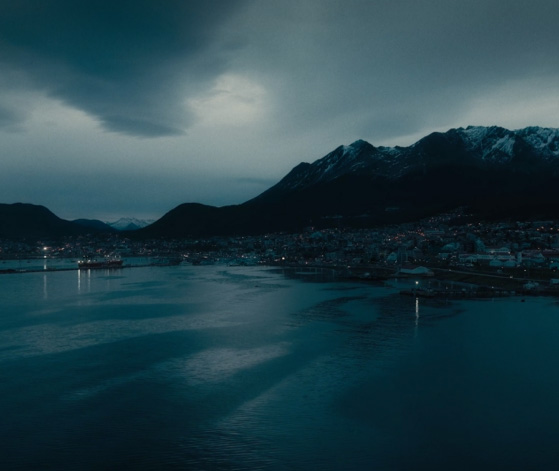
End of the World
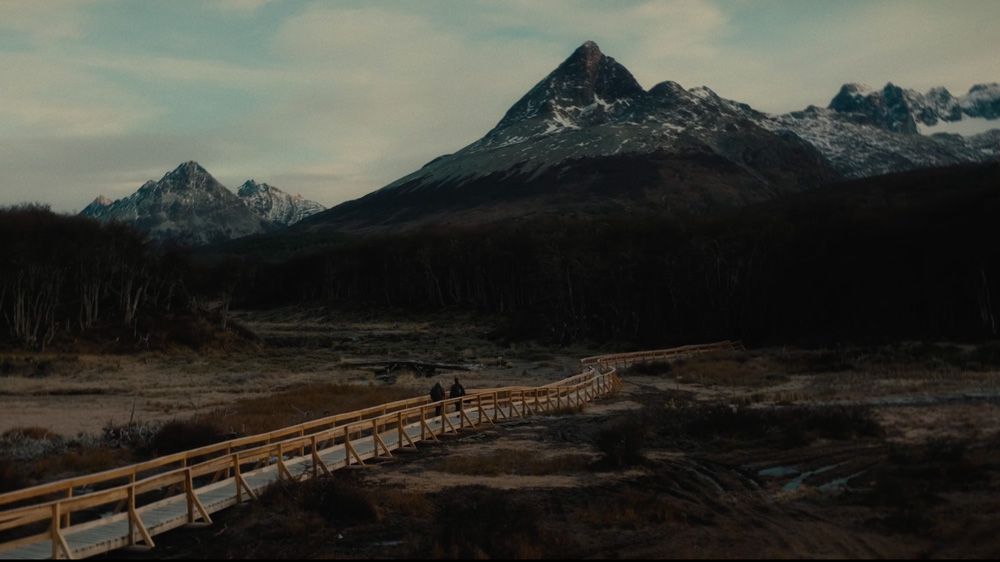
“Tierra del Fuego means the land of fire. When the Portuguese first arrived here in 1520, they could see the indigenous Yaghan carrying fire within their kayaks as they travelled between the islands. Everyone seems to have tried to colonize this part of the Americas, from the English to the Chileans and Argentineans. And so, it has this incredibly rich history that I just love. It is so remote. It feels like the end of the world to me.”
“That was the vibe I was going for here, was how to show the remoteness of the landscape. This place is something to behold in winter. Fully covered in snow, the landscape takes on this mystical quality. Coming here outside of the snow season, you see an entirely different world. Dappled in soft light with sunrises and sunsets that have become legendary with landscape photographers.”
“I have shot a number of projects for the Argentinean Tourism Board before, and so they were wanting a short film that would showcase the main tourist attractions around Ushuaia. They also needed social media content for these sorts of projects, and so a friend of mine took care of the socials content while I shot the main footage.”
“As a cinematographer, the first thing you notice about Tierra del Fuego is the soft gentle light that is a feature of being this far south. The one thing I wanted to capture with this film is a sense of the subdued light here. I could have featured the amazing sunsets and sunrises they have, but that’s not a true reflection of the lightscape. I wanted to make it look more surreal.”
“I love this sort of landscape and the light here really helps my shooting style. Shooting here feels much easier for me. I remember texting my partner who is a photographer, and saying ‘look at the position of the sun. This is our kind of place!’.”
“As we were landing at Ushuaia from Buenos Aires, the sky was aflame with the most beautiful sunrise. Unfortunately my camera gear was all packed away and so I missed it. And so when I arrived at our first scheduled location at 8.30am, the light had changed to something altogether different. It was very subdued. The sort of light you would expect in the Arctic Circle; soft with a greyish pink quality to the sky.”
“Disappointed at having missed the sunrise, I now started to think about the light I had to work with, and the way that would inform the color narrative for this project. It was at this point, I made the decision to keep the whole project low key with an almost ‘dreamlike’ feel. As if you were in some sort of surreal place.”
“When I started the edit, my plan was to keep the project short at under a minute. Because of the subdued nature of the shots, I thought that was probably the longest this piece should be. But after laying down the sound track, the whole project took on a life of its own that was completely unexpected. The more I worked the edit, the longer it became.”
“The first location we arrived at was the harbor of Ushuaia on the Beagle Channel. The plan was to head out on a whale watching tourist boat and shoot some drone footage of the whales. As we were leaving the Port of Ushuaia, you could see the fishing fleet had just returned. And so I really wanted these shots to feel like we were aboard a fishing vessel rather than a tourist boat.”
“The first scene I was playing with was of the first mate in his wet weather gear, but that shot didn’t make the cut in the end. What I settled on was the scene showing part of the skipper’s wheelhouse with Martial Mountains in the background. The sun was super low in the sky backlighting the mountains in the distance.”
“And so for this shot I used my Blackmagic Pocket Cinema Camera 6K Pro at ISO 800. Because I was shooting on a Vespid 25mm cine prime at T 2.1, I had to use more stops of ND to get the right exposure. My technique throughout this project was to shoot wide open, and where I needed to protect my highlights, I would shoot at a higher ISO with more stops of neutral density filtering. Where I wasn’t having to protect my highlights then I could comfortably shoot at native ISO 400 with only a couple of stops, or no ND at all.This is where shooting in Blackmagic RAW on the BMPCC 6K gives you so much latitude, because it delivers such clean highlights and beautiful blacks.”
“One of the locations Argentina Turismo wanted to highlight was the End of the World Train. It’s the southern most railway in the world. Originally the railway was a prisoner train in the 19th century, but now it’s a luxury tourist train that takes you through the beautiful Pico Valley and Toro Gorge, which are surrounded by incredible woodlands.”
“Because we were shooting for the tourism board, we had permission to film whatever we wanted. But the train still had to run to its timetable of course! So when we came to shooting the stationmaster, I had to wait until all of the passengers had climbed aboard. And then, we had only three minutes to shoot before I had to jump on the train myself.”
“The stationmaster was like having a very good actor. He was very stylish in the way he was dressed. But I had to work quickly around him, as it was between 4pm-5pm and the sun was setting fast at this time. Again, the light is super low at this time of day.”
“I had this formula in my head on how to position him to the train and direction of the sunlight. I needed to create depth to the shot, while having the last of the daylight wrapping around his face. And because I didn’t have a bounce for fill, I had to work quickly moving around him to get the right lighting. In situations like this, working handheld with a BMPCC 6K rig like mine, is very important because you have to be incredibly fast in getting your shot.”
“I was super happy with this scene as it has a really nice three dimensional feel to the framing. I also shot it on my 25mm Visped cine prime at T 2.1 at 25fps. I had no time to change lenses, so I wanted something with a wide angle that was fast enough for the available light. The light was perfect, so I could easily shoot at 400 ISO at Q5 using Blackmagic RAW.”
“I also shot some great footage of the train with my drone. But we had been on a massive hike just before jumping on the train, and I had already shot a lot of drone footage by then. I didn’t have time to recharge the drone batteries, so I had to make a calculated decision as to whether to fly the drone over the train.”
“As things often work out, my calculations were completely wrong and I was soon in trouble with the drone, which was now down to 10% battery life. I was getting desperate as I had only one drone with me on this project and we still had plenty of aerial shots to shoot. I was starting to panic, working out how I could fly the drone to the train window and to attempt to bring it inside. But the Windows were small and the carriage was full of passengers.”
“The whole drama soon became the main attraction for the passengers that day. In the end, I didn’t think I was a good enough pilot for such a precise landing, and so I had no choice but to try and race the train to the next station.”
“The whole train became distracted with whether my drone would, or wouldn’t, make it. Or if it was to be lost forever to the forests we are travelling through and the many streams we crossed. As the station came into sight, the drone was beeping madly. I pulled the stick and tried to push it as far as it would go. In the end, it fell short of the station, but fortunately survived undamaged. It was ‘a show’ of drone piloting I had not planned on. After such a big day, I have to admit my nerves were shattered that night!”
“Another of the spectacular locations we went to is the famous Emerald Lake. We went there a couple of times, shooting from a helicopter and then to shoot drone footage from the peak. However, the most intense journey to this location was an 8 hour day of hiking and shooting up the mountain trail. We set off at 8am, so it was about midday when we arrived at the volcano’s edge. There is one scene where I shot my friend who was creating the socials content for the Argentina Turismo. It was great having him with me on this shoot as he would help with lens changes and sorting out the batteries etc. And then for this scene, he was also my talent. So he was doubly important!”
“It was a lot brighter being high up on the side of the volcano. But at this latitude, the sun is still very low and soft, with so much of the direct sunlight hidden behind the volcano’s rim. So the light was more ambient than being direct, which allowed me more control using my ND filters”
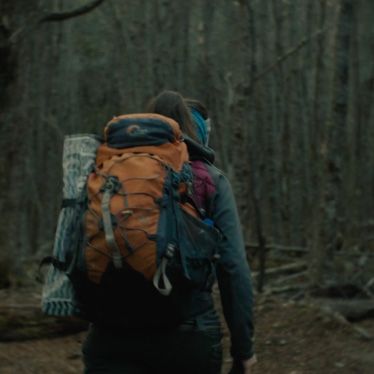
“I wanted this shot to be incredibly subdued, where my friend becomes part of the landscape. Not the usual ‘conquering the mountain’ type of hero shot, where the person is the main focus. I wanted the human and natural aspect to be equal. And that was achieved by working with the light that I had available to me.”
“When you are shooting with only available light, you have to keep it simple. It’s up to me to find the perfect position that provides the best backlight to help with modelling his face. It is only when I shoot with this very paired back approach, that I enjoyed these types of shots.”
“I shot this scene again, using the Vespid 25mm cine prime at T 2.1 with the BMPCC 6K set to ISO 800. Because I still had this very bright sky, I wanted to protect my highlights by using more stops of ND. Sometimes I will use 650 ISO as a compromise, because 650 is equal to the same number of stops as native ISO 400. But I will only do this with shots where I need to protect the highlights of course.”
“While we were on the trail up to the Emerald Lake I was shooting footage of our guide walking through the mud. Honestly, my best memory of this hike was putting one muddy foot in front of the other! For the whole day we were hiking the mountain trail, I had to carry all of the gear we needed for such a hike, plus my BMPCC 6K, batteries, rig, cine primes and a drone. So it’s a lot to carry yourself, when you are doing these types of shoots into remote places, without a crew.”
“When you are going to all of this effort to shoot somewhere as spectacular as Terra del Fuego, lenses are a really important decision. This was not something I wanted to shoot on my Lieca photo lenses. I wanted the look that only cine primes can give you.”
“And so the decision about which camera will work best with those lenses is equally important. This is where I find the BMPCC 6K shooting in Blackmagic RAW is incredible. It really is the perfect camera for this sort of project where you need a portable setup that will shoot beautiful cinematic footage. I find this camera gives your work that ‘big-crew commercial look’ without needing to have a crew at all! With this setup, I could work paired back, shooting 100% handheld for the whole project.”
“I like working handheld like this, as there is no right or wrong way to rig the camera. You can build it out, or strip it back to just the camera with a cine prime, depending on the scene you are shooting. I find that sort of flexibility ‘creatively-enabling’. I can do things now that I couldn’t do with my other cinema cameras.”
“I genuinely feel the footage looks like it was shot at the end of the world. I think if you were to visit Ushuaia, you would feel that I captured the essence of the place. That this is a true reflection of the light and the land down there. I can’t wait to go back and shoot another project. This time in the depths of winter, when it is completely covered in white snow.”