Crossfire
"When you’re crafting stories, the essence of crafting it, the journey itself is part of the crafting process and you are unbeknownst to certain elements of the film initially that come out through the haul and it reveals itself to you. It’s not like you wake up one night and you have the film start to finish. It takes months, even now. Even now, if you were to ask me to go back to Crossfire and rework some things, I would rework things and it could keep growing. But you must pull the pin at one point where you’re like, ‘Okay, I need to release this out to the world. I need to work on the next project.’ So, I can’t give a very linear answer to how the story came about because initially it came about as toying with an unstructured narrative."
"When I first heard Alper talking about it, I immediately thought about Kubrick’s The Killing. But I didn’t want it to be like The Killing - I didn’t want it to be centred around a certain, how can I say, ‘event’. I wanted it to be centred around a mood, a feeling, ideas & themes. I wanted the film to not be gravitating around a event, but around a psychological dread & these waves of different ideas ebbing & flowing against each other - pulling all the characters into its ripple and wake. That’s how I initially viewed it, it was an opportunity to do something different. However when I thought of The Killing, immediately you get sweaty palms, because you have minimal real estate in a short film, so the challenge itself looms over the project as ‘this might work or it might fail’ – that kind of internal inertia & dichotomy feels essential for a filmmaker. But yes, initially it was questioning narrative conventions and then of course it grew. It became more about man’s association with self-destruction and violence, and if it didn’t I probably wouldn’t have made it."
"I honestly think cinema should purely be deconstructing social issues & realities and less about trying to solve them. It should be a very stark and dark mirror that’s reflected to the audience that watches it. Cinema is a heightened version of reality. And when I say heightened I don’t mean hyperbole in the sense where it’s theatrical. I’m talking about, as a filmmaker you’re exploring the starkest examples of the human condition and in lieu of that, you’re trying to extrapolate the foundational elements within the human condition as a collective. And for me when I was making this film, it wasn’t to solve the idea of domestic violence. I don’t think you can. That’s the thing, I don’t think you can because society will continue to be operate as it has been for the last millennia. There are serious human tragedies like violence in general, violence against women, wars, racism, discrimination etc. that it feels that we cannot overcome, that have been ingrained in societal trends throughout history – which is a disappointing shroud following my mind as human being everyday unfortunately. When you approach stories, you don’t want to approach it with a utopian wand, as an artist your one true role is to be relentless to your audience & make them feel uneasy if the realities your exploring are uneasy. As Tarkovsky said ‘Art is born out of an ill-designed world.’ You want to approach how in this scenario, the circular & perpetual nature of violence, cascading itself throughout the film - ricocheting off all the different characters, is without resolution. Life is mostly never resolved. Yet as human beings, we build internal psychological interpretations & mechanisms to cope & be the architect of our personal resolutions. Like how the experience of films should operate for an audience, everyone is building their own personal resolution."
"I had several influences with this film, subconsciously and consciously. I say subconsciously because after you watch the film in post-production north of a thousand times you’re like, ’Oh yeah, that’s where I’ve made that decision’. In fact, over the weekend I was watching Fritz Lang’s ‘The Big Heat’ - just the way he makes the camera move! I was like you know what, I hadn’t seen The Big Heat before but I’ve seen many of Lang’s other films - I can definitely see part of my style being associated with Fritz Lang even though I hadn’t seen a Fritz Lang film for a quiet some time. But it’s just a reminder that throughout your life & the amount of films that you consume, in a certain way, it makes a certain subconscious impact on you. It’s less about immediate conscious influence, and more about the depth of your cinematic vocabulary these predecessors have helped influence. I could still see elements of how he approaches camera work which is how I approach movement in my films. So, it was interesting – sometimes the more you trawl into the past, you start recognizing choices in your own films & their origins stories. That’s what the subconscious influences are I guess."
"However, consciously there were certain shots that I took from Bergman, specifically The Hour of the Wolf. There are certain shots I took from Scorsese in Raging Bull when he racks the frame rate up from 24 to 36 frames per second. It’s not really slow-motion, but it induces this brooding subconscious tension - where the audience can feel that there is something not quite right with the image. There’s something tense about it. It’s just dragging out that piece of time, just a tiny bit longer like you’re over analysing a certain event. Just like Jake LaMotta was over analysing elements of his wife’s behaviour which were all in 36 frames per second. The genius of Scorsese, I’ll be forever riding his coattails. There are also many others. Wong-Kar Wai, there’s a shot that references his work in there as well. Michael Haneke, as well specifically Caché."
"There is a ‘Shining’ shot & a ‘Touch of an Evil’ shot. Again, I don’t know how to put it. Even with Paul Thomas Anderson - you see his first few of films, he’s referencing all the filmmakers that he reveres, from; Kalatosov’s I Am Cuba to Scorsese’s Casino to Altman’s Nashville to whomever else. I think you get to a certain maturity as an artist as well where you start to rely on yourself later in your career – coming into your own, but I probably haven’t got to that stage yet because I’m still really enamoured by the world that I’ve come to love throughout my whole cinematic upbringing. But regardless, all artwork is influenced by what preceded it. So it’s not too harsh of a crime to honour your influences!"
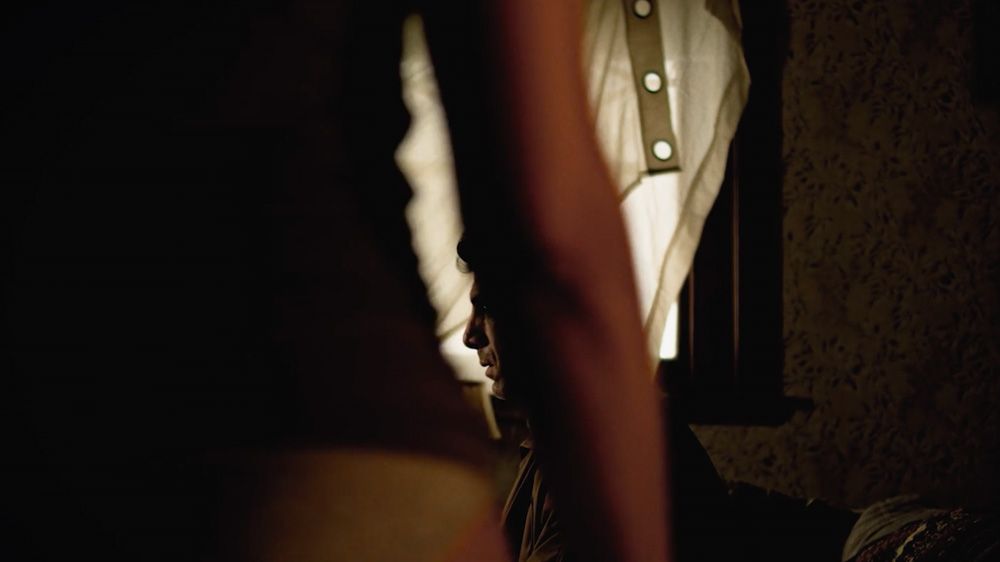
"We shot on the RED SCARLET-W with Zeiss Milvus lenses. Predominantly, I like the viewer to see through a 35mm focal length with a Super35 sensor – there were scenes where we didn’t stick to 35mm, yet it was scarce. The RED SCARLET-W is a great camera but at the end of the day, the camera is just a tool. You can shoot a film on any camera these days. It’s the tapestry of lens choices, lighting, framing, blocking & movement that adds volume into the image & helps service the triple narrative. We used a few additional lights to add to the available light. We used a bounce where we could. Inside the house it was mainly about diffusing the bounce of the natural light outside. So, we had natural light outside bouncing in and then effectively diffusing that with, as you probably saw, the curtains of the house that were there to help diffuse but also serve the production design."
"Alper and I, where very much in sync throughout the whole journey through post-production. The editing process is interesting because it’s a storyline that you can cut in many different ways and as you’ve seen, the way that we’ve cut it is not a conventional way of cutting it. There was a moment in the editing process where I realised I wanted to ask the philosophical question around Chekhov’s storytelling principles around the ‘gun’ and if it must be applied for a story to work, tying it back to the idea of chronology, where does a story start – where does it finish, does it matter? So even that was me embracing the creative journey in post which influenced the final edit."
"We did try a few alternative cuts but at the end of the day when we landed on this cut – both me & Alper felt content as it best represented the ideas in our film. I personally like editing a film myself. When I think about people in the industry who shoot a film and then have an editor autonomously edit it, I’m like, ‘It defeats the purpose!’ The editing process is one of the main voices you can give to a film. It’s such a unique experience, moulding the film & shaping it. I’m in the Kubrick school of thought, where you edit it yourself and have few minds in a room to bounce off. But definitely be there for the end-to-end process."
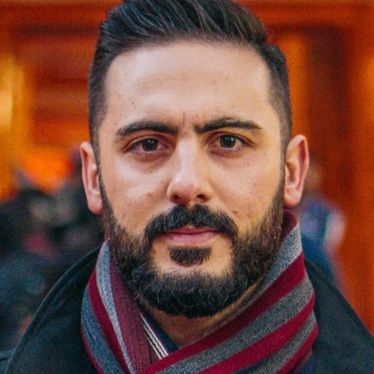
"One of my most profound experiences on this film is working on the score with our composer Robert J. Sedky. From being influenced by Penderecki strings coupled with caffeine fuelled scoring sessions – it was the one treasured experience that I had never experienced before working with a talented composer & musician for a film score, shaping the voice of it."
"We tested the sound-mix, colour & score for the final DCP with the generous team at IMAX Melbourne in order to create final adjustments before we submit to the festival circuit. I think that experience itself was just profound, watching your film & taking notes for mastering in the biggest theatre in world, with the best sound system – I’m just extremely grateful that we were given the opportunity to do that. It might even be the first independent short film semi-mastered in IMAX"
"I enjoyed the process of making ‘Crossfire’. Initially, you’re deeply passionate about something in your own psyche and then you start filming but you have a thousand questions coming your way from all angles. It’s interesting for me because I hadn’t worked like that before. The way I’d work before was very intimate, minimal crews, three to four people at maximum – so this was something new. To go from that, to having about 15 or so people coming at me with questions from all angles, it’s something that you need to get used to & confront. I internally started to map out all my decision-making choices in advance, it’s like a chess tournament. You need to know all your moves & realistic options before any question that could come your way. So, it was interesting kind of running into that – but I’ll take that learning curve forward for any future project. It’s something that ultimately all filmmakers will experience at some point"
"But at the end of the day, filmmaking is such a unique pressure cooker of an experience, you really have to enjoy it. You have to enjoy what you’re doing. For me, it was the most testing days of my life on this film, but as soon as it finishes it’s also something that you love. It’s the most challenging period of your life but also at the same time, it’s one of the things that you embrace, and love and cherish forever. There’s nothing quite like it, there really is nothing quite like it."