Antarctica
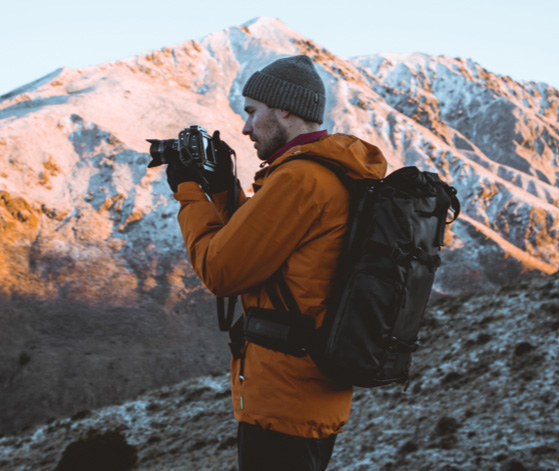
“At some point, a photographer friend of mine based in Sydney wanted to chat to me about filmmaking. We were talking about teaming up for a job in the Outback of Australia, when all of a sudden, he mentions this job he is planning to be do in Antarctica. He was heading off to take stills for a cruise expedition company. I then said, if they want any video work done, I will do it for free.”
“A week later Matt Horspool called me to say, they had just commissioned a brand new ship and so they were interested in having a stills and video team document the expedition. And so all up, the trip was for a total of three weeks. My brief was a little different to what I had been expecting, which was naturally to document all of the wonders Antarctica and the Souther Ocean. Instead, my brief was document the passenger-reactions to the trip. The look on their faces, basically!”
“In other words, if the passengers on the Zodiac were to see a whale, my brief was to document their expressions of wonderment, but not to document the whale itself. I had to document the experiences of the passengers, but not what they were seeing. The upside to the trip, was that in my own time I could shoot what truely impressed me. In the end, I shot more than 1200 files of the passengers and around 800 files of what I got to experience.”
“All of this happened during the initial outbreak of Covid 19. And so the trip was on and off again - a few times. When I finally got the call to say we were going, I had only a few days to prepare before flying from Sydney, Australia to Santiago, then onto Buenos Aires and finally, Ushuaia in Tierra del Fuego. Remembering that I could only travel with 32 kilos (70 pounds) of luggage, which had to include my tripod, gimbal, shoulder rig, monitor, Blackmagic Pocket Cinema Camera 6K, a photo camera and EF zoom lenses. And then added to that, file storage and of course my own clothing and hiking boots.”
“I took the most minimal kit I could, trusting that nothing would fail on me as I had no back ups whatsoever. When you are under weight constraints like I was, I had to make some serious compromises on how to manage the data demands for such a project. Not only did I have to travel light on batteries to run my BMPCC 6K and Canon photo camera. The biggest compromise was data storage and my chosen recording format. In a perfect world, I would have shot Blackmagic RAW given all of the extra benefits RAW gives in an environment such as the South Pole.”
“But sadly, I couldn’t carry enough storage to even shoot the whole trip in ProRes 422. I did start shooting in this format and suddenly realized I would be out of storage before the expedition had ended. In the end I took a gamble and shot mostly in ProRes 422 LT. I was very concerned, that shooting at such high compression would make some of my footage useless. Particularly where you have waves and water moving around icebergs. I was expecting some of those shots would be a failure due to artefacts.”
“I was relieved the dynamic range of the BMPCC 6K seemed to be able to handle recording to ProRes 422 LT without any issues here. When I was first seeing the results, I put it down to the subdued light we had in Antarctica. Because there were no shadows in this environment, all the footage came out clean and sharp. The irony for me is that when I am doing camera tests in my garden for my YouTube channel, I will shoot ProRes 422 HQ. And here I was on the trip of a lifetime, never to be repeated and doing a professional shoot. And what was I shooting on? ProRes 422 LT! Who would have thought that.”
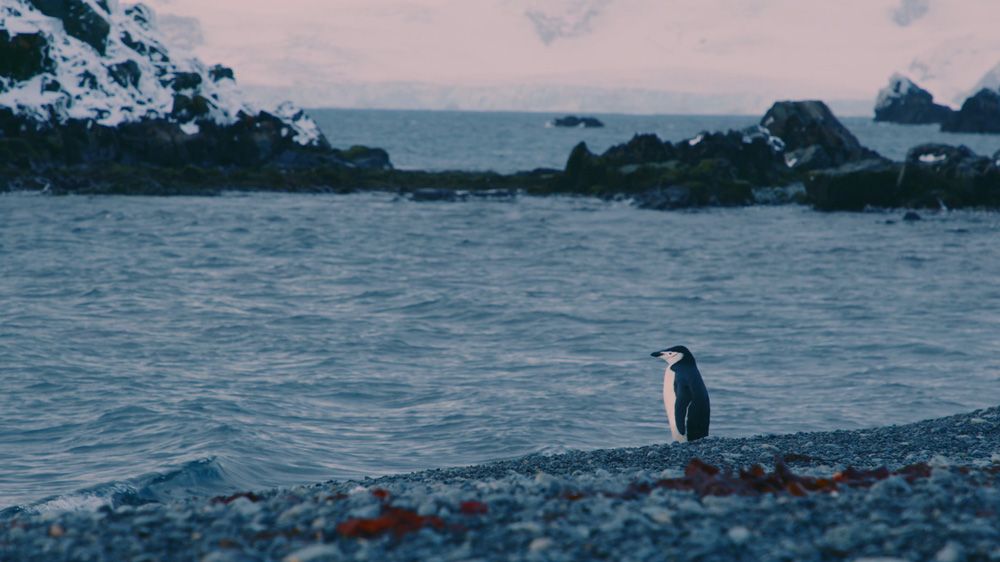
“When we headed off from Ushuaia in Tierra del Fuego, it was the beginning of winter. We were warned that our passage from South America to the content of Antarctica can be pretty rough at this time of year. They also said that we may not get the same amount of wildlife when the temperature suddenly turns arctic. But ‘good fortune’ favored us at that moment, as the weather was perfect and much milder than was expected. And as for the wildlife, there was plenty for everyone to enjoy.”
“I guess the first thing I would say about this type of expedition, is the people taking these trips are not your average tourist. This is an adventure into an arctic wilderness and so it takes a special type of visitor to make that journey. I found my tribe among the passengers on this trip. They we all extremely interested in the journey and wanted to learn everything you could about this remarkable landscape. The crew and passengers were some of the most interesting people you could ever hope to meet.”
“The first day we arrived in harbor and then ventured out on the Zodiac, was life changing. Not only were you feeling a sense of achievement at finally being in Antarctica, but there was universal anxiety felt by all, given we were so far from civilisation. As I mentioned before, this was during the pandemic. And so when we arrived, there were no other expedition ships to be found. We were completely alone and isolated.”
“When we pushed off from the expedition ship to make for land in the Zodiac, the sense that you were on your own was immediate. To then compound that feeling of being at the mercy of the environment, as soon as I pulled out my camera I was swamped by a wave. Remembering I brought a tripod, shoulder rig and gimbal to shoot on. On that first day out, I suddenly realized none of these things would work down here. Even changing lenses from a long zoom to a shorter zoom was perilous, due to the winds and water spray that swept over the boat.”
“Down here, the environment dictates how you can shoot; which was very different to all of my experiences shooting in the French Alps, New Zealand and Iceland. I am an experienced filmmaker in cold and snow, but this was an altogether different environment, and one that I would have to learn to become comfortable with.”
“Matt and I developed our own roll sheet of shots for everyday of the expedition. Although it was a documentary, for us, it felt more like a full blown production. We were up ready to shoot at 7.30am, with everyone getting ready for breakfast at 8.15am. And then we would do two Zodiac trips per day where we were on land for two to three hours each trip. All I could take was what you could throw in a waterproof bag in under two minutes notice. Which was the time we had to get back into the boats in case of an emergency.”
“So there was no extra camera gear such as external monitors etc. So all I took was a barebones setup, top handle, Rode Mic, V-Lock Core battery and a 70-200mm and 24mm-105mm zoom. So that I didn’t have my second zoom loose in a bag, I would mount it on my Canon photo camera. When I needed to change lenses on the Zodiac, it all had to happen super quick. So usually a passenger would hold my Canon for me while I changed lenses with the BMPCC 6K. Over the next few weeks that became a common routine for me when we were out on the water.”
“As a filmmaker, the first consideration was what gear I could feasibly use in this environment. The second consideration was the scale of everything in this part of the world. You have to have been here to fully appreciate, that everything is giant scale. The icebergs are the size of Manhattan skyscrapers and the coastal mountain ranges just reach up from the sea. With now shadows or human civilization for scale, the cinematic problem was how to convey the epic-ness of everything I saw. Everything was too big to fit into my composition.”
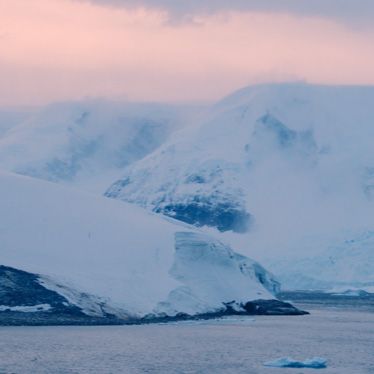
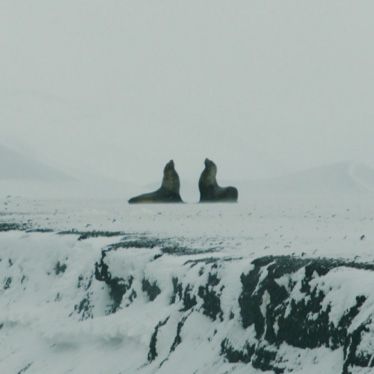
“It is the same when you are filming in a desert. On a wide angle lens, what you are seeing can be 5km wide. And with no reference for scale, you wouldn’t even know it. When your focused on a seal on an icepack, you were so close that you had no reference for the mountains behind. Which in some cases could be more than 6kms away. The challenge was to find the right zoom lens to squeeze the landscape into the frame! I had never experience anything this big before. I felt like I was in the land of the giants.”
“The other thing you needed to be mindful of was not getting stuck with a shot. Time was everything for me. I needed to shoot what I was commissioned to do and then have enough time to shoot my own shots. The problem with being in a protected habitat such as Antarctica, is there are lots of rules about what you can and can’t do (iaato.org rules).”
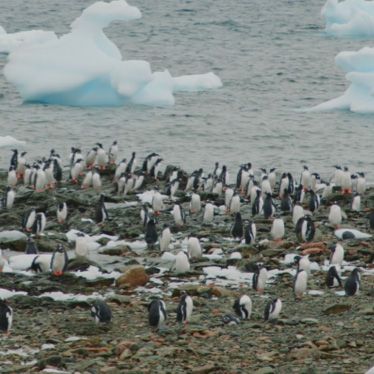
“For example, you can’t cross an animal’s path. You have to be 10 meters away from a seal, or 5 meters away from a penguin. Humans don’t belong here for good reason. So when you come as a visitor you have to be respectful of the rights of the habitat, regardless of the shot you maybe going for. I remember being absorbed in a composition I was framing and failed to notice I was getting between two groups of penguins travelling towards the sea. Before I knew it, I was stuck in the same position unable to move for more than 20mins. I was literally sitting there with nothing more I could do than watch the passing parade. I made a great photo opportunity for everyone else, as they photographed me stuck in the same position for what seemed like an eternity.”
“Everything about this voyage was unexpected and so much larger and challenging than our daily lives back home. The landscape was huge and commanding of respect. The voyage across the ocean was nothing you could plan for, particularly during a pandemic when anything could happen, and did. Because of what was going on globally with the world shutting down, our trip became an epic journey, remaining at sea for a period much longer than we had originally planned for.”
“Our return journey meant we spent many days at sea confined in our cabin enjoying whatever the winter ocean had to throw at us. So in every sense, this journey to Antarctica was a monumental moment in my life. It was a challenge and one I will never forget and always feel privileged to have taken. It was beyond anything, I thought it would be."