Aerosol Jezus “Cozey”
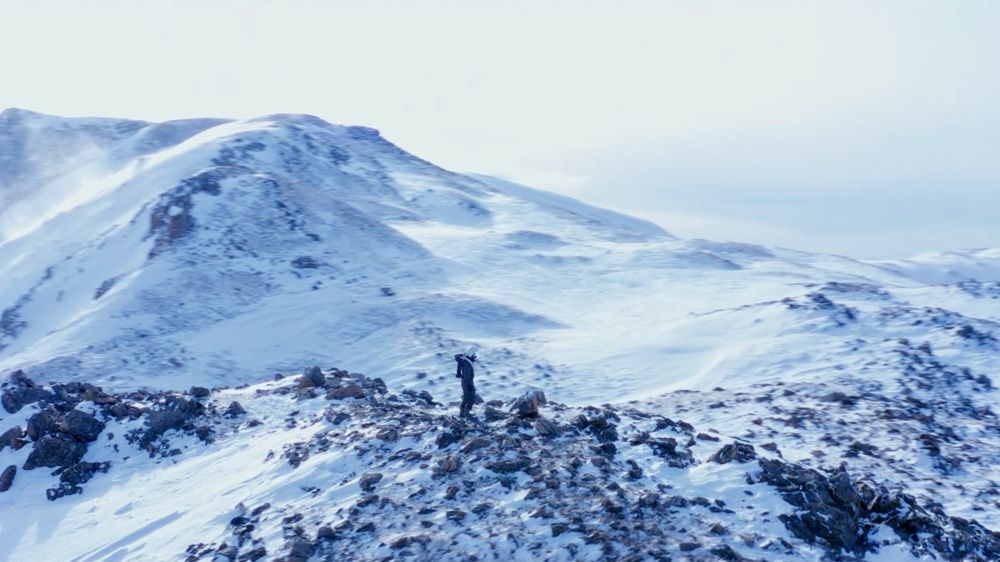
“The story we fell in love with called for a number of locations including snow covered mountain tops, vast deserts, and jungles. From the beginning we planned on making this with a two person crew: myself and Zach Ostapchenko. He initially came aboard as DP, but quickly took on multiple roles since we’d set up each shot then I’d have to get out in front of camera. Adding more crew members would’ve destroyed the budget because there was a lot of waiting around for the weather to cooperate. It was tough but it allowed us time to experiment, which was necessary since much of the shoot took place during magic hour.”
“Planet hopping wasn’t part of the original outline, though. During the first week of the shoot, Zach and I realized we were missing essential character/story beats. Our character needed a flaw, one we could visually convey, that would lead to his seduction and eventual downfall. So we introduced the idea of obsession. We re outlined the story in our grungy motel room, and the result is pretty close to the final video.”
“Of course, in hindsight, our solution was completely insane. “He’ll scour the galaxy compulsively searching for elusive gems on desolate yet distinguishable planets before finding the motherlode here in the jungle.” Whatever the reason, ambition, naivety, or just plain lack of sleep, we decided to tackle virtually every environment that has plagued filmmakers throughout history, all for one music video. Because, you know, how bad could it really be?”
“To shoot this project, I needed a motorcycle, not an 18-wheeler. We found ourselves climbing mountains and trekking miles into the jungle, which required something lightweight and nimble in order to reach locations that would’ve been out of reach if we were using bulky, ‘gas guzzling’ gear. The Pocket Cinema Camera 4K has a great sensor, fantastic color science, and outperforms most when it comes to low light performance. Plus, it’s priced like a high end iPhone, which means you’re not lighting cash on fire daily renting an expensive anchor. I didn’t just buy a great camera; I bought more days on the schedule.”
“If it’s a big camera, that means a heavier tripod, heavier gimbal, and so on. With Zach operating mostly solo, the Pocket 4K was the perfect choice. Also, Blackmagic has the best, most intuitive menus. We needed to move fast, setting up as many shots as possible each day, and the ability to quickly and confidently switch settings was crucial.”
“I used my set of Rokinon Cine DS primes for the shoot, mostly because I had them already and didn’t want the pain of renting other lenses. But honestly, I really enjoy shooting with them. I know they aren’t considered high end, but the lenses are fairly fast, and for the price they actually create a very pleasing image. I have the set that includes the 16, 24, 35, 50 and 85mm EF primes, so I have a great range for almost every situation. I leaned heavily on the 35 and 16 for this project. And the Metabones adaptor widens the image so the Pocket 4K 4/3 sensor feels more like a Super 35mm sensor.”
“We really took advantage of shooting Blackmagic RAW on this project, which was outstanding. We had to move fast, and had pretty much no control over lighting in any location, so knowing we could rely on the dynamic range of the log image saved us a lot of nerve wracking moments. We shot everything Constant Bitrate 3:1, which might have been overkill, but I wanted as much information as possible to assist with visual effects, since most of our footage was shot in low light. The functionality of Blackmagic RAW in Resolve was a life saver. We rarely had time to white balance, and being able to adjust ISO, temperature, and tint settings in post was crucial, particularly for matching plates and tweaking shots to stitch things together.”
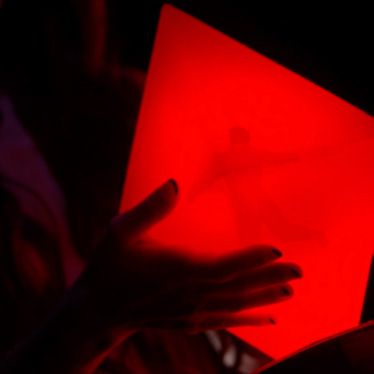
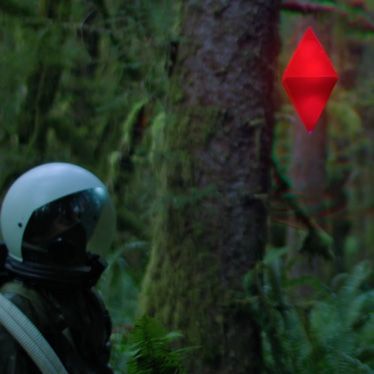
“We shot at 200 ISO for most of the project, except for some of the darker sequences where we bumped up to 1200 ISO. The desert shoots were the most difficult because we had so much light coming in to the sensor. We stacked our Tiffen ND filters just to cut down on the light and make it manageable. Luckily the highlight recovery feature in Resolve is incredible. I’m not sure how it works, but it’s amazing. It helped us manage the highlights in the brightest shots, as well as some of our in camera effects with the crystals. We used cheap headlamps within the red diamond to light it up, which caused intense hotspots at higher ISO levels, but highlight recovery effortlessly removed them.”
“So many of the sequences were complex, but the spiderweb sequence was particularly difficult. It was the only thing we shot in a studio because it was too complicated to do on location, and we needed safety measures to ensure I wouldn’t fall and break my neck. To make things even more difficult, the wrong gimbal was delivered on the day, so we had to manually achieve the 180 degree camera rotation by spinning a Steadicam rig while I was lowered to match before being quickly reeled up. I always did extensive research to make sure Zach and I were safe and prepared for each location. We had gotten through basically unscathed, so I certainly didn’t want to die on the last big stunt after having endured everything else. When in doubt, spend your money on amazing stunt coordinators. Shout out to Eric Aude; he’s the man.”
“With the cinematography, we focused on restraint, deliberately holding back specific camera techniques to underscore pivotal story moments. We refrained from using slow motion until the protagonist stumbled upon the red diamond, in order to emphasize his hypnotized state in that moment. We also steered clear of handheld shots (except for one in the snow earlier on) so that the running sequence would feel chaotic and disorienting. Ultimately, we aimed to begin with a very grounded approach to earn the psychedelic shift in the latter half of the video.”
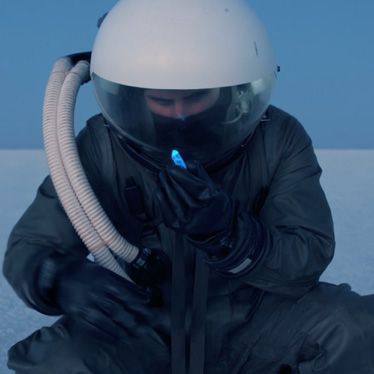
“I wasn’t able to do any editing during the shoot, but I luckily have a powerful desktop in my home office. For this project, the lines between editing, color, and VFX quickly blurred. Due to all the variable lighting from the location shoots, I had to perform color/VFX recon on each take to ensure it would match the other shots in the sequence in terms of look and to confirm whether I’d be able to complete any rotoscoping or VFX work required.”
“I understand many will say that’s putting the cart before the horse, but that’s also what makes Resolve unique. You can do everything (editing, VFX, and color) under the umbrella of one program. It’s extremely powerful, and I appreciate the fact it doesn’t constantly crash, especially considering I’d done extensive work on virtually every shot in both the Fusion and Color page. This was my first time using Resolve and Fusion, and I was constantly blown away by what I was able to achieve.”
“I handled the grading myself, which was challenging to say the least. I felt like I was using a fairly standard workflow: primary adjustments, followed by a CST pass, then using secondaries, then film emulation, with plenty of rotoscoping work throughout to create separation and address any issues. I didn’t know anything about color management at the beginning, so my project was unmanaged. We were constantly changing locations throughout the video, so I needed to establish a dominant color for each ‘planet’ to differentiate them (Dunes orange, Snow blue, Jungle green, etc.) It was incredibly difficult to make everything cohesive, and some of the newer features in Resolve (I started this project on version 16) were crucial (magic mask and color warper are both fantastic). It’s always about supporting the story you’re trying to tell.”
“I learned Maya in college, and I’ve used After Effects maybe twice in my life. It’s important to understand the fundamentals of compositing if you’re gonna tackle VFX heavy material. I read a ton before the shoot to make sure I’d have what I needed to pull off the more intricate shots in the edit. I have immense respect for people who work in VFX. I’m not a huge modular synth guy in music but my basic understanding of that may have helped me acclimate to the node based structure of Fusion. It can seem intimidating, but after you rewire your brain a bit, you realize how much power is at your disposal on that page.”