A bike ride is worth a thousand pictures
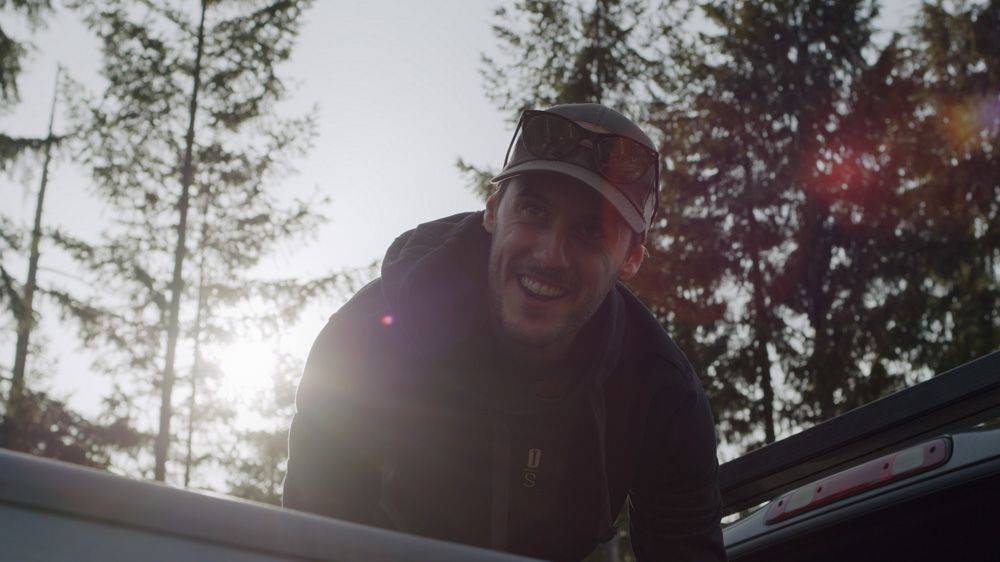
“Josh is also an avid mountain biker who has had articles published with Freehub Magazine and Mountain Life Magazine.. So he's always on the hunt for interesting projects and collaborations to do with mountain biking. We then struck upon this idea of doing a film about a photo shoot in the mountains at Squamish. What really interested me most about this project was seeing our different approaches to capturing the same moment, as both the photographer and the filmmaker.”
“Mountain biking or cycling photography is very different to other sports as you're not really directing the action. What you're essentially doing is building a relationship with the athlete you're shooting, and then sharing their experiences with the sport. So being a rider yourself is kind of key to the relationship, as your love and passion needs to be present in your work. To give your work soul, you need to intuitively know what the best moments are going to be before they happen!”
“Although Josh and I have the same love for this sport, our approach to capturing it on film is very different. I see everything that I shoot in terms of frames and motion. For me, motion is always in the world in 24 frames, whereas Josh sees the world completely differently in milliseconds! So it was cool to get that kind of perspective into what he's seeing compared to what I am seeing? My world is always a bunch of fleeting moments whereas Josh's world is chasing that one big moment.”
“I loved the different polarity we both brought to making this piece. I was trying to tell a story about Josh and the mountain bike riders, where he was capturing his own visual narrative. In my world of filmmaking, it was all about telling the story so you have to train your mind to focus on the shots that will enable that story. And ultimately, all of this has to be told through the edit!”
“My love affair with editing strangely comes from being bilingual. I speak Canadian French, with English as my second language. So in my mind I've always had this sense of not being all that articulate with spoken language. Canadian French is not the same as French, and Canadian French in English is not always the same as English. Anyway, that's how I have always felt when speaking both of those languages. But when I create a video I can communicate with far more confidence, saying exactly what I want to say the way I want to say it.”
“So editing is my strongest language you could say! Even now after all of these years, I have to admit I still feel a bit like this today. In the edit, I have the power to slow things down or change the emphasis of my message. I have complete command of my visual choices, being able to find the exact frame that says the right thing for me. Video is the perfect medium simply because I can emphasize exactly what I want.”
“That's the difference between Josh's creative practise and mine. I ultimately shoot for the edit. After we've finished the enjoyment of shooting that day on the mountain, I then got to come home with hours and hours of footage to revisit our day together. My enjoyment of the shoot is then extended when I put all that footage back together in a way that makes sense to the people I was filming.”
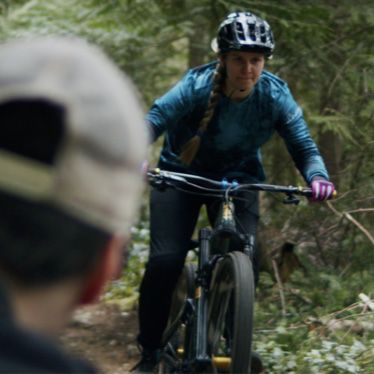
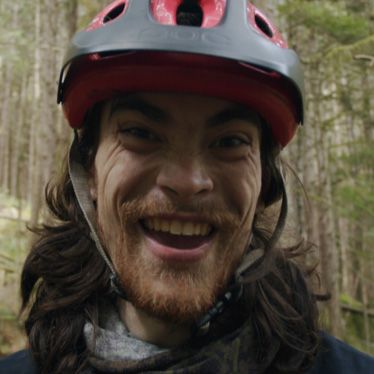
“And with mountain bike people, it's one of those sports where you get a better connection when they trust you. It's all about them respecting your opinion as a mountain biker! This is where directing the edit in your head before shooting each scene is so important. Otherwise, you'll end up with bunch of really cool shots that can't tell a story. When I was started out in this industry, folk always wanted to know whether I was a DP or more of a director. In most cases, I think I've more of an edge being both, especially when it comes to developing a narrative through the edit as I did with this film.”
“This is the privilege of my generation of filmmakers. We are able to shoot with affordable digital film cameras using the exact same tools that the Hollywood film industry use. And so we don't need to go through ranks as an apprentice DP, colorist or editor. You can do it all right now just by starting small and finding your own creative direction in your projects. In this instance, the camera was just an extension of my mind's eye as the director. The camera is just a recording device that I can put in front of my brain. So my whole experience of that day's shooting included what I saw of Josh's photographic approach with the mountain bikers. And that's what it's all about. Creating a film for other mountain bike riders.”
“For this shoot I was using the Blackmagic Pocket Cinema Camera 6K and shooting in Blackmagic RAW. I also have a set of Leica R cine-modified lenses that have a beautiful look to them. I've used these lenses on S.35 sensors and full frame sensors, such as the BMPCC6K and Pyxis 6K. The first thing you notice with Leica Rs is they're like having two different sets of lenses, depending on which sensor you use. Both looks are beautiful, but very different. The full frame tends to capture all of the aesthetics of the lens, right out to the edges. Whereas cropping in with a S.35 sensor tends to focus on the sharpest section of the lens. For this shoot, the Blackmagic S.35 sensor was perfect, as I was focusing mostly on Josh with the riders framed behind him. So having the narrower focal length made perfect sense for this shoot, whereas, Josh being much closer to the talent, used a full frame camera.”
‘For me as a filmmaker, this shoot was about experimenting with much slower shutter speeds. The cool thing about Blackmagic cameras and DaVinci Resolve is you can set your frame rate at say 5fps using the HFR button, which results in an incredibly choppy sequence. But when you put it into Resolve, you can stretch it back out to 25fps, that then stretches the shutter effect. What you get is a scene that's both blurry with some sharp moments that's like mimicking a photo. Given that this film was all about the photographer's relationship with the mountain bike riders, it seemed to be the perfect video effect. It's a pretty cool effect that I have now used a couple of times.”
“I was using my 19mm, 35mm and 90mm lenses and mostly I had the BMPCC 6K on an easy rig, just because we were walking in the woods all day. I had a fairly compact setup for the camera with a 98 watt gold plate battery on the rails. It's funny to me how some people complain about the power consumption with this camera, whereas I had it running for the whole day with power to spare!”
“When I started my career, I would complain a lot about the image quality of my cameras. I was convinced that I just needed a more expensive camera. And then I realized it wasn't the camera at all, it was just me. All I needed to do was to learn how exposure my shots better to get the full potential of my camera. It's the simple things like this that can take your cinematography to a whole new level.”
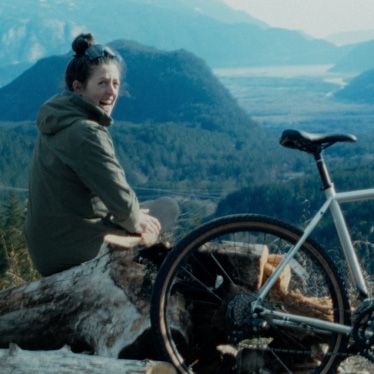
“The scene that I thinks speaks most to this shoot was the end scene up on the Forest Service Road with the gravel bike riders. That was really fun because the perspectives was super cool. It was one of the instances where Josh and I could shoot similar stuff, where we could both go for the same frame. We were both shooting for that big wide look with the mountains in the background and the riders and the road in the foreground. Being up in the mountains is obviously nice, but being there with fellow gravel riders is what it was really, all about!”