10/10ths
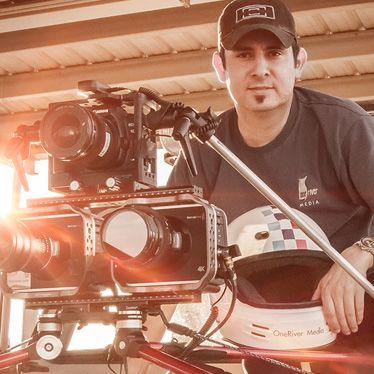
“BMWs, motorsports and filmmaking have always been huge passions in my life. For years, I've tried to figure out how I could meld the three together. In early 2013 the idea of '10/10ths' was a rough concept that was originally supposed to be a 30 to 60-second commercial. The idea to turn this concept into a complete documentary feature film came later.”
“Starting, and completing a film like '10/10ths', has always been a personal goal of mine. As I understand, it is uncommon for one person to perform all the major production/post production roles of a film of this size. But I felt on this one, that I was up for the challenge. I also wanted to show that this was possible from a technological perspective to do something at this level.”
“My love affair with BMW motorsports first started when I was a child, from the likes of the 3.0 CSL, the godfather M1, and the infamous E30 M3. In the late 1990's while I was working in my first business partnership, I was able to buy a 1995 BMW E36 M3, which was a dream come true for me. It wasn't off the lot or anything like that, but was more something that I could use for autocross racing. My passion for me actually “being in” motorsports started with me racing against the clock on an old airfield. I then graduated from autocrossing, to BMW competition schools, which is how I got into racing track events.”
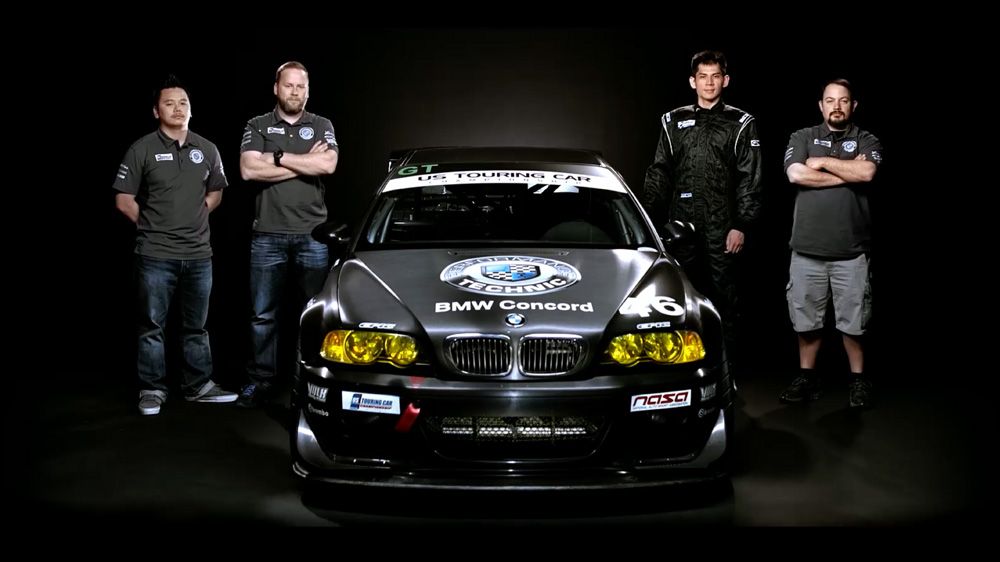
“Many years later, the '10/10ths' idea came through my friendship with Joe Gaffey, who owns Performance Technic in Freemont. We were talking about the idea of doing a short commercial for his BMW performance and tuning shop. Joe hosted a private track event at Thunderhill Raceway, where we used the car action of the day to potentially shoot some footage using my original Blackmagic Cinema Camera, the first beta unit outside of Australia and New Zealand!”
“After the first day of shooting, one idea started to run into another. After talking with Joe again, we thought it would more interesting to go a step further and make a really cool 5-6 minute documentary style commercial. A month or so later, Joe called me saying, that he was going to take his pristine condition E46 M3 street car and enter it in the United States Touring Car Championship series!”
“He and the entire Performance Technic crew were about to strip the car down to get it race-ready in only five week's time. At that moment I thought 'boom', here is the perfect opportunity to shoot a feature film. This was the story and narrative I had been waiting so long to make a film about.”
“I had always wanted to do a BMW centric film for years now, but I had never had the opportunity to justify doing a project of this size. Until this time, the lack of affordable high-quality camera technology made it virtually impossible for me to do something like this. But with the release of the original Blackmagic Cinema Camera, I now had the opportunity to shoot at the level of quality I wanted for this film.”
“I didn't want to shoot a film like this on my DSLRs or Sony EX-1, because I didn't want to have to work with Long-GOP or other compressed digital video formats of old. So in a sense, the whole codec thing of the 90's was still a problem for me. BMD's Cinema Camera was one of those few revolutionary cameras, like Sony's VX-1000 or Panasonic's DVX-100 had been in the past. These were all gateway cameras that really opened up the creative and technical opportunities that previously weren't there.”
“So when BMD's Cinema Camera came out, I didn't have to think about codecs and all the problems that come with them anymore. I wasn't going to be held back by some crappy 8-bit multi-compressed format that I couldn't push the grade on. Being able to rework the background or highlights in post-production is one of those things you have to be able to do, especially with 'run and gun' documentary shooting where there can be uncontrollable or unexpected high contrast situations. As much as I love to setup all of my shots, this is typically impractical when shooting something like motorsports. There is no second take when they have thrown the checkered flag!”
“So when I spoke with Joe about doing a legitimate documentary feature film about his team's campaign in the USTCC series, I had the right gear to do justice to such a film. Straight after we decided to go into a partnership on the film, I immediately started shooting the teardown of his car to begin the film's introductory plot, setting, and character builds.”
“A month or so later, Joe called me saying, that he was going to take his pristine condition E46 M3 street car and enter it in the United States Touring Car Championship series!”
“I knew that if we only shot a film about the racing, it would get boring really quickly, especially for non race enthusiasts; so it was important for me to have a set of sub-stories that I could thread into the main story as well. By interjecting these supporting sub-stories, I could keep the interest there by simply changing the pace as I needed to.”
“Because I had a Cinema Camera, I could start shooting the breakdown and rebuild of Joe's M3 immediately. It wasn't until the racing events that I really needed to look at shooting multi-cam. For the first couple of races, I simply resorted to my EX-1 and 5D as additional cameras for some quick cut away shots. Keep in mind I still had the original beta Cinema Camera, so it was basically impossible to get a second or third one at that time. For the M3's tear-down shoots and such, it typically was just me shooting alone. But on these large race days, I sometimes had to hire a professional crew of about six people, so that we could cover all the angles we needed. As the racing season went on, I started adding more Blackmagic cameras for greater flexibility in shooting this film. By the time we were nearing the completion of filming in mid-2015, I had already accumulated six Blackmagic cameras that were being used in various forms in the film (Cinema Camera EF, Cinema Camera MFT, two Production Camera 4Ks, Pocket Cinema Camera, and URSA 4K). In total, I'd say about 90% of the film was shot with Blackmagic Design cameras. And of that, I'd say 90% of it was shot in ProRes and 10% was shot in RAW.”
“Joe and I went into this thing with the simple idea of the narrative being the tear-down of the car, building it back up, and then hopefully winning some races! But I knew that a documentary narrative invariably takes on an unpredictable life of its own. They can be an uncontrollable force of nature, when it comes to the overall story direction.”
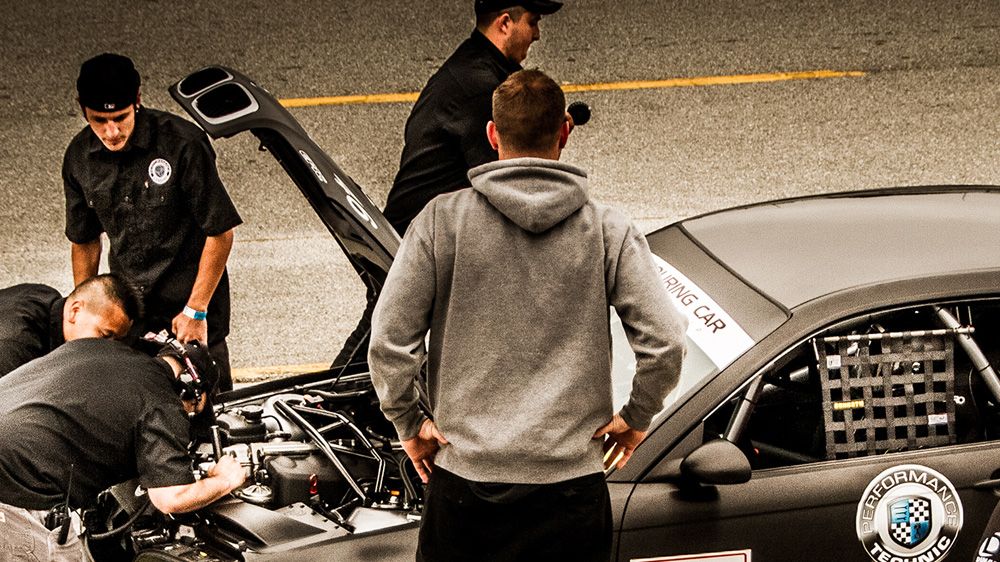
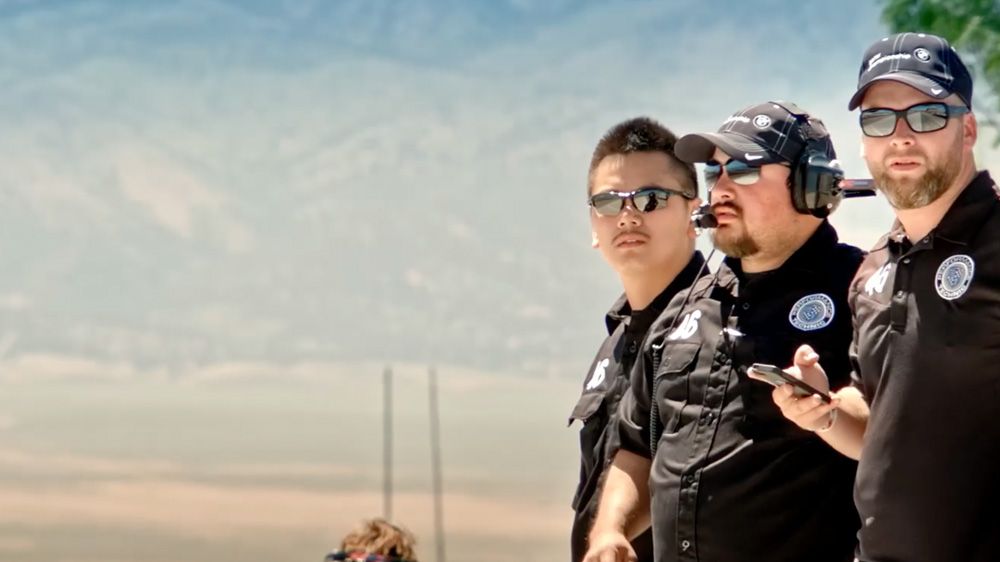
“Because I was so close to Joe and his racing team, every time they were racing I wanted them to win of course! But if they had won every race, then honestly, what kind of story would that have been? As luck would have it, various turn of events and unexpected drama completely changed the original idea of 'winning every race'. Bad for team, great for the film! Ultimately, these unforeseen events made the whole journey a much, much, better story to watch with a much better theme for the end of the film.”
“In fact, the very last sub-story in this film solidifies the entire theme of the film itself to help close it out. If the team had won every race, there would be no hardship, no conflicts, no journey, and ultimately nothing to learn or appreciate. It's only by going through hardship that you start to think things through and learn the necessary 'life's lessons'.”
“And so it was with the last sub-story in this film, that the closing was taking shape. It wasn't until the very last race that it all came together for the guys. Which was fortunate, because until then we really didn't have a proper ending for this film.”
“So we had shot the whole race season, along with all of these various, but relative, sub-stories, and in the end, it all came down to the last race to find a great ending. I always say there is a lot of luck with documentaries and this film was no exception. I would never have guessed that it was going to be the last race that would deliver the film its proper closure to the story.”
“Now that the racing had finished, it was up to me to get this film done so that we could submit it onto the film festival circuit. To get it into these initial festival submissions on time, I had to enter a cut before I had even completed the color grade and the 5.1 surround mix! As this thing progressed and became more finished, I would then replace the old file with the newer one.”
“Even though I was submitting a cut without its final grade, or 5.1 sound mix, I definitely didn't want to submit it with a temp soundtrack. I only had about four of the songs completed for this film while I was editing preliminary conceptual cuts of a couple scenes early on. It wasn't until about a month or two before the first film festival submission date, that I started completing all 39 scores.”
“For those two months, I had to put off all of my commercial work to solely work on the musical composition, scoring the film and getting all of the remaining sound tracks done! For each song I first had to tempo-match the music from the temp tracks to create the tempo of the newly composed songs I had to write. Once the tempo was solidified, I had to compose the actual music, choose instruments, and perform the instruments, record it, mix it, and then finally master the whole thing. This had to be done for each of the 39 songs inside those two months.”
“There were a few songs where I literally had to do all of that work in a single day! There were other songs where I did all of that in under 5 days, which was still ridiculous. I was breathing, eating and sleeping music during that time. By then end of it all, I was literally dreaming chord progessions to these compositions in my head at night (one of the closing songs was based on one of those very dreams!). It's something I've never experienced in my life, even though music composition and performance has been with me since being a young child.”
“I have done a lot of scoring and sound tracks for my commercial clients, but that had always been on a much smaller scale than this. Previously, I had done maybe one or two, maybe three songs at the most, for a particular project. I hadn't had a project like this, where I had the freedom to do what I wanted. I had never tackled a feature length film score before, so it was a new experience for me - even though I have done a lot of compositions before.”
“There were three music styles I was going for: straight traditional orchestration, modern orchestration with synths, and lastly purely acoustical (like acoustic guitar, piano, drums). This modern orchestration with synths style has really been popularized by Hans Zimmer with 'Batman', 'Inception' and the 2010 version of 'Tron'. Even though I had an extensive music composition setup in my business, I still felt the desire to invest further in a number of newly released synth modules at the time.”
“For example, to be able to replicate the actions of stringed instruments in the orchestral bits, meant a whole range of new software synths to truly replicate the sounds of those instruments. Bowing up on a real violin, for example, can have subtle, but noticeable differences compared to when you are bowing down, and then bowing back up on the string. You can randomize these up/down actions or create a sequence, which is what I wanted to do here. Likewise, a hard and short 'staccato' note on a real cello sounds completely different than a soft long 'legato' note. Even how the bow is being used and in some cases, not being used at all (plucking). All these multitudes of nuances were absolutely important for me to replicate in my performance in this score. And that's just each of the string sections! There were also various brass sections, percussion sections, woodwinds, and the list just goes on and on. So the whole thing went beyond just hitting a note and sustaining that for as long you wanted.”
“Once the score was completed (and in time for the first scheduled film festival deadline entry), I submitted the first film festival review file. From there, it was time to begin (and complete) the proper 5.1 surround mix. I was originally debating on either doing a basic 2.0 stereo mix (for speed) or a 5.1 mix (for theatrical immersiveness). I ultimately decided to do a full 5.1 theatrical surround mix. Part of that decision was the fact the most theaters require at least a 3.0 mix (left, center, right), so I figured I might as well just do the whole 5.1 mix. In the end, I'm extremely glad I did, as I feel it really adds a lot to the film's immersiveness with cars whizzing by or tools running in the back of the autoshop.”
“The very final puzzle piece to completing this 2-hour documentary feature film was the color grade. In total there were over 1200 shots to grade. Without question, I performed the grade in DaVinci Resolve Studio. Being both the Cinematographer of the film and the Colorist meant that I could carry my vision through from the moment I originally lensed each shot. Conversely, there were some scenes I decided to completely alter the style of the grade from the original vision, but didn't have to worry about upsetting the Cinematographer or the Director since I was all of them!”
“The making of this feature film, was truly, the most arduous undertaking of my life. There were aspects of naivety on my part, underestimating the length of time to fulfill some of the post processes, despite having performed these professionally for years on much smaller scale projects. But when you're performing all the major production and post-production roles of a feature film, it has to be expected that there would be misperceptions in terms of time-overlaps. But like anything in life, these were extremely valuable lessons learned. In that sense, there's a very bazar and unforeseen parallel with the real-life story of '10/10ths' and in the making of '10/10ths'.”