Warren Eagles
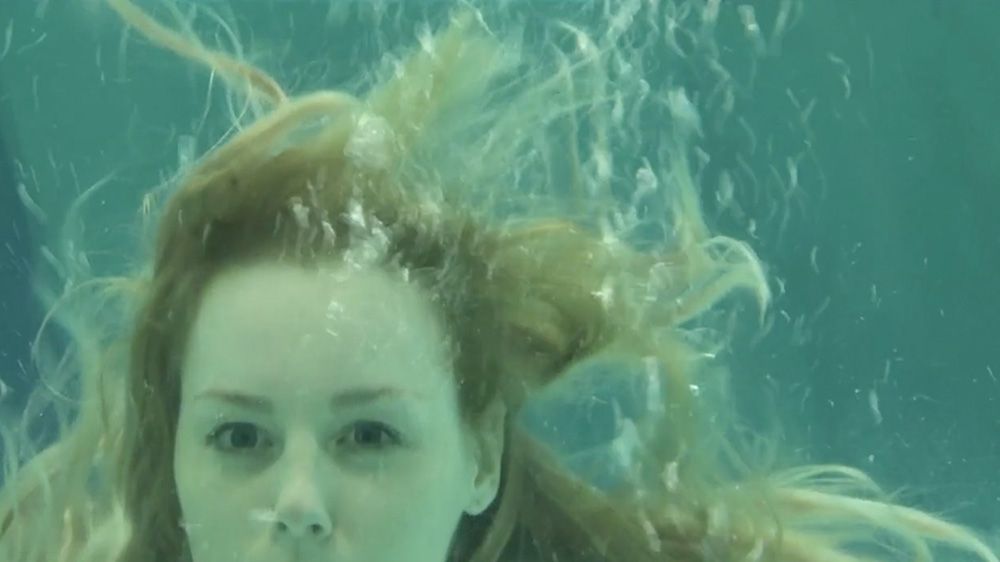
"I also had a little bit of history doing the same thing as a kid, when I spent some time as a professional ‘sock model’! I was told I was in big demand back then, as I had beautiful feet."
“The photographer I was a 'foot modelling' for happened to be looking for an assistant about the same time I left school. Tom Belshaw’s studio was right in the middle of Soho in Oxford Street, where I started off assisting as more of a holiday job than anything else. However, it soon turned into a full time gig and I found myself assisting on everything you can think of from underwear catalogs to socks! I was doing all of the video casting, lighting and general phtographic assisting, so it was absolutely the dream job for a seventeen year old.”
"The big problem was that I never studied photography as a degree, and the other assistants had, so I thought this could be a really hard path for me going forward. And, secretly, I still wanted to do something with moving pictures. Back then, there were all these kooky little preview theaters all over Soho ranging from 6 seats to 80 seats. So when I saw an ad in the London Evening Standard at the Mercury Theatre in Wardour Street, I thought I would give it a go."
"In the morning we would screen TVC film rushes, in the afternoons we would typically screen the cutting copies from big features. So you would have the picture on one projector, sound on a separate mag, and then I would lock them up together and then run it for the editors and producers - just like a rough cut."
"By the evening, I would be doing movie preview screenings for the press, which is how I got to meet Sean Connery, Christopher Reeve and a whole bunch of other actors. When I wasn't required to do screenings, I was flying around in a van supplying Pinewood and Shepperton Studios with editing equipment. It was another great job, but I wasn’t really getting any closer to what I wanted to do as a director, cameraman or editor."
"At twenty-one, I applied to be a runner at one of the big post houses called Visions. They used to do a lot of music videos and TV commercials, not movies or drama, so the whole place was really geared towards commercials. Literally, I just ran around getting coffees to begin with. And then if I was on for the weekend, I would be cooking roast dinners for clients and all that sort of other things. It was a good round education and I learnt how to cook as well, so that was a double bonus!"
"Every moment I could get, I was in on an edit or the telecine and grading suite learning as much as I could. After work each day, I would stay back in the evening learning and watching."
"After six months, I was promoted across to tapes where I was lacing up the 1” tapes on the ‘Chart Show’; which was the biggest music television show in the UK at the time. During the three years I worked in tapes, I tended to gravitate towards the telecine because of my experiences working as a projectionist and in photography. Back then it was mainly 16mm film, so you couldn’t even sync the 1” VTR with the telecine machine. So as a tape operator, we would have to do things like a manual ‘fly-grade’ trying to chase the color as it went down, which was a real skill in itself."
"Money was no object and the mountains of film shot back then was unbelievable. They were the great jobs in post, because you billed probably £300 an hour. There was a lot of money in 1988 in post, so it was a good gig if you got a director who shot lots of film! When I got the job as the telecine assistant, I was working with colorists Luke Rainey and Clark Muller now at Incendio in Venice Beach. Both of them came from a traditional lab timing backgrounds, so they really taught me a lot about color grading. The skills they brought to each telecine grade were different because of their lab backgrounds."
"Lacing up film was a trusted job, because if you laced it up wrongly you would scratch the master negative! You only ever got one chance, and if you laced something wrongly, and you scratched the neg, well that was it for you! Digital fixing in those days was unbelievably difficult, like wet gate prints, but nothing was easy. You had to be very precise every time you handle the negative. When Luke Rainey left, Clark Muller said to me that he was happy to train me up which gave me my big break at being a colorist. So I started on a Rank Mark3 Telecine and a Digigrade Color-corrector."
"Back then I only had primaries, all controlled by joy sticks. It was all about color continuity and making sure all of the shots were balanced. We learnt how to 'fly grade' back then, so we became super quick at grading using your scopes."
"My first real job was grading the MJ Bad tour. They shot so much film, I just was thrown in at the deep end. It was a great experience to be involved in such a big production and I learnt a lot. It was a mixture of concert and behind the scenes footage all shot on 35mm and 16mm film. Originally, I was to do the transfer, but then the main colorist just kept giving me more to do until I was finally working with the director on the whole thing. After that, I started to get a whole bunch of music videos to grade with all of the young 'up and coming' directors."
"Just as my career was taking off, Visions was bought by the pencil company W.H Smiths, along with Molinare and TSI. Visions was a casualty of the merger, so I decided to go freelance. There I was, out there in the wild with only a years experience as a colorist. Fortunately some of the directors I had been working with followed me."
"After I returned from backpacking around the world, I started with Chrysalis TV in Camden doing TV commercials and dramas. We did snow boarding films shot on 16mm Bolex cameras and heaps of indies."When they bought a film lab, I suddenly found myself running the whole telecine department. I was on a really good deal, but then this chance to get back to Soho working on Davinci came through. I wanted to learn a new system and to do more higher end work, so the gig at SVC in Soho was perfect."
"I had only been at SVC for about two months, when I said to the boss that I really needed some Davinci training. So there I am with 3 days DaVinci training and I am told that I am to grade this little movie, ‘Lock Stock and Two Smoking Barrels’ for Guy Ritchie and Matthew Vaughn. After about four days of grading, I sent Guy the VHS tape. Guy rang me up and said, ‘Warren, it’s not looking at all right on my TV! I am not happy with the grade and we a really going to have to do something here.’ I said ‘What TV are you looking at on then?’ He said to come around to his place and check it out."
"Guy wasn’t in mansion status back then. He was still living in a little flat above a news-agency in Wardour Street, near Broadwick Street in Soho. When I went to see him, Guy put the kettle on and we had a cup of tea, before looking at the VHS tape. So he puts it on on this 20” CRT TV and the whole thing looks bloody awful. It was over chroma-ed and looked very different to my grade. So I switched his TV over to a few of the midday shows and everything was over-saturated. So I explained to Guy that his TV was out of tune! I took him back to SVC and played on a couple of domestic TVs where it all looked great."
"Two years after 'Lock Stock,' SVC, then decided they couldn’t afford two grading suites, so 'last one in - first one out!' So here I am, back freelancing again. While I was at IBC doing demos for Cintel in 1999, I met an Australian who owned a post company called Beeps. Steve Cooper invited me down to Australia to do some freelancing with them. I was mainly doing TV commercials for the first two years, before I got back into doing long-form working with Cutting Edge. Then I found myself freelancing all over Australia. Davinci and DFT then asked I would help out with demos and training across Asia."
"When Apple Color came out, I put my own system together and started to work on projects out of my home here in Queensland. I started to work on a lot of episodic TV like 'Offspring' and cop show, 'Rush.' I then started to think, maybe I could do more of this work from a full blown home grading suite! So I jumped across to Davinci Resolve on the Mac, and that opened up a whole bunch of opportunities working as a freelance colorist."
"Kevin Shaw and I got to chatting about this change to color grading and decided to start the International Colorists Academy. We thought that we could have a website as a general resource to share media and ideas and our training classes. I guess the rest is history. My time is pretty much spent split between grading and doing international training sessions with the ICA"