Robyn Miller
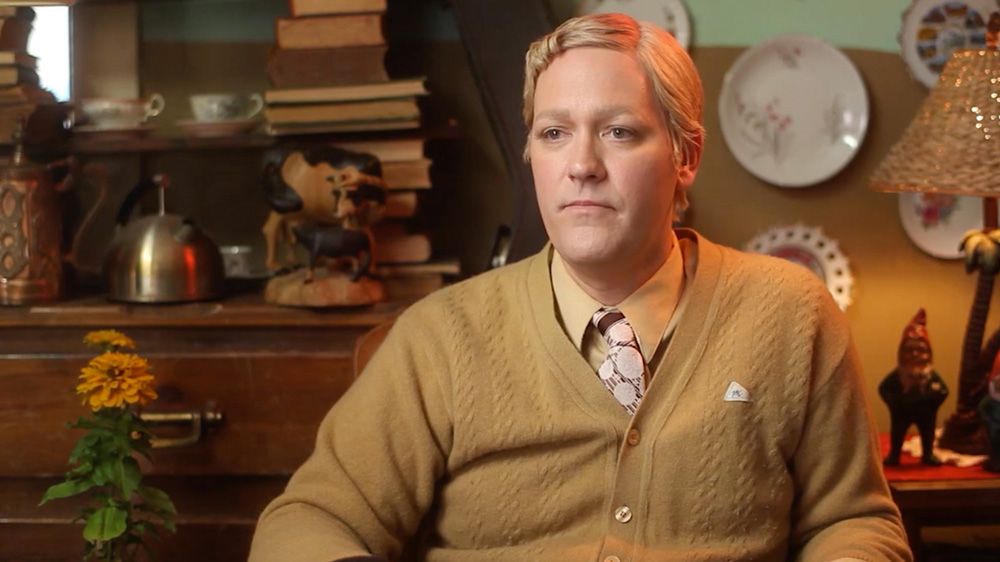
"All that was probably disorienting for a kid, but we also lived in some fascinating places. From small towns like Henderson in Texas, to large cities like Philadelphia, and places of diverse culture, like Albuquerque, New Mexico and Hawaii. Although being bounced around the country might have been difficult in some respects, I think the experience gave us all something very special. I was never connected to any one place and so I took refuge in creative endeavors, like art, music and eventually writing."
"Fortunately, our parents were cool with my various creative expressions, even when it scared them a little. They were fundamentalist Christians, they raised us with a lot of love and nurturing, and their religious beliefs were never painfully imposed on any of us as kids. They allowed us to explore the world in our own fashion and come to our own conclusion on matters of life. Which was very cool."
"For example when I was 14 years old, I started painting a large surrealistic painting on my bedroom door. I think a lot conservative pastors would have immediately put the kibosh on that… because it wasn’t very ‘Christian’. Instead my parents were thrilled. I almost wanted them to be a bit more weirded out! They totally encouraged my weird expression and it didn’t seem to matter to them that I was taking a path they didn’t exactly understand. They were, and are, amazing parents."
"I first started getting serious about art in high school. I spent hours each day airbrushing large photo-realistic paintings. We’re talking total painter-nerd -- I didn’t do sports, I didn’t do any extracurricular activities, I didn’t do my homework -- I just painted during every free hour I could find. Unfortunately, years later, I stupidly threw all those paintings away because I decided no human eyes should ever see them. Dumb. But I think through all these hours of practice, I developed an aesthetic and a skill. They were slightly surreal in tone -- the connection to sensibility of Myst was pretty obvious."
"My last two years of high school, I all but dropped everything having to do with the visual arts and decided it was time to seriously learn to play the piano. I started taking classical piano and began reading up on music theory. This was a similar sort of non-stop practice for me... hours a day, which was necessary because I knew I was going to be a rock star. Somewhere there’s a cassette of some of my early high-school songs, recorded onto 4-track. It’s not pretty!"
"Fast-foward a bit -- after having lived in Port-au-Prince, Haiti for while, and having had my priorities shifted a bit, I was months away from a degree in Cultural Anthropology from the University of Washington when… my older brother Rand called me and said, ‘Hey, you gotta try out this amazing development platform called HyperCard.’"
"By that time (1987), I was already familiar with the Mac -- I’d been using it since around 1985 for illustration and graphic design. HyperCard was new. When it was released it was hard to understand what it was and what it could accomplish. Even Apple had a difficult time selling it, and Rand had a difficult time telling me what it was and how I why it was useful."
"It’s much easier to explain now... HyperCard was precursor to the web. Each HyperCard ‘stack’ was the equivalent of a ‘website’. Each HyperCard ‘card’ was the equivalent of a web ‘page’. Each ‘button’ was the equivalent of a web ‘link’. The difference? HyperCard was limited to single user's computer. There was no internet. So the only way to distribute a HyperCard ‘Stack’ was to share it around on floppy disks."
"Rand was working in an IT department in a bank at the time and he had this vision to take the Hypercard development platform to make a children’s book. He sent me a copy, I doubtfully took it over to my parent’s house -- they owned the one Macintosh to which I had access -- and, because of the tool’s transparent ease-of-use, I jumped in and immediately began creating the world that became The Manhole, our first product."
"When I say immediately, I mean immediately. I loaded HyperCard, I opened the drawing tools, and I scribbled a quick manhole cover, expecting to erase it. Something about it caught my fancy. So I drew a quick animation: the manhole cover slides to one side and a giant vine grows to the top of the screen. Fun. Now I would erase it. Except suddenly wanted to know what was at the top of the vine and down below the manhole. So I began drawing those options and linking the images together and, within minutes, a navigable environment began taking shape. As I built more, I was able to explore a simple world."
"That’s how it began. Instead of doing the children’s storybook for Rand, I was suddenly distracted by this little world inside of the manhole."
"By the end, it was probably about 15 floppies, pretty large at the time. I would send them to Rand and he would fix all my technical errors and ended up compacting it down to 5 floppy disks. Which probably mean nothing to the vast majority of your readers. And he added voices!"
"At this time, I still had plans of going back to my university studies, as I saw all of this gaming stuff as a fun temporary gig with my brother. However, we thought in the meantime, we could try doing another of these interactive games. On that next game, Cosmic Osmo, I spent more time crafting the drawings and we took the whole creative experience a bit more seriously."
"It was such a great experience creating and designing with Rand. I think the reason we’ve been able to have a successful partnership is because we’ve always left egos at the door. It’s never been about us. It’s only been about what’s best for the work and our audience. We can consider trashing any idea, no matter how much either of us might love it, and neither of us runs away crying. That’s a unique partnership. And… we do all this with a lot of humor and laughing, which is vital!"
"That brings us to Myst. We had always wanted to do a game for an older audience, but no one ever seemed interested in trying this. I think it seemed to risky. It was incredibly fortuitous for us when Sunsoft Japan approached us, wanted us to create the exact style of game we’d been wanting to make! It was perfect timing. Especially because the technology was lining up at the time for what we had in mind. With a very small team we were able to start production on ‘Myst’, having absolutely no idea how popular the game would become."
"We hoped to make our money back with ‘Myst’, so when it became a hit on the Mac platform, we thought that would be the end of it. Then we took it over to the PC world and it became this crazy hit game. I think I at least had a slightly difficult time wrapping my brain around the scale of its popularity. I’m not sure… it may have been a good thing we were based in Spokane, Washington, because our lives didn’t really change that much from all of the success. Living in that community kept us grounded."
"I was always focused on directing the next project, Riven. It was such a great environment for me to work in. And I’m thrilled with how it turned out but I was beginning to have frustrations with the medium and the state of the technology. So I stepped away to focus on other mediums."
"It’s been interesting to watch what’s happened to gaming in the meantime. And especially in terms of VR, I think the technology is ripe, ready to bloom, but very unsure of itself. That general sensibility is identical to how things felt when we created Myst. Like… everything was lined up, the cards were in place, but no one knew what was about to happen. It’s electric!"
Robyn currently runs a film production company in Seattle Washington, Zoo Break productions.
He is in early development on a large scale VR project. He’s not telling us a word about it but he seems to be excited.
Zoo Break has a number of projects in development, including the series, Daffodil; the feature, Rebecca Gigantic; the VR project, Vertical Tomb; and Peggi™.
Robyn also recently composed the music for the video game Obduction for Cyan Worlds. Zoo Break recently released a feature film, The Immortal Augustus Gladstone, and two shorts, The Hero Pose and Kill Cash Cow Kill.