Ric Serena
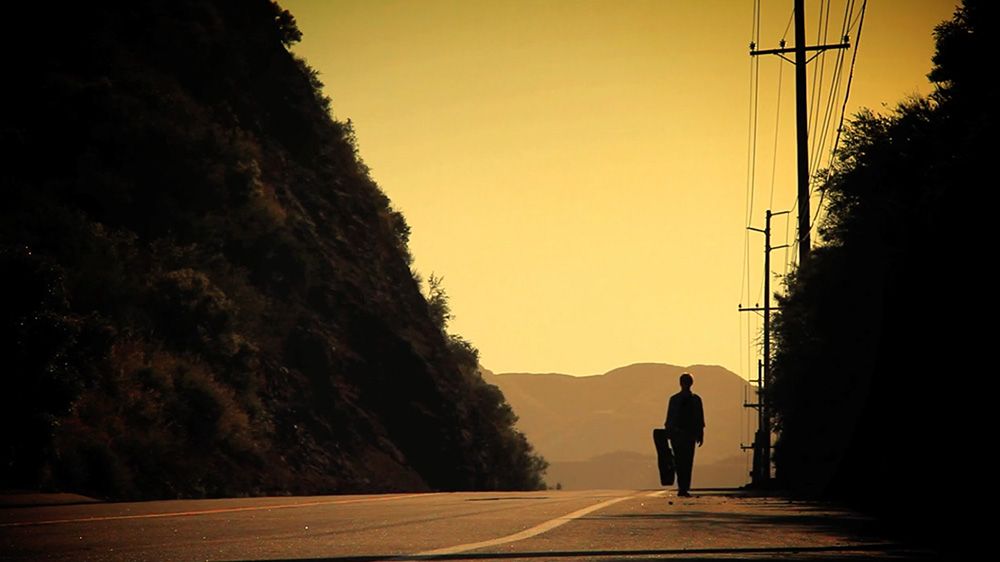
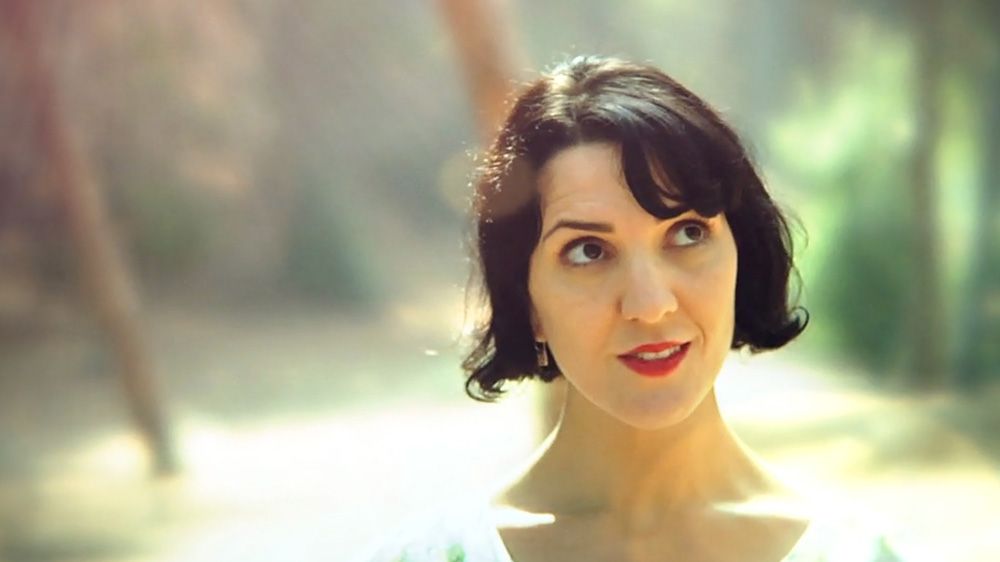
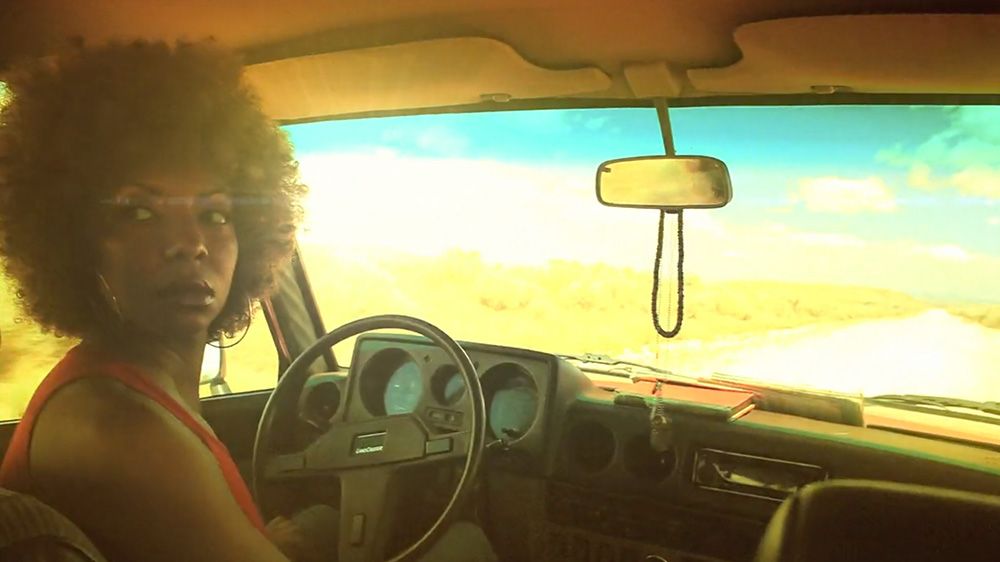
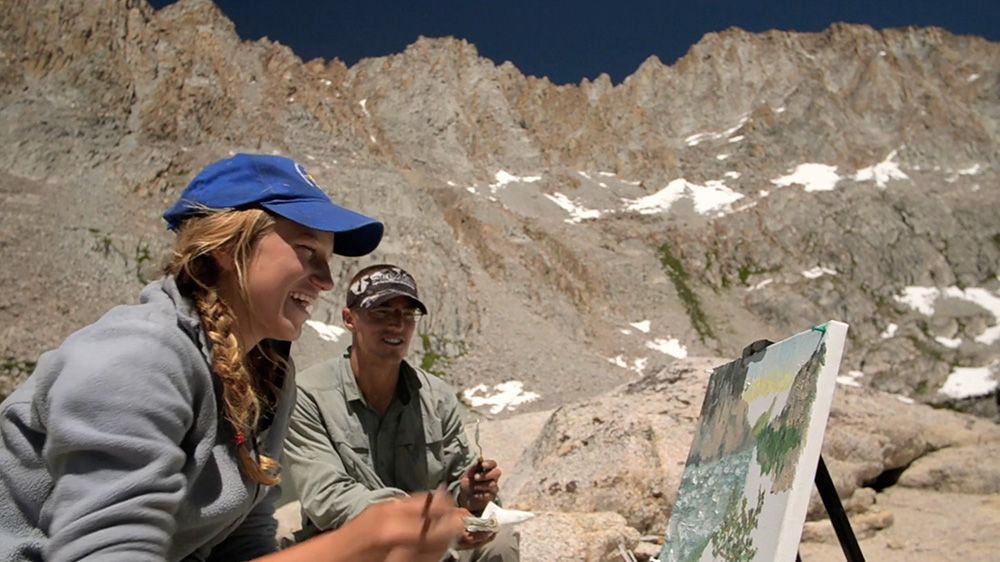
"I have one vivid memory of riding my bike, imagining I was going fast down a hill on a motorcycle, and in my mind, at that moment, I truly believed it! There is something beautiful about our imagination when we’re kids. It can transform you, from what is otherwise a very real world, into anything you wanted it to be."
"I had a modest upbringing, but my family worked incredibly hard and always valued my creative interests. For my eleventh birthday, my parents saved up and purchased a Super 8mm camera for me (I still have the layaway receipt from J.C. Penny). A neighborhood friend, Julio, and I would build these intricate cities with old cardboard and make stop-motion films with GI Joe figures. I hadn’t thought of it as a career yet, but I knew I loved making images."
"It wasn’t until high school that two important moments occurred in my journey, both centered around my television production teacher, Charlie Schomer. The first moment was when he shared Orson Welles’ Touch of Evil, which blew me away in terms of how the camera was employed in the storytelling process. And the second memory was when he spent an entire weekend at the school with me as I edited a short film I’d directed for a competition. It meant a lot to know someone outside of my family believed in me."
"Charlie always appreciated my passion and how ambitious my film projects were. He believed in me and helped me to take those first important steps towards filmmaking. Charlie still teaches at the high school where my wife Jen and I attended and occasionally stays with us when he’s visiting relatives in California."
"After high school, I left Florida for Santa Fe, NM. Before my freshman year, I had never been west of the Mississippi, let alone on an airplane to another state. The experiences and creative friendships I gained studying that year at the College of Santa Fe, continue to have a major influence on my career."
"Santa Fe is also a huge arts center with an eclectic creative community. I think it’s safe to say this was the beginning of my love for the arts. Because of financial limitations, I returned to Florida after only one year, but the impression of that school and its creative community continue to last."
"Once back in Florida, I started applying to all of the various film schools I could think of. After starting my film studies at Santa Fe and having worked on tons of student films, I thought I would get into another film school straight away. That didn’t happen for the first couple of years, which hit me pretty hard."
"For a brief moment, I gave up on the idea of becoming a filmmaker and began taking courses in elementary education. I did this for a short period until coming to the realization that rejection and failure was going to be a part of this journey throughout and I’d better get used to it at some point."
"To pay the bills and get some work experience, I took a job editing wedding videos for a small company in Orlando. It was the first year of our marriage, so it gave me an income while being able to run the gauntlet of editing. It was the perfect first job, as I had plenty of opportunities to edit my personal projects in between weddings. From there, I started PA’ing at Nickelodeon in Orlando where I met some amazing people, some of whom I continue to work with now that I’m directing. Around that time, I was accepted to a film program I really liked, but decided to continue working in the industry instead."
"My Dad is from Staten Island, so there has always been a New York/Italian influence in my life. Two years after Jen and I were married, we made the decision to leave Florida and to try our luck in New York. We just decided to chance it and went there without a job lined-up! I really wanted to pursue the path of an editor and I figured that this was the best way to do that."
"My first job in New York was as a post production coordinator with Jim Henson Productions on the children’s program, ‘Bear In the Big Blue House.’ I am sure that my earlier studies in elementary education influenced my great fascination with children’s television at the time."
"Working on something like ‘Bear In the Big Blue House’ was an incredible experience and a huge amount of fun. I loved the opportunity to observe the technical approach to working with puppeteers. It was like being a kid in a candy store for me!"
"My next production job was in reality TV, when it was still pretty unsophisticated. Fortunately, my producer, David Cook could see that I really wanted to get into editing. Another seminal moment in my journey came when David gave me a chance to edit one of the episodes of a dating show we were working on."
"I remember sitting with him, still trying to learn all of the hotkeys. He was VERY patient, as I was truly the slowest editor ever! But David believed in me and I ended up cutting for him for a number of years."
"Back then, I am not too sure that my dream was to become a director. All I really wanted to do, was to be a filmmaker and tell stories. Being a filmmaker is a lifetime commitment and you have to be ok with the time that it takes for you to get there."
"I remember one night in particular, when Jen and I were walking back from seeing a small show in New York. As we were walking towards the subway, the rain just dumped on us! We were having a pretty tough time then, both doubting ourselves as the work had not been as regular as we needed it to be."
"It was one of those moments when you reflect on how good life really is. The good, the bad and the hard times - they were all just part of the journey we go through. I had a mental shift that night and realized that everything would be ok in the end. Even though we occasionally dip back into those dark moments, that shift has stayed with me. It’ll all work out."
"If I wanted to be a director, then I was going to have to make that my priority and commit to it long term. Once I understood that, I now saw my editing as a step to becoming a director. It wasn’t something that had to happen right there and then, but something that was going to happen over the long haul."
"My wife, Jen, has always supported my efforts to follow a creative pathway. She has been ok with spending our own money on projects that we believed in. While we were in New York, Jen produced my first short narrative comedy that I wrote and directed. She saw projects like this one as an important outlet for me and convinced me that this was my film school."
"At this time, I was freelancing for Viacom’s Nickelodeon, MTV and VH1 networks. Every year, the major networks take part in what’s called the Upfronts, a week in May when they would pre-sell their advertising space based on the pilot promos for the up coming season. Although CBS’s promo department was in LA., they would fly out their team of twelve to New York for 3-4 weeks, crazily putting all of the promos together. They would quickly setup a bunch of edit bays and hire in two local editors out of New York."
"I came on as one of those two local editors, and worked with one of their producers, Sarah LaBrache. Her boss, the head of CBS’s promo group, was so impressed by my speed and quality, that he said that if I ever came to LA, there was a job waiting for me."
"We were expecting our first child, so Jen and I had expectations of buying a brownstone and starting our family in New York. When we lost that pregnancy, everything in our world changed."
"This was a huge shift for us, so we thought we would give the job in LA a go! Coming to Burbank from New York City was initially a bit of a culture shock, because it’s a much sleepier town of course. But the community here in Burbank is wonderful. Over the last eleven years we have grown to love our lives here in LA."
"For the first two years here, I worked on-staff with CBS. After that time, I left to pursue my career as a director. Over the years, my relationship with CBS has really blossomed with them giving me plenty of free-lance editing work to fall back on. In more recent years, they have been giving me more work as a director in my own right, which has really helped my career along."
"Directing is all about confidence. It is one thing to go out and direct a small passion project, but it is another thing entirely, when you have a large crew looking to you for answers. It’s only now, that I feel entirely comfortable directing large commercial projects. For me, this confidence had to come from experience."
"One of the big risks you have to stay on top of is getting too caught up in the whirlwind of a production. The crew relies on you to have clarity of mind and to carry them along through the process. Moving Parts, the production company that reps me for television promo, has been a huge supporter of me and has helped me to carry over my personal approach to the larger shoots."
"The interesting thing, it’s the passion projects I do these days where I succumb to the various distractions! With a larger crew, I’m held more accountable, and as a consequence, maintain better control over what needs to be done and when. With my own projects when I’m directing and shooting at the same time, I can easily get distracted. It’s not necessarily a bad thing, because I’m able to work through creative ideas and land on something spectacular. This is a luxury of time that may not always happen on the larger shoots."
"Things definitely took a big turn for me when I started to develop my own style. What appeals to me most about directing are the storytelling and the people I get to meet (both behind and in-front-of the camera). My love of interesting stories probably comes from my professional growth in NYC and the nostalgia of growing up in the South. I’ve never really thought of myself as a southerner, but I still hold onto a lot of the character and culture of the south."
"It’s an interesting thing to see the place of your childhood scrutinized from an outsider’s perspective. Having lived there and having experienced all of the good there, it was suddenly overshadowed by all of this negativity."
"Jen and I went to school in an ethnically diverse community, which I’ve always been grateful for. I was also incredibly fortunate to grow up with a family that valued character beyond all else. My grandmother (with whom I grew up during my early childhood) did not permit any form of racism and always saw the good in people."
"She was an inspiration to me and a champion to those whose voices were seldom heard. I think my experiences living with her and the community to which she exposed me, have strongly influenced my desire to tell stories of people who work hard for what they love, be it family or creative passions."
"My next big goal is to tackle a narrative film. I have had a story bouncing around for the last couple of years, but sadly, it never gets my full attention. Now that I am receiving attention for the quality of work I am directing, I feel I have the confidence to make this script happen."