Paul Provost

“I was the youngest of 5 kids, and since I had been going to a strict private boarding school, when I then went to business school and was on my own for the first time, and I went a little wild - I guess because it was my first taste of freedom. I had no dreams of becoming an accountant, I was simply doing what I was expected to do. I had become a musician in high school, so I thought what the heck, music seemed like a reasonable path to fame and fortune at the time, so I moved to Hollywood.”
“I decided I wanted to be a guitar playing rockstar. I had a couple of friends out in Hollywood, so I just packed up my car and drove out here. I spent about 10 years trying to make it in the music business, which is about the toughest road you can pick.”
“I came out to LA and ended up at a school called ‘Musicians Institute’ which was very big at the time, it’s still going today. At that time it was 'GIT - Guitar Institute of Technology' which was basically a guitar trade school that trained you to work as a session musician, because that was sort of a way that you could actually make money playing music in LA as a session guy. (Or at least that's how they convinced the parents to pay tuition!)”
“I went down that route and ended up building my own recording studio, started writing and recording but did very little live performing. I focused on the writing/producing area. The competition in a city this size is enormous and the odds of making it in music are so small. It’s just brutal.”
“The reason I did not do a lot of live performing was that I had terrible stage fright. I also wanted everything to be perfect and because I had my own recording studio, I was used to every note being perfect, which it isn't how you play live.”
“As it became clear that I was not going to become "The Next Big Thing", I decided to try to get a job at a ‘mix house’ doing audio for film and TV, and just could not find anything. It was during a recession and everyone was being laid off. So a friend of a friend offered me a gig, said it was not great, but it is yours if you want. So I went and worked at this video dubbing house quality checking VHS tapes.”
“That is how I got into the post business, but it was great,as I was exposed to millions of dollars worth of equipment. I learnt about all the broadcast standards, scopes and basically what most people don’t learn these days, what the video signal actually is. It was great fundamental training.”
“I worked there only about 9 months, and because there was always a lot of hiring and firing based on how busy the industry was, I got laid off. I immediately found a job at a small boutique post house that did dubbing, but they had a real niche market where they were building demo reels for commercial and feature directors and DPs. It was kind of low end work for post, but we were doing it at the very highest end, working with the top of the top in the business.”
“We would have Ridley and Tony Scott, Darius Wolski, Zack Snyder, Matty Libatique, guys like that, coming in to build their commercial and feature showreels with me. In doing these reels I would sometimes need to do very basic colour correction using just the TBC on 1" reel to reel or D2 VTRs, so that was really my first exposure to colour correcting. Ridley would say something like "crush the blacks and make it a bit more fashiony!" I had no idea what he was talking about at the time, I just turned the four knobs until he was happy!”
“So I spent about 10 years there being exposed to clients like this. Showreels back then were a huge deal. Nowadays you just put something up on YouTube or Vimeo and nobody cares much about it. But back then there was a lot of anguish over which spot went first, what order they would play in, etc. Then they would make 50 or 100 3/4" tape dubs to send out, just to have some producer or agent change their minds and then do it all again at huge expense! It was just crazy.”
“I had gone way past were I could go there, I was the General Manager and could not go any further. About 2002/2003 Final Cut had really taken hold and non-linear edits systems had become far more available, DVDs were starting to replace three quarter inch dubs so it was a lot less expensive to build a company doing that kind of work. It was still significant because you had to buy digibeta decks and monitors, etc., but you could start a small place for $100,000 instead of $500,000.”
“So I left along with another guy and we set up a boutique post company called 'post + beam'. Because I was sort of the face of the previous company and all the clients knew me, many quickly came over to us. We were very fortunate, and growth in the first few years was amazing. We were doubling in size every year. And then after a few years we moved into our own building, with employees, health insurance, profit sharing plans etc and we really thought it would go on forever.”
“But then everything changed in the business and with technology. We had this big infrastructure and overhead that just could not sustain itself, and we were unable to change with the industry quickly enough.”
“We had to keep it limping along for quite a while because we were in a lease, so we did what we could to try to morph into something that was more viable. To be honest we had just got so stuck in that showreel thing because it was immensely profitable. There was a huge demand and we were the ‘go to’ shop in town, so we were turning away other post work because it was not as profitable, and we basically pigeon holed ourselves.”
“When people could do their own showreels on their laptop and post them on the internet and nobody needed us anymore they went elsewhere for all their other post because we had not really built up much of a reputation for traditional post services, even though we did offline, online, color grading, VFX etc. Everyone just saw us as the DVD showreel guys. I kind of always knew that day was coming in the back of my mind, but just thought it was further away. I really thought that blu-ray would take off more than it did, but it all just went online. I guess we were in good company, as all the major movie studios were feeling the same pain!”
“When we were finally able to put 'post + beam' to bed and shut it down, I decided that I did not want to start another post house or another company which had that much overhead. It just didn't make any business sense anymore.”
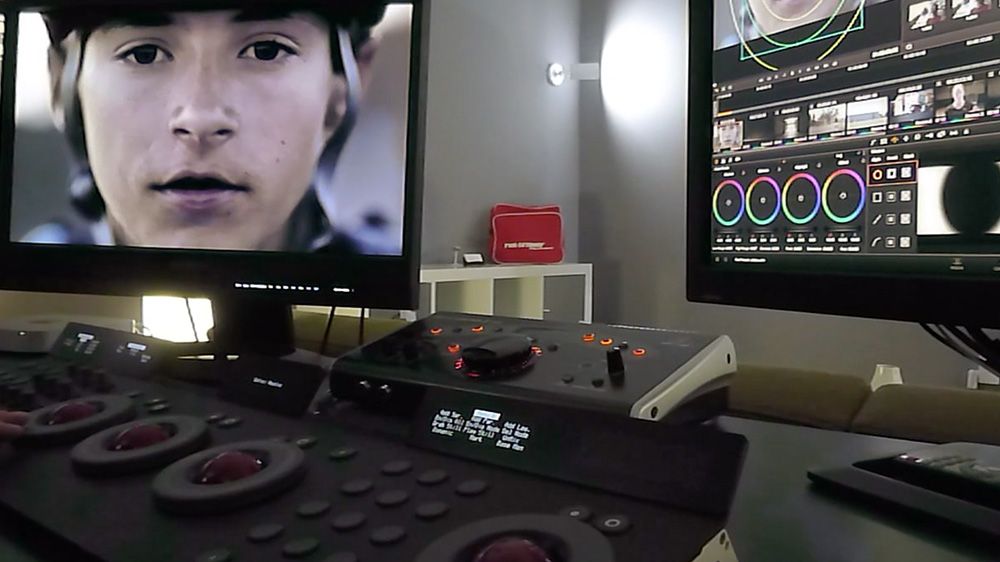
“So in closing post + beam I opened ‘4K Finish’ focusing purely on color as the colorist. I have been open as 4K Finish for a little over a year now and am building my client base. It's been challenging because I was not always known as a pure colorist in the past, and a lot of the other guys in town have come through the traditional telecine path and have been doing only that for a good 20 years or more. Whereas being the owner of a post house, I ended up doing much of the administration / client side of things while still keeping my hand in the technical / creative side of things. I would group myself in with the newer generation of colorists who have grown up with the software based side of things which began with Apple Color, and are often more self taught, rather than being an assistant who was mentored at one of the older color houses doing film to tape. There are advantages and disadvantages to both sides of that coin though.”
“I am really enjoying what I am doing. I think, for the first time in a very long time. It's because I am not just the owner of a company that looks after the business side of things, and I am back to working directly with clients and directors and DPs. I feel much more creative, and have been fortunate to be involved with some great projects.”