Mike Skoptsov
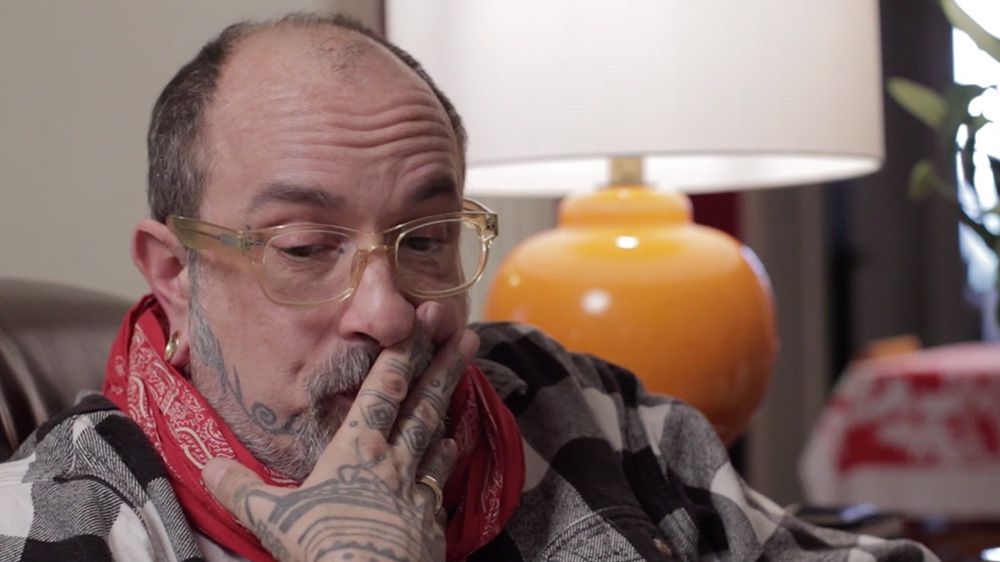
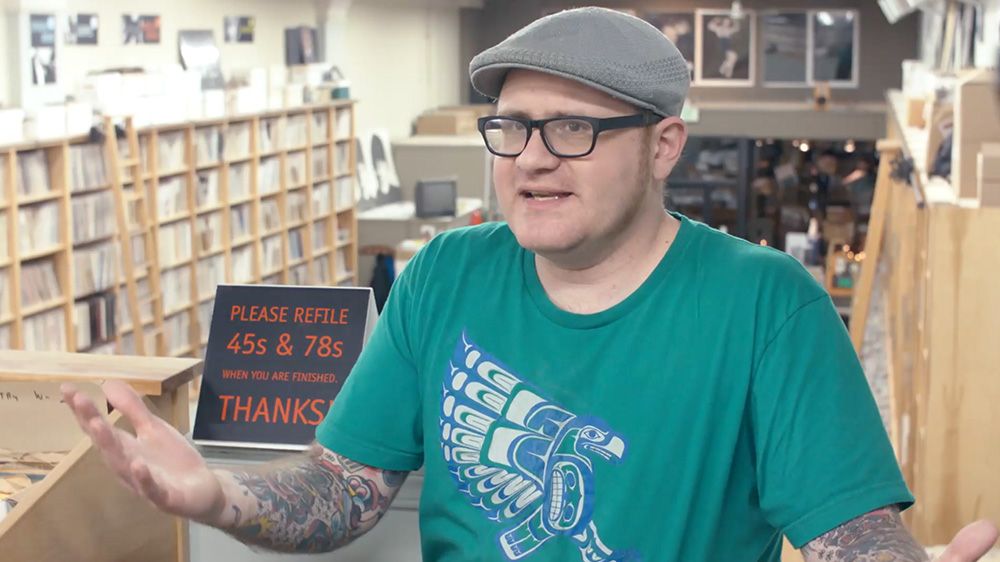
"I am not entirely sure on the exact reasons on how we came to seek asylum in the US, but I know it all took place shortly after the fall of the USSR. I was about ten when we first moved to Seattle, to live with another American-Russian family."
"My dad tells me that in 1997, the currency in Russia crashed overnight and thousands of people lost everything they owned in a single day. My family had a business in Stavropol, which also became worthless over night!"
"Fortunately, we knew someone in Seattle who was willing to help us. So my mother and I left Russia with a suitcase and $1,000, to come and live in America. When I got here, I found the family we were living with had four children and none of them spoke Russian!"
"Being with an American family and going to an American school at ten years of age, meant that I learnt to speak English very quickly - with no hint of a Russian accent. What’s more incredible, is that when I was a child, I could barely speak at all let alone learn a new language! I nearly didn’t start school in Russia, because I had the worst stuttering problem you could imagine."
"My parents never gave up on me though. They managed to get me into an experimental program in St Petersburg that completely cured me. That probably save my life, because I couldn’t imagine what life would have been like otherwise. My mother is the most incredible person for doing that for me."
'As a kid, I was technically minded and found I was very good at maths. My parents seeing this, thought that I should go into the I.T industry and become a programmer. But I am more of a creative and found that other things were of greater interest to me. I guess the first thing that interested me was my music."
"When I was at school, they had this free music program where you were given an instrument and free lessons. The only catch was it was under ‘The Endangered Musical Instruments Program,’ meaning you couldn’t pick guitar or the drums. So I got stuck with a bassoon!"
"It actually turned out to be a great instrument to learn. I guess that’s where my sense of rhythm really started to come together for me. I never really thought at the time, that learning a classical instrument would have such a large influence on my editing later in life. In editing, everything is about the beats so having a musical background really helps a lot."
"My next big thing was skateboarding. I was so inspired by it and got totally into the scene. My parents were of course concerned about my grades at school, so they figured they could bribe me with something. Well that turned out to be a Canon GL1 MinDV camera. The deal was that if I got really, really good grades, then I could have the camera. Well, I got the perfect grades that year!"
"With my new camera, I very quickly found found myself shooting videos and editing them for everyone, including the local skateboard shops here in Seattle. I never really thought of myself as a filmmaker, because my parents were expecting me to go into I.T. After awhile, I guess they realized that was never going to happen and simply gave up, saying I should do whatever I wanted."
"I really owe everything to my parents. They have worked so incredibly hard to help me realize my dream of becoming a filmmaker. If it wasn’t for my parents, I would never have come to Seattle and been able to do what I do everyday."
"With their support, I decided to go out on a limb and try out film school. We are super fortunate here in Seattle, because we have one of the best film schools; and it just so happens to be a community college too. It is definitely one of these best film schools in the state and probably one of the best in the country. I am pretty sure that most of the successful filmmakers in Seattle all came through the same program."
"It was while I was doing my final year, that I seriously found my way into editing. Pretty soon I became ‘that guy who can edit’ in my year. I ended up working on two short films, a documentary and a bunch of other projects for everyone. With more than four massive editing projects on the go at once, I can honestly say that was the craziest time of my life."
"When I was a kid, I found skateboarding films inspiring to me. They motivated me to go out there and shoot my own films. I guess that has always been my inner goal. I want to inspire people through filmmaking, to go out there and do the same thing! So I guess, documentaries for me are an extension of my love for skateboarding films when I was a kid."
"After I finished college, I did what the rest of us usually do. Found myself without a job and broke. Fortunately my good friend Futsum Tsegai and I found our way into Sub Pop Records, where we have been doing a bunch of music videos. Futsum is a really talented freelance cinematographer, so we have ended up doing a lot of work together over the years."
"Editing work in Seattle comes and goes, so I do a lot of motion graphics work as well. I think that all comes down to that technical side to my personality. There are a ton of people all wanting to direct, but not so many who want to do the post side of things, like I do."
"I am starting to find my way into color grading, because it’s that perfect blend of the creative and technical minds. It is so much fun and I can really see me heading down that path in the future. More recently, I have been doing some great documentaries with a bunch of my friends from college. We all have different connections throughout the creative scene here in Seattle, so we all tend to be doing different things."
"We love coming together as a group to do documentaries as a team. We’ve done a bunch of 48 hour film festivals and have recently won a number of awards at Hot Docs. Last year we won ‘Best Film’ and the year before that we won ‘Best Interview’."
"These are some of my best friends and some of the most creative people I know. Marcy Stone-Francois is our director, and Futsum Tsegai and Cozell Wilson do the DP work, while Luke Knecht does our location sound. I usually do some of the B-camera, the editing, titles and grading on these things."
"I enjoy the whole post production process on these things. We are usually under the most insane time pressure, but I think that really sharpens up your skills and improves your craft. I still transcribe everything myself and then print it all out on sheets of paper as a rough paper edit. I find that I can read the story so much faster that I can hear it. Although this process took about six hours on the ‘Mark Mitchell’ documentary, it must have saved my about twenty hours in the edit. There must be something to this approach, because we won ‘Best Interview’ at Hot Docs with this one."
"There is something about documentaries, that allows me to see things from a different perspective and share that viewpoint through the edit. I guess it all comes back to being of two cultures. When you come to a new country, you soon become very good at understanding different behaviors and seeing the subtleties in things. You learn to see the smallest of things and have an appreciation of how to share that with people."
"Although I am totally American, my way of thinking is still influenced by European culture. I find that when I am working on a documentary, I can see things that would go well beyond the American viewpoint. I think that’s so important in filmmaking. That we make sure our films have a universal message and have an appeal that goes way beyond our local culture."
"I find myself constantly arguing from that single perspective, regardless of how controversial that maybe. Being able to see things beyond the framework of our culture, is something I have become very passionate about. I think that these things add so much more emotional depth to the way you tell the story."
"I have never wanted to be a director, because I get so much more joy out of helping others to tell their story. Having said that though, whenever I go back and watch one of our films six months later, it’s surprising how much of my own story comes through in the edit."