Michael Sternoff
"I later graduated from Montana University where they had a really good broadcast and journalism school. The great thing about broadcast, is that you can use the entire world as the canvas for your camera - and I guess that's played a really big part in my becoming interested in journalism."
"After doing my internship in New York, I then decided to move out to Chicago with a stockbroker friend. The first time I drove through Chicago, I just loved it. It’s not as big as New York or L.A. but it’s still a big city, and more importantly, it immediately felt like home to me."
"After doing my internship in New York, I then decided to move out to Chicago with a stockbroker friend. The first time I drove through Chicago, I just loved it. It’s not as big as New York or L.A. but it’s still a big city, and more importantly, it immediately felt like home to me." Being in a new city, I now had to find a job. So I just started cold calling anyone I could find in broadcast. I knew of girl who went to Montana University and it turned out she was working at Chicagoland TV. After asking her for advice, she then offered to put my VHS tape in the chief photographers box. My first big break came when Chicagoland TV offered to start me out as a freelancer working as a photojournalist and cameraman. After a couple of months they could see that I had other skills, so they hired me as a video editor as well. And that's pretty much how I got into broadcast and journalism in Chicago."
"From then on, working was like my second training. I would go and shoot stories every single day and then go to as many seminars as I could, learning how to use a camera to tell stories! I was doing everything I could, like riding the truck and riding the mast. I did sports events at Wrigley Field, parades and house fires. You name it I did it. I worked really, really hard everyday, even working on my days off to learn truck ops and editing."
"It took me about a year to learn all of the equipment and to have the skills to be able to tell a really good story. To get my stories on air, I had to do a lot of journalism in my free time. My first big break was an article I did on the Columbus Day Parade in Chicago. When I got there, I found a major protest marking the genocide that Christopher Columbus committed against the Indians. So I went around interviewing everybody and soon discovered the truth about how many people the Spanish killed and put into slavery. My story started as an interest piece on the parade and then quickly transitioned to how people think it should be renamed Italian/American Day. That was the first piece where I learnt how to do everything."
"My next big break came thanks to Ed Mann who was the director of Operations at NBC. In Chicago, NBC is an owned and operated station with another broadcast division called Telemundo. So for half the week, I was do stories for NBC and the other half of my week, I would do stories in Spanish for Telemundo. It was really difficult getting my Spanish up to speed, but like anything, the more you work at it the better you get!"
"There is this huge Latin American presence here in Chicago. Mostly I was doing the nightly news, which includes house fires and city hall type stories. However, crime has become really bad due to gentrification of the different neighbourhoods, so the nightly news was all about covering a lot of the action to do with the gangs. As a photographer, this sort of news coverage does something to you. It's hard because we are going into these peoples' homes straight after the violence."
"I remember when I was with Telemundo, I was interviewing the mother of a fifteen year old who had just be gunned down that very day. It was one of the strangest things you do in news. Because I did so much of this hard news at that time, the one thing I learnt is that most people actually want the same things from life. I came away from it all, liking people better. I guess that's because I met so many different people who all want the same thing from life, but were unfortunate enough to be thrown into these absolutely horrible situations."
"In fact, my very first summer in Chicago, I was sent to the far south side at 112th and Michigan, where another young boy had been killed playing basketball with his friend. His best friend told us that these gangs came over the hill and started to shoot down on them as part of their gang initiations. With gang initiations, they just go out and shoot some unarmed kids from a rival gang. In this case, the boys were just playing basketball. When I spoke to the boy's grandfather, he said that he wanted to move his family to a safer place but couldn’t afford to. You learn a lot about people’s lives when you do this sort of journalism."
"After five years with Northwestern and NBC, the recession hit and layoffs were coming. So in 2009, I decided to take a break from hard news and travel for six months shooting documentaries. I went running with the bulls in Spain and then to Belieze on a shoot, and then onto Bogata doing a motorcycle diary. After that, I went to Bolivia, Machu Picchu and finally Brazil. I fell in love with Latin culture."
"When I arrived back in Chicago, Beth Bennet called me to see if I wanted to help out with some teaching at the Medill School of Journalism. So at twenty five years, I started teaching undergraduates which was pretty intimidating at the time. I had to learn how to do lesson plans and structuring a class. I knew broadcast journalism from the field, but now I had to learn how to convey this in the classroom. It was not as easy as you may think! But like most things, I just worked really hard at getting it right. There's a lot of technique in broadcast journalism, so it was great when you could see a student's work really develop once they knew this stuff."
"Later, I had this really cool opportunity to join LX.TV, which is a lifestyle network based out of Chicago. Even though it's still part of NBC, it was under a different division which meant I could do every part of the story with these guys. I could now shoot, edit, report and basically have full editorial control and ownership of the story. Because it was a lifestyle program, I was meeting celebrities, reviewing the best restaurants in the city. It was a super fun job!"
"Just after Oprah Winfrey left the ABC studios for the Harpo Studios, the President of ABC 7, Emily Barr, decided that she wanted a local morning show that would be super fun and exciting. I guess that was about a year after I joined LX.TV. Thanks to a producer friend of mine at ABC, I suddenly found myself working at ABC 7 on their new program, which they called 'Windy City Live.'"
"I have to say, it was one of the best work environments ever! At ABC I was responsible for everything in the field so, I would go out with people like the co-host, Mark DeCarlo and do some seriously crazy stuff. While working on 'Windy City Live,' I decided that I wanted to do more national programing. This was about the same time, I had just finished shooting my second documentary ‘Kindred.' I realised that I really needed more creative ownership over my work."
"After completing my second documentary with Beth Bennett, she suggested doing yet a another documentary. We both felt that our filmmaking skills were pretty solid at this stage given the two documentaries we had produced together, both won Emmy Awards. Then I saw on Twitter, the International documentary challenge. Again, we did pretty well with our film ‘Spin,’ being a finalist."
"At this point, I am now seriously considering doing longer form documentaries. That was until I spoke to a lot of big name documentarians. Their advice was to build a reputation as a documentary journalist by doing some smaller projects before launching into long form."
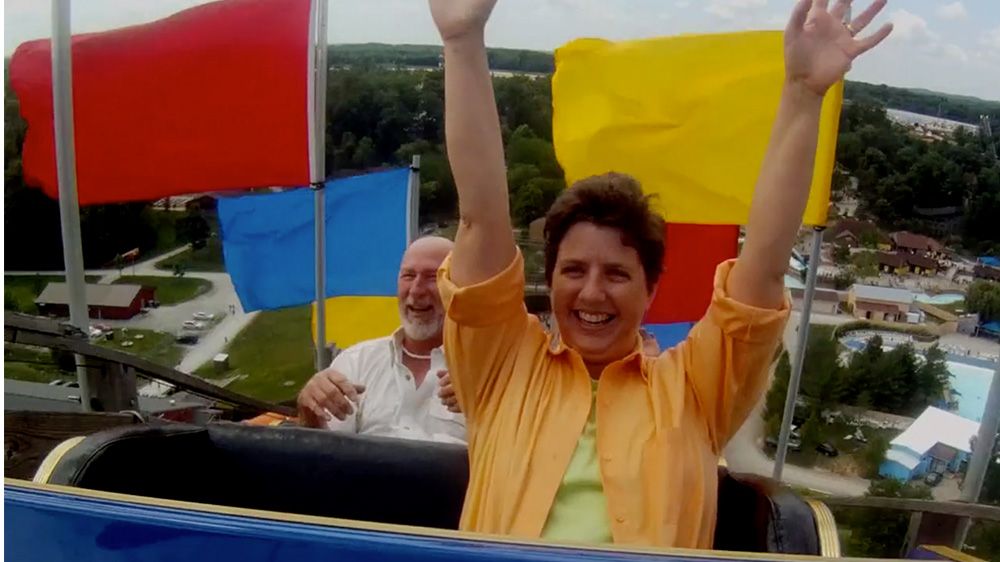
"And that's pretty much what I am doing now - doing the things I have always wanted to do. It has always been my dream to work for the New York Times in some capacity. So I went on Linkedin and contacted pretty much everybody I could find at the New York Times, to see if someone would get back to me. Sure enough, one of their journalist did get back to me and explained to me what sort of projects they were doing these days. Fortunately, they are doing shorter documentary style pieces! So I contacted their assignment editor and she first hired me to do the piece on roller coasters."
"Now that I am living in Seattle, I been working for the New York Times some more. I also contribute regularly as a video journalist to the Huffington Post, which helps me focus on national type stories. The best thing about video journalism, is it leaves me my nights and weekends to work on documentaries. This way, I really do get the very best of both worlds!"
"For me, documentaries have the power to show stories as they are! They inform people about things they might not have ever seen before. With my first documentary ‘Under the Ice,' I had people come up to me and say, ‘I never knew about that.’ My New York Times piece on roller coasters, was great to do as it was something people hadn't seen before. There is a real power with documentaries where you can empower people to make better decisions. You can help and benefit society, as I believe that documentarians and journalism are the checks and balances of The State these days."
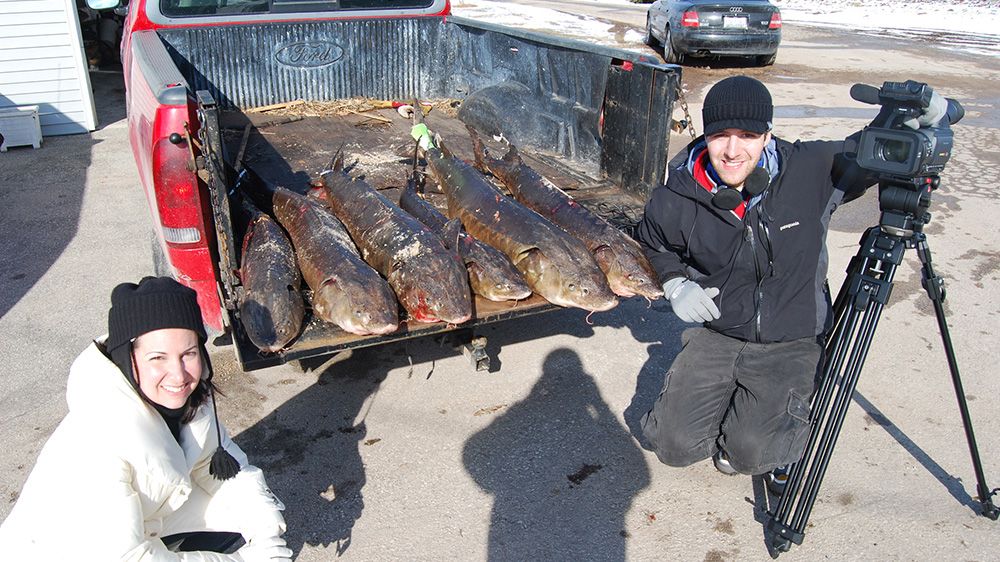
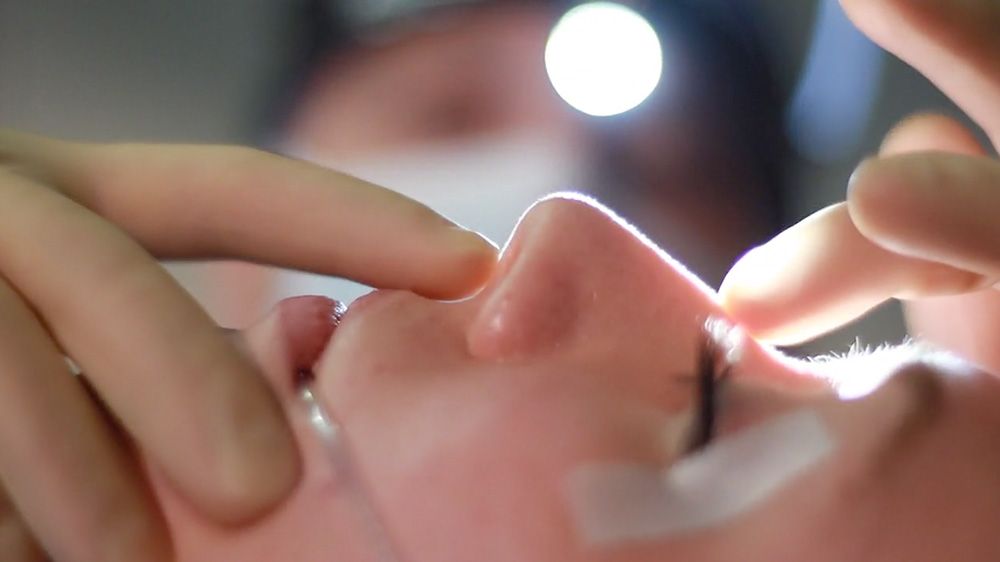
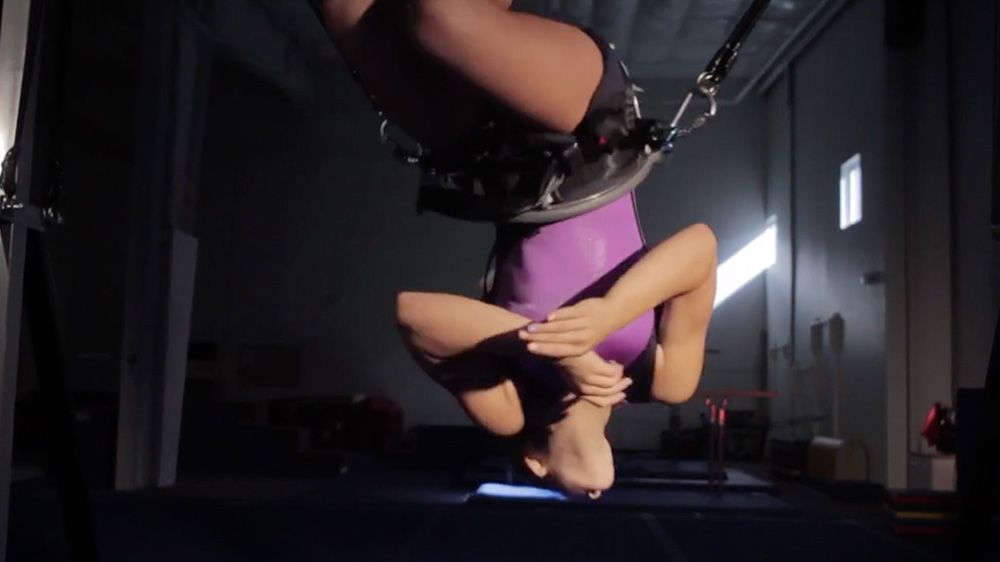
Michael Sternoff and Beth Bennett’s first documentary, captures life on frozen Lake Winnebago during the sturgeon spearing season. Shot in 2009, their debut documentary 'Under The Ice,' won two Emmy Awards and a National Press Photographers Award. Their second documentary collaboration, 'Kindred' tells the story of Kindra McLennan who died of cervical cancer at the age of thirty. This documentary also won an Emmy Award and Best documentary at the Illinois Film Festival. Their third documentary 'Spin' was a finalist in 2012, at the International Documentary Challenge.