Matt Rutherford
"Studying languages at Cambridge University was the best way of going and getting the degree experience, without having to tie yourself down to a career. Cambridge doesn’t offer a film program, so I just used to shoot films for myself while I was at college. In fact, I tried to avoid film school altogether. Film is such an entrepreneurial process, I strongly believe that you can learn better habits by just going out and making films yourself. The act of learning on the spot how to do something without any prior training is itself a key skill, a skill that film school by definition can’t teach. It’s the beautiful chaos of working your way through a new experience. You need to embrace this if you want to innovate or do anything new."
"I mainly shot documentaries in my own time while I was studying. I remember shooting a short documentary about Chinese motorcycle gangs in Taipei with my friend Chris Naylor, which was rather fun. While we were shooting, we were chased by gang members with bats and things, and later ended up having our motorcycle confiscated by the police after being part of an illegal street race. Fortunately we were able to run away from the police on foot, so the bike was the only casualty. That one experience hooked me into documentary filmmaking for the rest of my life."
"After studying Chinese at Cambridge, I did an internship at the British Embassy in Beijing. It was just normal diplomacy, and I found the whole thing incredibly boring. Thankfully, I was next given a scholarship to undertake Arabic studies at Harvard. I was only supposed to be in the US studying for two years but in the end I never moved back to the UK. The US is the cultural centre of film and tv for the western world, and beyond. So if you’re going to start a film career somewhere, then why not in the biggest pond of all."
"While I was at Harvard, I wanted to do my own startup business, so that I could make a lot of money quickly and then go off and make more films. Facebook had started at Harvard in 2004, and there was a strong theme of tech entrepreneurship at that time."
"So when I graduated in 2006, I bought a van for a few hundred bucks and lived in it outside of my friend’s backyard. The idea was to live very low cost so I could put all of my money into a business. You could get free food by sneaking into the Harvard dining halls. What I forgot, was how brutal Boston’s winters can get. By the time it came to October, I was freezing and I realized this was pretty miserable and ridiculous. So I got a job in advertising in NYC."
"A friend had told me about a creative job available at a new boutique ad agency in New York. When I went down to New York to check it out, I just fell in love with the place. David Droga had just started Droga5 few months before I join, so I came in as employee number 19 or so. They were looking for unconventional people to work in advertising who had an interesting background. So they took a shot and employed me as a copywriter."
"I really enjoyed the whole New York ad scene and it turned out to be a ridiculously fun year or so. Advertising was great, but I also started to miss the intellectual stimulation from academia, as much as I liked helping Droga5 sell rum and sneakers."
"I had another friend from Harvard who was a producer for PBS's Charlie Rose at the time. When Charlie had his private screenings, the producers could ask along a few friends to the viewing. So I had met Charlie a couple of times by the time my friend decided to leave the show."
"Charlie is really the only TV host in the US that does regular hour long interviews with people like Bill Gates, Richard Branson and Martin Scorsese. So the show commands a lot of respect over here. So when I was offered a role on his show, I jumped at it."
"I produced shows and ran digital strategy for Charlie for about a year and half. His producers all tended to have their own specialty and mine was technology and China. Some of the interviews that I produced include Jeff Bezos, who was introducing the Kindle for the first time, and Hollywood celebrities like Brad Pitt. The second part to my job was the show’s digital strategy. So here is the thing, Charlie has thousands and thousands of hours of interviews that are all online. Charlie was always experimenting with new content for online, for example we tried out a new ‘peer review’ segment, somewhat like Warhol’s Interview magazine format where other famous figures ask their own questions to the guest. This was additional content, you could only see it online after the show ended. Brad Pitt had a great story about a New Year’s Eve prank he pulled on a friend in the year 2000, using the Mexican army, it’s still on YouTube."
"While I was in New York with Charlie, I arranged for Michael Arrington of Tech Crunch to be a regular technology correspondent, which is how I came to know him. I was at his birthday party in San Francisco one year where I met Salim Ismail, then the CEO of the Singularity University. I remember we were a few beers deep, when I said to him that I loved the idea of the university and that I should come and film it in some way. Being in Silicon Valley, things can happen very quickly, so within weeks of that conversation they said that I should come to California and film the university. A couple of weeks later, we had all of our funding arranged for a documentary. This was only a few weeks after I got my Green Card – around this time I had left Charlie Rose and started a production company called Roc Noir, and so I moved to San Francisco to work on a film about Singularity University."
"Singularity University was created in the Silicon Valley by Peter Diamandis, the founder of the X Prize, and Ray Kurzweil, a famous inventor and futurist. They were supported by Google and NASA, and the university itself is based at NASA Ames, a highly eccentric research base in Mountain View, next door to Google. That combination of organizations and people was incredible, so I could tell that something interesting was going to happen here. The main aim of the University is to teach grad and post grad students about exponentially growing technologies, and to harness these growth curves to create companies that improve the lives of a billion people within ten years. The whole thing sounds a bit insane, but that’s why I liked it."
"Initially, this documentary about the university was to be a one year thing, but then we changed the span to follow the development of some of the companies that spun out of the university. This was an extended project, which we knew we could be filming for a long time, so we needed to start doing a lot of commercial work as well."
"To start with, we took on small, low budget projects, and just made sure that they turned out great – initially it was all portfolio building. San Francisco pretty much works on word of mouth, so we just kept on building up our portfolio, which in turn helped us get even more word of mouth. Before long were working with large corporations like Cisco, Google and Pfizer."
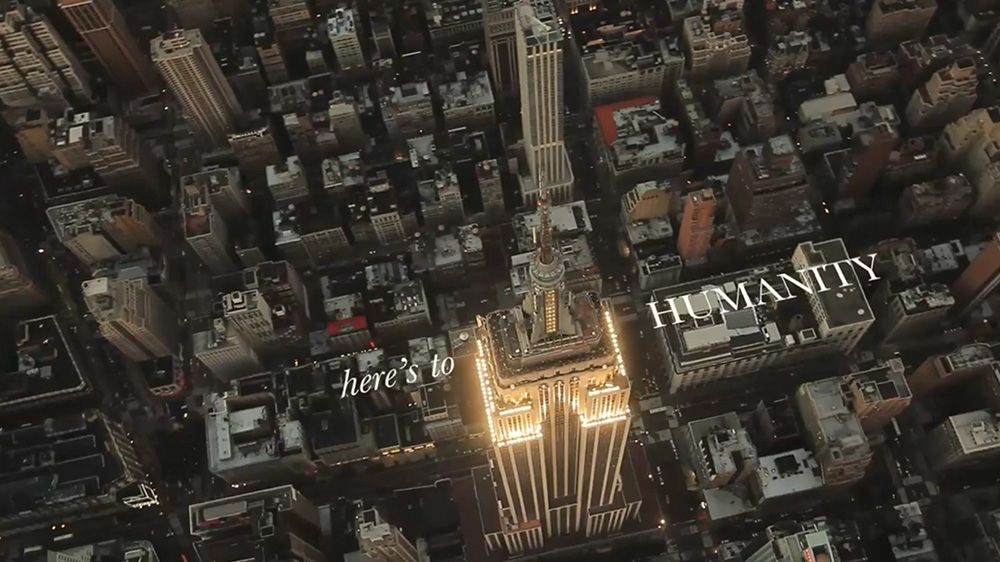
"Each client would not only get us more clients, but we started to get more work from each of them as well. At that point we could afford to be a little more selective about what we took on. We mainly concentrate on the content I personally want to shoot. The niche I love working on is content to do with the future of humanity. Technology is just a subset of that ideal for me. Technology is clearly one of the biggest drivers of human progress, its incredible. But really it could be anything to do with human progress. Anything that fits into that macro perspective fascinates me, it just happens that a lot of that ends up being about technology. Given this focus, we’ve picked up a lot of tech clients such as Google, Cisco and so on, because they incorporate the message and style that appeals to me most."
"I enjoy working for those types of corporation because I can use my approach to filmmaking for those types of brands. We focus on content that deals with the future of humanity. I really feel that more people should be focusing on creating intelligent content and portraying those stories in a way that is more engaging and accessible to the mainstream audience. There’s a great opportunity for filmmakers like us to help shift the mainstream audiences' interest from reality TV and sports, to things that really matter."
"The big issues in the world, are incredibly important me and my team. So part of my ideal goal as a filmmaker, is to highlight the crucial things that are affecting the future of our species, to get people thinking and inspired about these topics, and ideally to help audiences move away from simplistic celebrity culture which fundamentally doesn’t add much to human progress."