Marco Solorio
“Growing up as a kid, I absolutely loved everything about computers. The elementary school I attended in Walnut Creek, California had the early Commodore PET computers, which is where I got my first experiences playing around with technology. After begging my parents, they bought me a Commodore Vic-20 for my birthday. That was the beginning of my love affair for computing.”
“I was learning the ‘BASIC’ computer language while all of the big stuff was going on here in the Silicon Valley. Not everyone had a computer at this time, so thanks to my parents, I was able to grow along with computers as this whole ‘home computer’ thing started to evolve.”
“It was this weird time, where if you owned a computer, you had to learn how to make it work on your own. You learned very quickly how to become a problem solver, as there was no magic help button there for you like Google or YouTube. I think a lot of the frustrations and struggles that came with computing in those days, has certainly served me well with my career.”
“Back in the 80’s and 90’s, the home recording studio was a complete joke compared with today’s technology. It was a constant exercise in patience. If you wanted to do multi-track recording, the tools all had to be hobbled together with various sync connectivity. Four-track recorders and MIDI sound devices sounded like crap at the time. Whereas today, anybody can combine pristine digital audio and built-in realistic software synths in just about any audio music software package!”
“I remember back in the 80’s during high school, a friend of mine’s father was a professional video editor. He had professional JVC S-VHS broadcast tape decks that were connected via a master linear edit controller, so his son could do some really cool, frame-accurate edits at home. But for anyone like me at that age, editing was nearly impossible to do since the technology was both out of reach and exorbitantly expensive… especially for hobby use. I would see my friend’s setup at his home and just dream of having an hour or two on that thing! My ‘solution’ to my ‘problem’ was using consumer decks I ‘borrowed’ from my father (Video 8 and VHS) with no sync and lots of analog hits between manual assemble-edit cuts. It was horrific, but it’s all I had and made it work the best I could.”
“Long before I was shooting on Betacam SP and DV cameras in the 90’s, I got my first start in shooting consumer analog video and 35mm film photography in the 80’s as a teenager, thanks to my father. He was a bit of a consumer electronics junky back then, and I reaped the benefits of his ‘investments’. Looking back, it was all pretty basic stuff, nothing overly expensive or even professional, but it was a huge gateway for me to explore new forms of media, other than music performance/composition I was so wrapped up in.”
“Some time around the 1980’s, my dad got a Canon EOS 35mm SLR film camera and I often ‘borrowed’ it to shoot photos, which included cars and motorsports subjects. I also dabbled in Super8 motion picture film, but the associated costs were too high. But shooting with these various cameras (video, film, still) really exercised my mind in composition, subject matter, lighting, exposure, and so much more. It ultimately provided a foundation for my future in professional video production and ultimately, cinematography in digital cinema acquisition. To this day, I don’t think my father understands how much he indirectly and directly helped mold my life-long career in media production.”
“On the audio side of things, I subscribed to Mix Magazine as a teenager and I would literally cut out the pages of the various Neve and SSL consoles, frame them, and hang them on my bedroom wall! If I had a crystal ball as a teenager and I could see what the audio technology is like today, I’d be doing back-flips in awe!”
“Creativity for me, came early through my love of music. My first experience of playing a musical instrument was in the third grade (about 7 years old). Having an interest in trumpet (thanks to my father having albums of Herb Alpert, Doc Severinsen, Chuck Mangione, among others), I begged my parents for a trumpet that I could play in elementary school. The begging paid off and I had my first Yamaha student trumpet. As time went on and into middle school, my trumpet skills were improving where I ultimately made first chair trumpet in Jazz Band, which was a big accomplishment for me. It was at that time I also self-taught myself saxophone, keyboard/piano, and acoustic guitar. Amongst all that, I also started growing my little home studio (in my bedroom) with my MIDI gear. In a nutshell, music was my life and I loved everything about it. It literally got me through school, as it was the highlights of my day. As incredibly archaic as my little home studio was, it still allowed me to explore my musical ideas and grow with the audio technology, from analog to the new digital frontier.”
“I didn’t know at the time, that when I would finally go into video editing that my music background would be so important. I know a lot of Hollywood post-production A-listers commonly speak about the advantages musicians have in the video/film editing process, especially in regards to pacing, timing, and rhythm. Even Martin Scorcese said it best: ‘It’s the editor who orchestrates the rhythm of the images, and that is the rhythm of the dialogue, and of course the rhythm of the music. For me, the editor is like a musician, and often a composer’.”
“When graduating high school, my mind was set on going into sound engineering as a career. I had built a foundation of music performance and composition, which is very helpful in sound engineering. I even delved into electrical engineering with the hopes of designing and building my own mixing console (which I constantly drew up designs and flow charts for, but never built anything beyond basic breadboard hackery).”
“After a couple of junior college semesters in the sound engineering program, I was PA’ing for the audio instructors and helping out whenever I could. Concurrently, I was also doing a lot of MIDI stuff at the college. This is where I also got my start in interactive multimedia (Macromedia Director) and 3D modelling/animation. But my primary focus at this time was to continue with sound engineering and music as my core career path.”
“During these early 1990’s years, I was starting to make ground, freelancing as a chief sound engineer in a couple of Bay Area recording studios. These were some pretty exciting times for me since I was chief engineering at a relatively young age, but was also making good connections and playing with the quickly advancing digital audio tools of the day.”
“After junior college I went to San Francisco State University, to enter into a brand new program that included multimedia, programming, and some computer science. This was all very new in the 1990’s and the universities were still trying to figure out what multimedia even was (even the professional industry hadn’t fully grasped it yet).”
“At that point, I was getting very serious with multimedia, so much so, the university started hiring me to do their online interactive work (including the college I had attended previously). Because all of this was so new, I ended up working and sharing ideas with the instructors. We were collaborating so much (and getting paid by the very university I was attending), that I decided to also start working professionally in the multimedia industry. This was a huge positive shift for me because it allowed me to work creatively on other mediums, not just recording and mixing tracks as a sound engineer.”
“To further diversify my creative interests, I was also getting into the digital prepress world by designing CD covers, inserts, and posters for the bands I was sound engineering for. Likewise, I would videotape some of their recording sessions and produce basic music videos of those sessions and editing them in the very first versions of Adobe Premiere. It was a crazy mix of all things digital back then with almost no roadmap to follow. Digital audio, digital video, digital prepress, 3D animation, and interactive multimedia was at its birth in the early to mid 90’s.”
“I had also been working at Guitar Center in Berkeley (a job I had found while in junior college) in their pro audio department. One of the customers I was working with, Scott Jamar (a personal friend to this day), worked for Novell at the time. Turns out they needed some 3D animation to kick off a multimedia forum they were hosting. Novell had all of this cool video post-production equipment, but no one who could actually use it. So I did all of this 3D animation for them, which in a way, helped propel my career, even though I had already been freelancing at the time. After that experience, Scott suggested we start up a visual effects post-production partnership with a third person, Jerry Pentin, who already had a video production business (and had worked with Scott in the past through Novell).”
“Here I was in my mid twenties, discovering all of this exciting stuff with two partners who were quite a bit older than me! We invested in a healthy bit of gear (Media100, Sony UVW decks, a fleet of PowerMac 9500s, and more) and I learned a lot during this time and met a lot of amazing people along the way. I remained in that partnership for about five years, during which time I was exposed to many more aspects of the professional video side of the industry. It was with them I attended my first NAB in 1997 and was completely blown away.”
“After five years in that partnership, we decided to dissolve the business, which allowed me to better focus on my own career direction.”
“For about the next seven years, I leased office space in Walnut Creek until the building itself was sold to another owner around 2009. Fortunately, a few buildings down the street had a much, much larger space available that allowed me to expand my suites and services even more.”
“During that transitional period, computers couldn’t really handle the types of video we have today. We had to compress everything in these really crazy ways so computers at the time could smoothly play this stuff. Cinepak was one of the various codecs we used to deliver 320x240 review files to our clients. But between acquisition codecs, editorial codecs, and delivery codecs, it was almost impossible to know which was really the best quality to use back then, so I started doing codec comparisons. I would test each of the codecs, doing things like banding tests, chroma subsampling tests, and 10x passes to show how quickly they would fall apart after recompression. I essentially created a routine of tests, that I did for comparing all of these different video codecs.”
“I initially tested all these codecs for myself but thought if I’d gone to all this effort, I should throw it on my website so that others could take advantage too. Michael Horton of LACPUG (LAFCPUG at the time) first caught wind of what I was freely sharing to the public on my website, known as the ‘Codec Resource Site’. Michael then introduced me to the genius mind of Adam Wilt, who became a huge influence to me in what I was doing with this codec stuff. Then before I knew it, Grant Petty (before he started Blackmagic Design) was another mentor to me of sorts. The guys from Aurora Video also would chime in on this codec stuff for added help. All these guys in their own ways really brought me up to speed on how this could be shared to the rest of the video community in a positive way.”
“With all this accumulated knowledge with codec testing, I was starting to write articles on the topic. The first big articles landed on Michael’s LAFCPUG website. Soon after that, Ron and Kathlyn Lindeboom at the Creative Cow asked me to do the same thing. Back then, the user forums in this industry were totaly lit up. It was an incredible time in the development of the industry.
“Before I knew it, I was presenting at NAB about codecs at one of the very first ‘FCP User Meets’ run by Michael Horton (in what was basically a very small room—nothing like the monstrosity Supermeet events they hold today!).”
“Nowadays, my workflows are much simpler, typically with ProRes or RAW acquisition and staying in the ProRes format throughout the edit (with a few caveats to the rule). For the most part, I’m not even really thinking about codec stuff anymore. Fortunately, I spend my time working on the story, rather than the limitations of a codec! That’s honestly a great thing because it was a struggle for a lot of people back in the 90’s.”
“In recent years, I published some books on filmmaking, including ‘Rigging Your Cinema Camera’. I’ve also been traveling across the globe as a speaker and presenter on video/filmmaking practices for a number of events, including NAB, HPA, Broadcast Asia, SXSW, and the Digital Cinema Society, which continue to be cool experiences. I’ve also done a lot of consulting work for companies like Pixar, Google and Apple. So the type of work I do, has been really diverse and incredibly interesting to me. Because for me, if I’m doing the same thing day in and day out, I get bored quickly and burn out. The way I’ve built my career now, I don’t have to worry about that happening.”
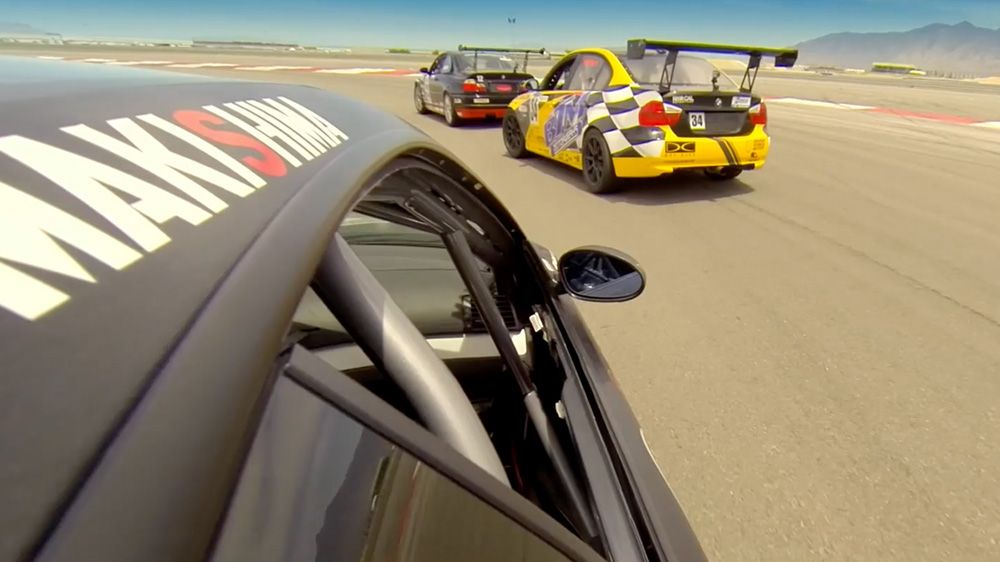
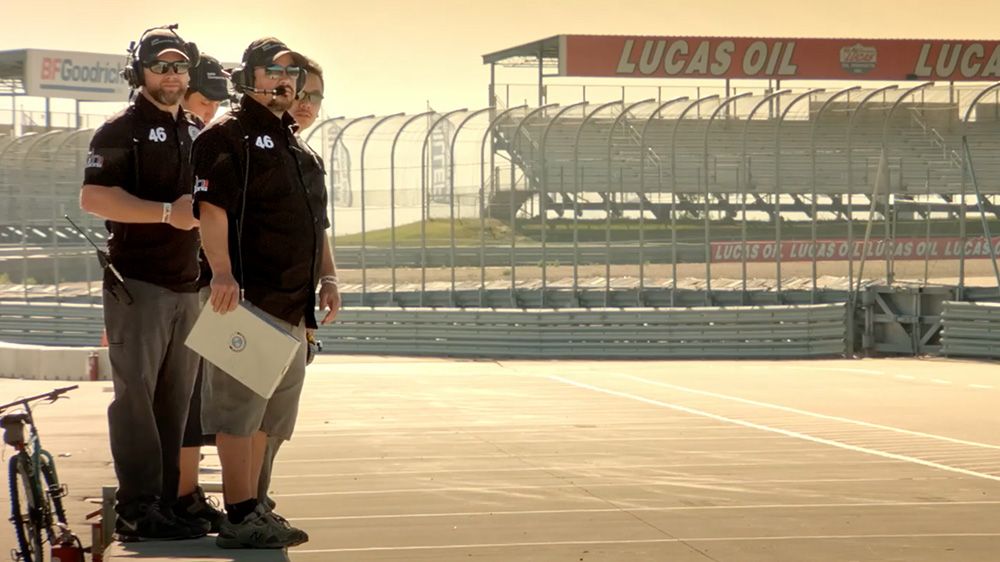
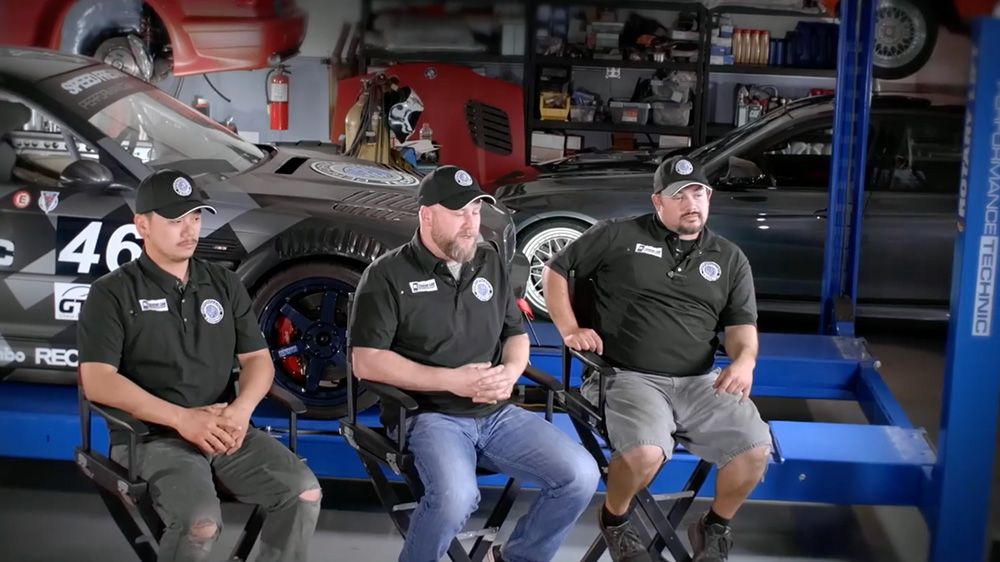
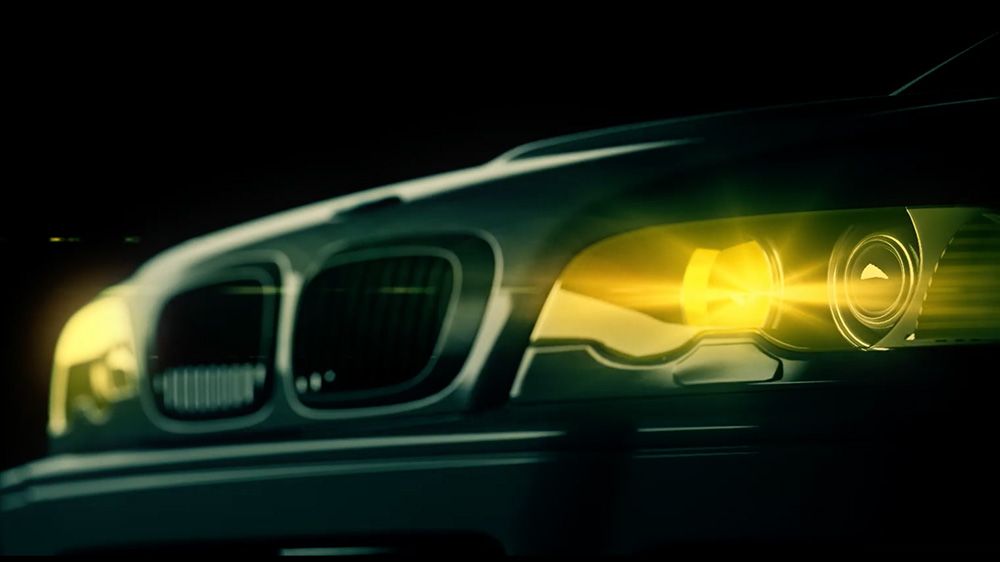
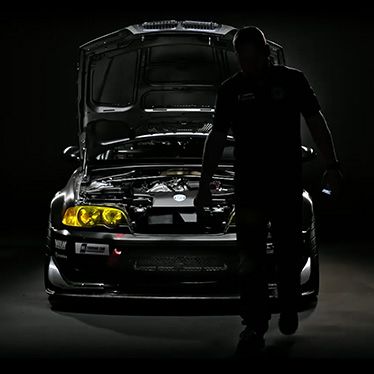
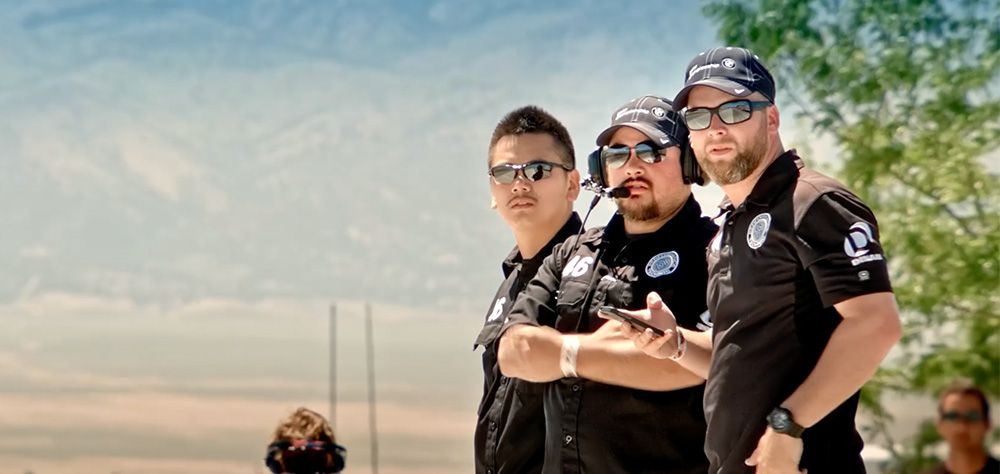
“My latest project is a feature-length documentary film titled, ‘10/10ths’ that follows a BMW racing team, competing for the first time in the United States Touring Car Championship series. I had always wanted to do a BMW-centric film for years now, but I never had the opportunity to justify doing a project of this size.”
“I thought it would make a really interesting story to perform each role as Co-executive Producer, Director, Cinematographer, Sound Recordist, Editor, Visual Effects Artist, Music Composer/Performer, 5.1 Re-recording Mixer, Colorist, and Marketer for the film. I wanted to show that doing all of this on your own can be done these days with the sorts of affordable equipment out there.”
“I will say though that this film has demanded a huge commitment from me to see it through and can honestly say it was truly the most arduous undertaking of my life. The film is just now starting to hit the film festival circuit, having already won several official selections and awards. It is still early days for the film release, but it’s great to get this sort of positive response.”
"Ultimately, the culmination in the making of ‘10/10ths’ reflects my life journey in building my career over the decades, from music composition/performance, cinematography, video editing, and everything else in-between. The film truly encompasses everything I’ve built upon in the last 30 years. I can’t say for certain that I’d perform all of the major roles of production and post-production again for a feature-length film, but then again, anything is possible. What I do know is that I want to continue learning, growing, and experiencing the love of filmmaking, in whichever capacity it may be, big or small. The biggest aid in accomplishing that is truly believing in yourself, building up your abilities from successes and failures, never giving up, proving the naysayers wrong, and truly doing what you love.”