James Willett

"I went to the City of London Freemen’s School where we were lucky enough to have access to a music studio. I’d been playing music since I was four years old, when suddenly I found myself surrounded by all of this technology which which I could make it as well as play it! By the time I was fourteen, I had set my sights on the world of sound engineering."
"After I finished my A levels, I had no intentions of going onto university. All of the industries I was considering for a career, didn’t really seem to suit having a qualification in order to be successful. I was looking at a couple of specialist sound engineering courses like SAE; which also had a campus in Australia - and this sounded pretty exotic! At the time, I figured I could study here in the UK and have the option to undertake a term or two on the other side of the world. I was so close to going in to the sound side of things. But then, at the last second, I thought I would look at other possibilities."
"This is where things took a bit of a funny turn for me, as I was selected by Virgin Atlantic to do an aeronautical engineering apprenticeship. I had always been very interested in electronics & mechanics so the engineering side of things really appealed to me. At this stage I had no ‘ins’ to get myself into sound, broadcast or film, so this seemed like the next best thing to get the ball rolling."
"This was something I was really well suited to - and things were going pretty well! But I had this continuous itch that just needed to be scratched. One of the things I hate most in life, are ‘what ifs?’. I remember I had a business card for Ben Giles - an Avid editor in London I’d met years ago. I tended to be quite organised with these things, so after seven years I still had his card tucked away."
"I wasn’t even sure if he had the same number after all these years. Or even if he would remember me, given I was a school kid when I met him. However, when I rang Ben he immediately asked why it had taken so long for me to get in contact!"
"So after all of those years, Ben invited me up to a London post house where he was cutting a large documentary at the time. I happen to make a pretty damn good cup of tea, so when he introduced me to their facilities manager, they offered me a job as a runner."
"That’s pretty much how I went from studying aeronautical engineering with Virgin Atlantic to becoming a runner for Clear Cut Pictures in Shepherd’s Bush. I guess my whole career in post, you could put down to a chance meeting with Ben Giles when I was a kid."
"While I was a runner at Clear Cut, every chance I got, you would find me chatting with an editor or the tech support guys - seeing how everything linked together and understanding all of the technology that underpinned the entire post production process. This really interested me. Now all I had to do was to work out how to get out of making tea!"
"I had been at Clear Cut as a runner for about six weeks, when a friend of mine became the technical manager at Unit Post in SoHo. He knew that I’d jump at the chance to get involved so before long I found myself over there working with him."
"Unit Post was pretty unique in those days being a Mac facility operating Final Cut Pro suites. Moving into an Apple centric environment at that particular point in time was certainly interesting. Soon after I arrived they’d finished putting together a color grading suite based around Final Touch and a Tangent CP 100 panel. It was like nothing else people had seen before on a Mac and I had access to it - you can see where this is going!"
"The system could do things that no-one really had in their heads that a Mac could do. Unit Post had no full-time colorist so they would hire in freelancers. Being involved in the backend and around the various workflows, meant that I spent a very considerable amount of my time working alongside these colorists. After awhile, we all became good friends."
"This is pretty much how I came to learn about color grading - working along side and supporting these colorists who had been doing this sort of thing for twenty years. Final Touch was quite a niche product back then, so we tended to use the same group of freelance colorists over and over again."
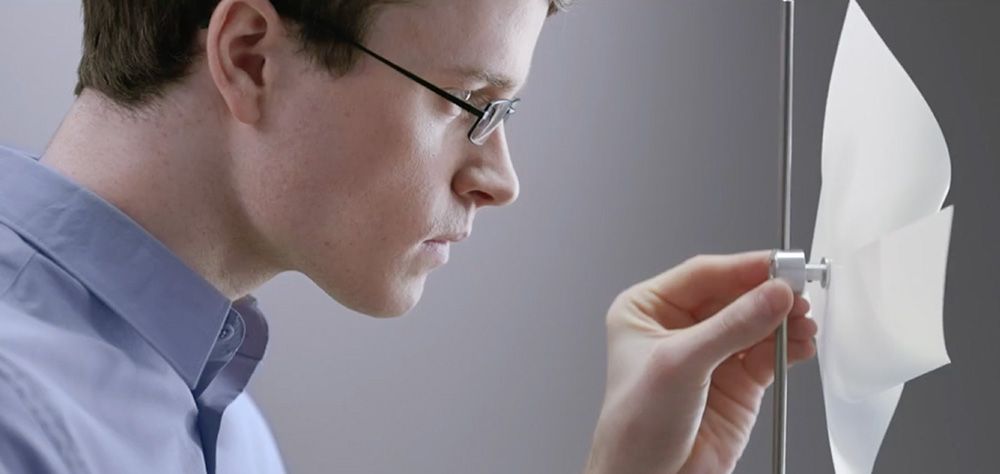
"One of the freelancers we used was Peter Lynch. He is an amazing colorist and as we sat there watching render bars creep across the screen he shared many a story from his years in the colorists chair."
"For about a year, I really pushed Final Touch - finessing workflows and trying to figure out what it could and couldn’t do. Because I knew all of the infrastructure behind the suite I found I was ideally placed to put it through its paces."
"As time progressed I soon became comfortable color grading myself. After the years of working alongside all of those freelance colorists, it seemed to be my turn. I pretty much spent my last year at Unit Post working 24/7 in the grading suite."
"We were an early adopter of tapeless back then. DVCProHD tapes were being replaced with P2 cards - and it seemed everyone couldn’t get enough of variable frame rates either. The Varicam was a big hit and Phantom footage was rolling in through the doors regularly. Technology was and obviously still is moving fast. The VFX team really started to busy up and I was onlining - taking in their graphics, sourcing the audio mix from our audio department and doing the grade too! It was very hands on. The grading suite allowed me to combine the last five years of hard work and get the job done."
"Knowing the systems like I did, and all of the various workflows in and out of that system, meant that I had options when grading. When there are massive time constraints on you, it always helps to know the tool you are working on back to front. You need to know exactly how to finish a project to the right quality in the limited time you have left. That’s the best thing about color grading. Its this really nice blend of technical skills with creativity. The more you know the more fun you can have."
"Continuing to work with many freelancers, I started to get a sense of what life was like for them and the sorts of work they were doing. I can’t sit still for too long, so it seemed to me that being a freelancer would allow me to have lots of different things on the go. The whole notion of freelancing had its draws!"
"By this stage I had a bit of a financial buffer behind me so it was now possible to give it a go. Again, I hate having ‘what ifs’ in life. One day Peter Lynch turned around to me and said, ‘…Well, off you go. Just get on with it…’ So I did!"
"For the first few months of freelancing, I worked as an online editor but then soon dropped that. I figured, if I wanted to be employed as a colorist then I had to be known for being a colorist and not an online editor. The flip side to this, was that whenever I was doing a grade, and someone needed me to export something or passing something onto an editor, I could easily do that too."
"When I started freelancing, Final Touch had been taken over by Apple. Now Apple Color was to be found in a lot of post houses in London. However, when Apple took it over they didn’t re-skin the application - it was still essentially Final Touch."
"So here we were with post houses running Apple Color, but still not many people out there who were able to drive it. That worked for me! People would open it up - take one look at the UI…and then close it. I’d then get a call. My freelance life had begun."
"That was seven years ago now and these days I am working mostly in Davinci Resolve. Over the course of the last seven years I have considered putting in my own suite, but I do so much work around London it doesn’t really make sense. Having access to the suites I do is great."
"With Davinci getting stronger and more flexible every day, being a colorist who drives it really works for me. There are all of these grading suites that I get to work out of everyday and call my office - its not a bad life really. There’s the odd runner that makes a damn good cup of tea too…wonder what they’ll be doing in the future!"