Guido Pezz
“Interestingly, my dad was the complete opposite to my grandfather. Dad had his own shop developing photo negatives and prints, so he was very technically minded. And then later in his life, he started selling video recorders, camcorders and broadcast equipment to the television industry in Argentina.”
“So as kids, my brothers and I were surrounded by all of these different creative and technical influences. My older brother was always shooting something with the VHS camera and then editing movies, but being much younger myself (I was around 6 years old at that time), I couldn’t get my hands on the cameras too much, so I was mostly in front of the camera.”
”I have always had an interesting relationship with my brothers, as we are fiercely loyal to each. And have been all our lives. So my family has had a profound influence on me, with my grandfather giving me my creative side and my dad giving me the tools to express my own creativity. While my dad had his photo business, he decided to also study civil engineering. But the pressures of running the business and other demands in his life, meant he had to abandoned that dream.”
“When I finished school, I started to follow in his footsteps studying civil engineering. When you are a teenager, you don’t really know what you want to be, so I just chose that direction. A safe career, I guess. However, I knew deep inside that I wasn’t really passionate about it. I just didn’t know what I wanted to do!”
“It was a tough degree in Argentina as it takes five and half years of study. We only have the option of a masters degree over there, so you had to commit to finishing. I enjoyed the first years. I was meeting amazing people and the discipline involved in doing this sort of degree, really shaped me as a professional.”
“But by my third year, I realized engineering wasn’t going to be my future. Although I loved engineering, it didn’t really drive me. I enjoyed the study of engineering, but I didn’t really want to be an engineer all my life.”
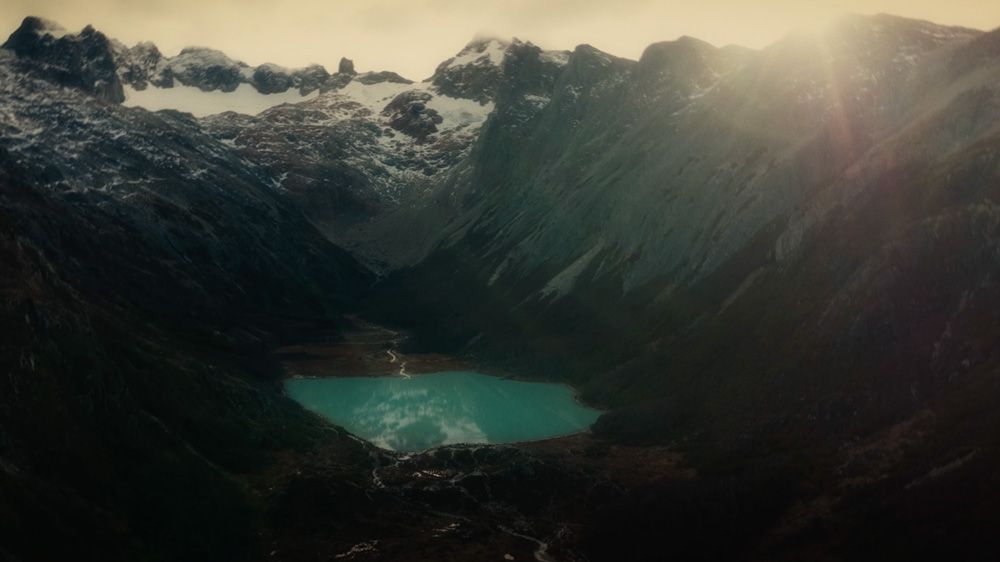
“During my second year of studies, I started working full time in an engineering company specialized on major power infrastructure; like power stations and high voltage power lines. I loved travelling to amazing places - I was obsessed so during my first job, I would save all of my money, just so that I could go travelling again. My parents have never been rich, so if I wanted to travel then it was on me to make it happen. Living in Argentina meant that I would take holidays to some of the most remote and interesting places in South America, such as Tierra Del Fuego and Patagonia.”
“During those early years, I also managed to travel to the US, Europe and even Australia. So travelling has always been a major part of my life. What I didn’t realize at the time, was it was also helping to shape my future. The company I worked with in Argentina were fantastic to me, because they would allow me to take extended trips on no pay. So I truly had the most flexible job at the time that helped me to explore the world and to feed my intellectual development.”
“Soon after I got my masters degree, I got a job offer to work in Serbia in Europe, I was super attracted to that part of the Balkans because I love history. For this role, I was mostly assisting the project manager on major bridge and road infrastructure projects. I was working for an Austrian-Serbian company who were super happy I could speak English fluently, because most of the team were international workers.”
“I absolutely loved my time in Serbia. It was such a beautiful and historically interesting country. And such a contrast to the towns and villages I had seen growing up in Argentina. Being in Europe meant that I could go travelling very often. Which is what I was really passion about.”
“On all of these trips abroad, I would try to document my travels. I recently showed my wife, who is a professional photographer, one of my early travel films. And honestly, what I was producing back then were so bad in terms of production values. The places I visited were amazing of course, but my cameras and the way I was shooting were not very good.”
“Back then I was just shooting on a small travel camera and my phone, not even a DSLR. I kept putting off buying a DSL because I thought it would be too complicated to film on. After travelling abroad, I came back to Argentina with this idea of growing into a filmmaker. So I invested in a DSLR with a bunch of photo lenses. Which I could use to shoot stills and my films, which I had started posting to YouTube.”
“During the period I was still working as an engineer, I was also trying to grow my personal client base as a filmmaker. I needed to start building a reputation as a filmmaker to be able to successfully change my career path. So I kept publishing my photos and videos on social media, which to my surprise people really loved. Looking back on my videos now, I don’t think they were all that good. But somehow they were popular.”
“I was learning everything I could about cameras and lenses from the internet. I didn’t have a mentor to show me the ropes on how to become a filmmaker, so I had to learn through trial and error. I started with Sony mirrorless cameras and E-lenses, which were great for still photography but they didn’t give me the flexibility I needed for filmmaking.”
“I guess it is only when you study lighting, that you find you’ve crossed the line between videographer and cinematographer. Thankfully there were plenty of creative people going through the same transition. So although I didn’t have a mentor to show me the right way, there were plenty of people posting their experiments on YouTube to learn from.”
“It was while I was studying all of these lenses, camera tests and lighting that I discovered the Blackmagic Pocket Cinema Camera. Once I had sold all of my Sony lenses I began investing in much faster Sigma and Canon EF lenses, which worked perfectly with my Blackmagic cameras.”
“I had always been plagued by cameras recording in 8bit. I would try coloring them and they would just pull apart. It wasn’t until I moved to 10bit cameras that I suddenly found I had the creative freedom to make my films they way I intended them to look. When I discovered shooting in Blackmagic RAW, the quality of my cinematography immediately went to the next level. But I wanted my work to be even better.”
“It was only when I shifted from fast photo lenses and zooms to cine primes, that my cinematography started to look the way I wanted it to feel like. My images had more emotion to them. And certainly shooting most of my footage slightly underexposed and then color grading in DaVinci, unlocked a creative look I hadn’t experienced before.”
“It wasn’t until I started grading and editing in DaVinci, that I found I could get what I needed for my style. With the right tools I could finally achieve what I wanted from my work. Throughout this journey of improving my shooting style, I continued to get more and more commercial work.”
“When I traveled abroad, I would always find photographic and cinematography jobs. And then I started to get a reputation in the tourism industry which certainly helped me when I decided to finally settle in Australia in early 2018.”
“After Australia closed down because of COVID in early 2020, I was kind of lucky, because I could still get work locally and then US agencies kept calling me to shoot locations for them all over Queensland, such as the tropical rainforests and the Great Barrier Reef. Hotel chains like the Marriott and Airbnb, still needed beautiful looking destination footage. So lucky for us, there was still work even though Australia was now cut off from the rest of the world.”
“During COVID my wife and I lived on the Gold Coast in northern Australia. And although it is incredibly beautiful with long surf beaches and modern canal homes, we never really felt like we fitted in. We met really nice people in the film industry there, but the culture of the place really didn’t suit us. So in the end we decided to relocate to Melbourne in the southern part of the country, which is the other large cosmopolitan city here, and was the first city I lived in when I moved to Australia.”
“The landscape and cities are all incredibly different. So too is the light in Australia, which is something you have to learn when you shoot for a living. The light here is bright and aggressive. It is difficult to work with and takes a great deal of effort too tame. We have found the window for shooting in golden hour or blue hour is incredibly short. So you have to plan your shots very carefully. Especially, given my wife and I have spent most of our time in Europe being accustom to the softness of the light there.”
“We have the same sort of intense light in parts of South America, especially near the equator. So I was no stranger to the full effects of the ‘super bright light’, like you get in Australia and Africa. You just have to lean how to tame the light in places like this, so you can unlock the subtly of the landscape. I guess that is what I love most about shooting in Europe. You begin to understand different types of light and the effects it has on the landscape and your subjects.”
“I love light and what I can do with it in my films. It is something you never stop learning about. Being able to paint with natural light in these amazing travel locations, brings such happiness to my life. I have never looked back after risking it all to become a cinematographer. Creating images and storytelling with this medium is so exciting. There is always a challenge with every location.”
“After COVID ended, we were able to travel to Poland, where is my wife is from, and Argentina again, where I had plenty of work opportunities. Although, I am not too sure I want to be travelling all of the time in the future. Although I love travel work of course, I would like to do more documentary work as well. Now that I have become super comfortable with my style, and how to get there using my camera and post-production tools, I am open to exploring different types of projects.”