Ed David
"I grew up in Fairfield, Connecticut, which is a fairly wealthy coastal suburb where a lot of New York City commuters live. Having said that though, the local high school was incredibly creative and conducive to the arts. There was certainly something special about that environment. We had people like John Mayer, the musician, and a whole bunch of actors including, Justin Long and Richard Belzer come out of that school. It was just a really cool environment to grow up in as a kid."
"Back then, I actually wanted to be a writer while I was at high school and through out my university years. My getting into filmmaking actually came about by complete accident. The very thought of being a filmmaking was completely foreign to me. I had absolutely no concept at all of anything to do with cameras and lens and such."
"While I was at high school I decided to take a summer program in filmmaking. I remember seeing the documentary, ‘Thin Blue Line’ which totally blew my mind away. I realized that this was a whole new world, that I had no clue about. Seeing the possibilities for journalism and documentary filmmaking, really started to interested me.”
"It was while I was studying anthropology and film studies at Emory University, that I did a bunch of really interesting internships.The one I loved the best was working for was Alltrue Inc., which was an early precursor to YouTube. This was basically a video streaming site which featured user uploaded videos.”
"As an intern with Alltrue, I would go out and help shoot some of the films that were to be uploaded to their platform. There were some truly talented filmmakers working with those guys back then. I made friends with a bunch of the editors who then introduced me to Final Cut Pro. Editing was like learning a whole new language to me, which I was totally fascinated by."
"My next internship was with CBS News working for their documentary division in my senior year. One of the productions we were working on was about the history of the papacy. In fact, I got to act as one of the corrupt popes from way back in history. I got to work on all of these really cheesy history recreation shows, which I just loved because they were so damn funny."
"The very day I graduated from college, I got a phone call from CBS wanting me to come and work on a new show. My career plans at this stage were to become a teaching fellow, but here was this opportunity to P.A on a TV documentary about Saddam Hussein’s children. This was all during the time of the Iraq war, so it was pretty much a propaganda show. And that’s what got me launched right into the path of a TV career!"
"So there I was working for CBS for the next few years, until a friend from my earlier internship at Alltrue, came and rescued me. He had gone to work at the History Channel and wanted me to come over and work with him. I was so happy to leave CBS at that time, as I was working with them on a week-by-week basis and they were laying people off all over the place!"
"When I got over to the History Channel, they first put me in the tape library where I was to do all of the labels for their promos. It was a pretty basic job, but I made a tons of connections with people from all over the network, who I am still good friends with today. So that job was less about doing labels and more about making the right sort of connections to help me in the future."
"At that time, I really thought about becoming an editor because I loved music. If you’re good at music, you can be good at editing because you are basically cutting to music or dialog. To be really good, you have to be able to cut to the rhythm and I just loved that side to it."
"So after making labels for a year, I convinced the History Channel to give me a go as an assistant editor. At the History Channel the assistant editor was the guy who put up the slates and loaded in the footage. We didn’t have to do dailies because everything was post based, so it wasn’t the most creative work you could be doing."
"My big move across to cinematography, really happened while I was onset at CBS one day doing the ‘Sons of Saddam’. One of the actors who was cast as a terrorist, was onset reading a B&H catalogue. I told him how I was going to buy myself a new Sony VFX 2000, which was the skateboarder’s camera back in the 1990s. He looked at me and said’ Man you’re crazy, what you need is a Panasonic DVX100, which will shoot 24fps!’ I didn’t even know what he was talking about. He then said, “dude, seriously that’s makes everything look like film!’"
"On the back of that conversation, I went out and bought that camera with all of the money I had in the world! Fortunately I had just come into and inheritance from my great-uncle, so I guess he bought that camera for me in the end. I did asked my dad if he thought it was a good idea, and all he said was that I could easily sell the camera if I didn’t like it!"
"I had a bunch of documentary ideas I wanted to do after college, so buying this camera seemed a great idea. Well, it soon got around the History Channel that I had this cool camera. It didn’t take long before one of the VPs for promotions came to me. He had a celebrity golf tournament and was looking for someone to shoot it. So here I am now shooting this thing at 24fps with one of my junior producers. Remembering that no other camera did this back then, so instead of this looking like a soap opera or TV news, it looked awesome."
"All of a sudden I found myself shooting all sorts of things for History Channel on that camera! Anything they needed, I would go out and shoot. By this time, I was shooting all of this random stuff while still holding down my day-job as an assistant editor."
"I was doing both of these jobs for about 5 years averaging a 90-100hrs a week work-load. That was truly the craziest moment of my life. I had no life outside of work at all. I had girlfriends come and go and I had hardly any friends, because it was all I could do to just keep up with things."
"It’s about this time, I started hustling the editors at the History Channel hoping to get my big break. I was trying to impress them with some of my earlier documentaries. When I showed one of my documentaries to the senior editor, I asked what she thought. She said that the cinematography was excellent! I then asked again what she thought of my editing, and she said that she really loved my DP work. I kind of took that to mean that she thought I should be a DP and not an editor."
"On the back of that comment, I started shooting videos for YouTube thanks to one of my contacts from History Channel. Back then, I would get 40,000 views for a project, simply because there wasn’t all that many people online. I remember, I did this one project for YouTube and that hit 1million views."
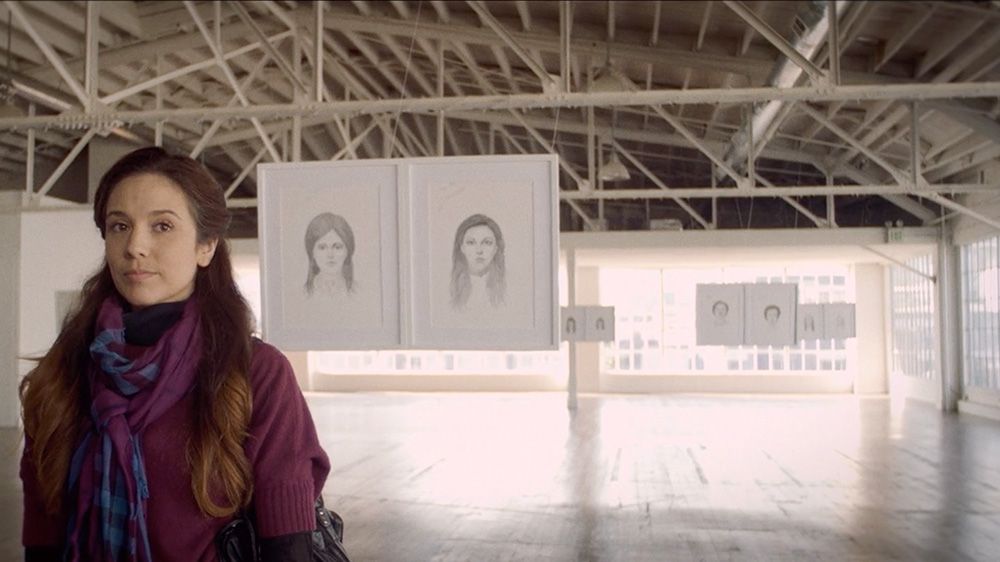
"Well nowadays, some of my projects get 100million views which is incredible, when you think about it. The Dove project I worked on with John X. Carey, I think has hit more that 150million views! It has been pretty incredible to be at the forefront of video on the web, and to have been able to ride this amazing wave."
"However, I guess the best thing that happened for my career as a cinematographer, was in fact the Redrock M2 35mm lens adapter. With this on my Panasonic DVX100 meant that I could suddenly get a 35mm style depth of field to my work. That changed everything for me, because I was basically getting a 35mm depth of field with Mini DV; which previously you could only get with film."
"This was well before the DSLR revolution, so for awhile there I had a very sophisticated look to my work thanks to that little adapter. When the DSLRs first hit the market, that really took me off-guard. I was like some old grumpy man who had just lost his secret mojo! I figured that was going to be the end of my career forever, because everyone will now be shooting with a shallow depth of field."
"The sort of things that interested me back then, are still the sort of things that interest me today. I care deeply about human rights issues and things to do with our planet. Because I have always wanted to be a writer, I have always been trying to resolve the bigger issues that face us all. I still have that fire inside of me today, so I am constantly attracted to these sorts of causes with my filmmaking."