Cirina Catania
Cirina had a creative upbringing, thanks to her American Colonel father and Belgian mother. "Growing up in Europe was a very fertile environment. I was around a lot of people who were very creative, so I always felt part of that. There is support for creative people in this part of the world. In the village where my mother comes from, everybody sings, dance and does plays. And I grew up with that!"
After studying voice at The Conservatoire Nationale de Musique in Orleans, France, Cirina found her way into radio, working for AFN in Stuttgart, Germany. She worked as a DJ and news announcer until a radio colleague lured her away. "The engineer worked with a pop group that was looking for a lead singer, and before I knew it, we had cut three albums and toured Germany!"
In an effort to 'stifle' her own creativity and please her parents, Cirina decided to study accounting. After only one semester, she abandoned her sensibilities and went straight into journalism and business. Cirina took her already full list of life's experiences and set about building a talent management agency in Utah. That was until the Governor of Utah offered her a role with the Utah Film Commission. It was a role that was to forever change her career. While working at the Film Commission, Cirina, Sterling VanWagenen and Commissioner John Earle struck upon a novel idea for a film festival.
"We were all sitting around at dinner and we said - let's do this! We thought we should do a film retrospective and bring in regional filmmakers for the competition. And before you know it, you've invited all of your filmmaking friends to become involved. Then our idea grew into a community and that created something altogether different - it was the beginning of the Sundance Film Festival!"
"Creative energy becomes a catalyst for innovation and change. Something you can look back on and say 'geez did we do that'! You just take that first step and before you know it, you are up and running and doing great things."
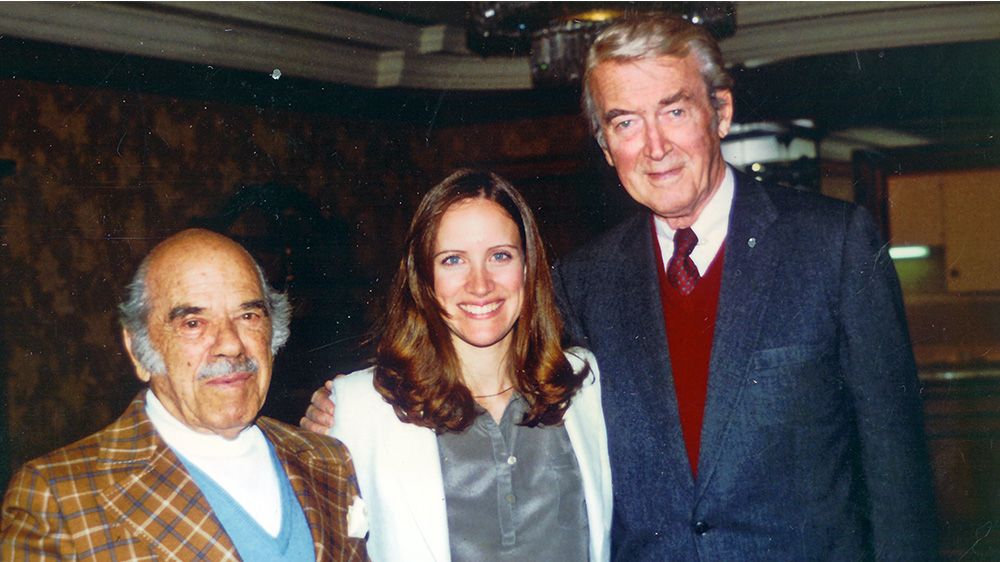
During that first festival, they showed movies such as 'Deliverance', 'A Streetcar Named Desire', 'Midnight Cowboy', 'Mean Streets' and 'The Sweet Smell of Success'. "After the first year, the Board was deciding if the film festival could be made economically viable. Utah's Governor, Scott Matheson called me up and said, 'We will give you six months leave and continue to pay your salary, if you will run the festival.' Sterling had left to work on Robert Redford's Sundance Institute, so I took over managing the festival the next year. It is to this day, one of the most rewarding projects I have ever done! We had no money. We had no offices and no furniture. With 200 volunteers and donations from local businesses, we managed to run the festival again. We even brought in Jimmy Stewart and Frank Capra that year!"
"Back then, I didn't know any better. I remember calling the President of Columbia Studios and saying, 'I am putting on this little film festival and we don't have any money, but I am looking through your catalog and I would like to use these films for our retrospective.' I didn't know you weren't supposed to call the head of a motion picture studio! Anyway, he said 'Sure! Pick out what you want and we will ship it to you.'"
Through the Sundance Film Festival, Cirina found herself fully immersed in indie filmmaking. "We were making independent films in Utah at this time and pre-selling them for TV. This was when TV pre-sales for a 'movie of the week' were just under a million dollars. We could take that money and do a small film and then release it theatrically. At the time, we were four-walling the theatres to pay for it all. We worked with local crews on a series of independent films and that's how I learned the craft of filmmaking."
Hollywood was the next step for Cirina. "Everyone said, you won't get a job in California and you're not even in the union. When I finally got a job, it was not in production but in publicity for MGM/UA. I started as a publicist working on the lot. In my first week, they sent me over to the theatre to watch the latest production. It was 'Brainstorm' starring Natalie Wood, who had just passed away. They wanted an opinion about the cut and thoughts on marketing the film. And that was in my first week!" Cirina went on to UA where she became VP of Worldwide marketing, leading the team on many of box office hits, such as the 'James Bond' series, 'Rocky IV', 'Rain Man', 'Yentl' followed in later independent years by “Stargate” and 'Tombstone' to name a few.
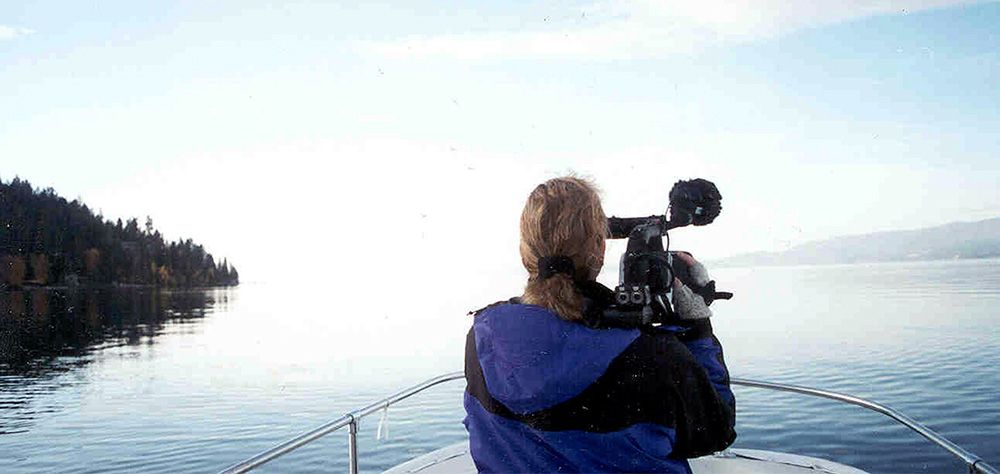
"What I love most about marketing films is working with people all over the world. When you watch a film and you're trying to communicate what that film is all about, there are so many ways you can tell that story to audiences! So what you choose affects the profitability of the film and potentially, the ability of that filmmaking team to go on and make another great movie. There is a real sense of responsibility! There is also a sense of adventure in searching out that story about somebody else's work and communicating it in such a way that you're going to get people into seats on the opening day!"
In 1989, Cirina chose to go freelance just after Kirk Kerkorian sold United Artists. "I have been very lucky in my career. Working with a major studio allowed me to experience the international, big budget major motion picture side of life. But then, there was this feeling of freedom that comes from doing the smaller projects that I wanted to do. So far, in my career, I have worked on over 100 films in either marketing or production."
By this time, interest in behind-the-scenes documentaries was really starting to peak. "I freelance for National Geographic - which is a dream come true for me!" Cirina has worked on the broadest range of TV documentaries possible, including, ‘National Geographic’s Top Ten Photos,’ 'Nat Geo’s Most Amazing Photos – Orphan Elephants', 'John Douglas Mind Hunter,’ ‘Southern Steel', 'Worst Case Scenario', 'Untold Stories from the ER' and 'Animal Kidding' for Animal Planet. Talking about 'Nat Geo's Most Amazing Photos-Lightning,' Cirina talks about how absorbed you can get doing this kind of work.
"One night, I remember a huge storm around us and we were standing under a black anvil. We felt very small in the dark quiet surrounded by such majesty. I understood then why people like Tim Samaras and Carsten Peter live their lives for adventure. You have to be very courageous when shooting lightning, but you don’t really think about it when you are in the middle of getting, ‘The Shot."
Another stand-out moment was 'Nat Geo's Top 10 Photos'. "One of those stories was about an award-winning photographer, Stephanie Sinclair, who had spent eight years documenting young women forced into marriage as child brides. Many of these girls are forced to endure physical, sexual and psychological abuse and some try to commit suicide by setting themselves on fire. That was a tough one to work on - and this was only one of ten stories we were trying to tell. This was a one-hour piece, so the question was, 'How much do we show, how graphic should we be, do we risk endangering the families with what we are reporting, and how do we deal with this?' Ultimately the decision was to tell the truth."
"I think it is such a wonderful gift to be a filmmaker. I want to leave something behind that my children and grandchildren can be proud of.' If we use our skills and creativity to help other people, then that gives us the motivation to continue. It is not easy, and, there are all these people saying, 'Why don't you get a regular job instead of living in a tent for 6 months, chasing down stories when you don't even know if you going to distribute it!'"
"My response to criticism is so simple: creative people are just compelled to do it!"
"I really don't know how you can describe that 'Ahha Moment' to people. For example, I am shooting lions in South Africa and I have a 300 lens trained on the mother lion and then out behind her come her cubs. Then the mother charges me! I looked at her eyes through my lens and I knew she was just trying to protect her cubs. It was so amazing, that I kept shooting her charging me! My guide was already running away towards the jeep to get his rifle, but I just kept on shooting! I finally got to the last shot, which is now really blurred as I am backing up to reach the jeep too. Luckily, she stopped, just glaring at me. By that time, however, I had gotten to that moment when I knew I had the shot. I knew I had captured it. What a moment! How do you explain that feeling to people?"
Cirina's career is an example of what can happen when you give over to creativity. She credits her early love affair with creativity to a childhood full of music. "Music, I think, drives the creative heart in so many different directions. And for me, it has been the creative freedom of filmmaking!"