Arthur C. Smith III
"I first fell in love with the Arctic, on a photo assignment in 1993. A near-miss with a polar bear, set a hook that I just couldn't shake. Haunted by the experience, I spent the next ten years trying to reconcile my life as it existed, with a course that proved impossible to deny."
"In 2004, I returned to the Arctic and have never left. I met my wife, Jennifer, here in Kaktovik in 2007. We were married on the beach a year later and have made the Arctic our home."
Filmmaking and photography have always been there for Arthur. Guided by his father on hunting and fishing trips into the Adirondack Mountains, he was shooting 16mm Kodachrome by the age of ten. Years later, even while studying plant genetics and agricultural economics at Cornell University, photography still had a strong calling.
Eventually, Arthur joined the internationally-renowned Grant Heilman photo agency as an assignment and stock photographer. Twenty years later, Arthur's life is totally devoted to his filmmaking and photography.
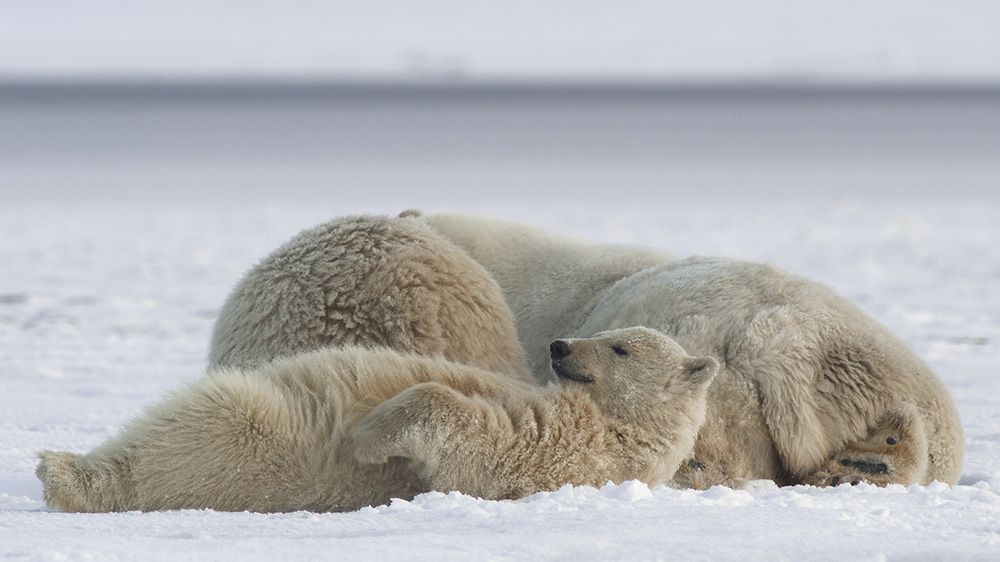
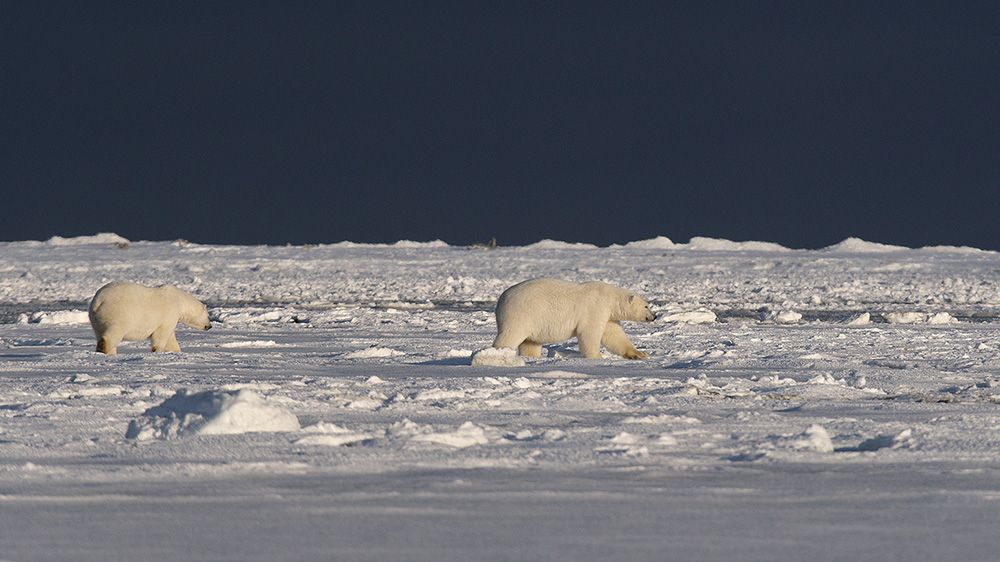
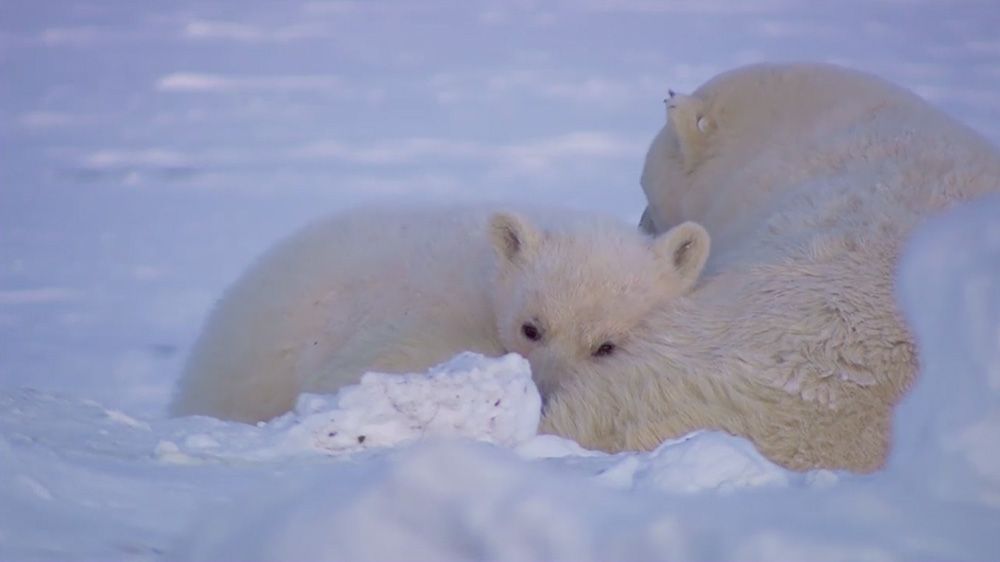
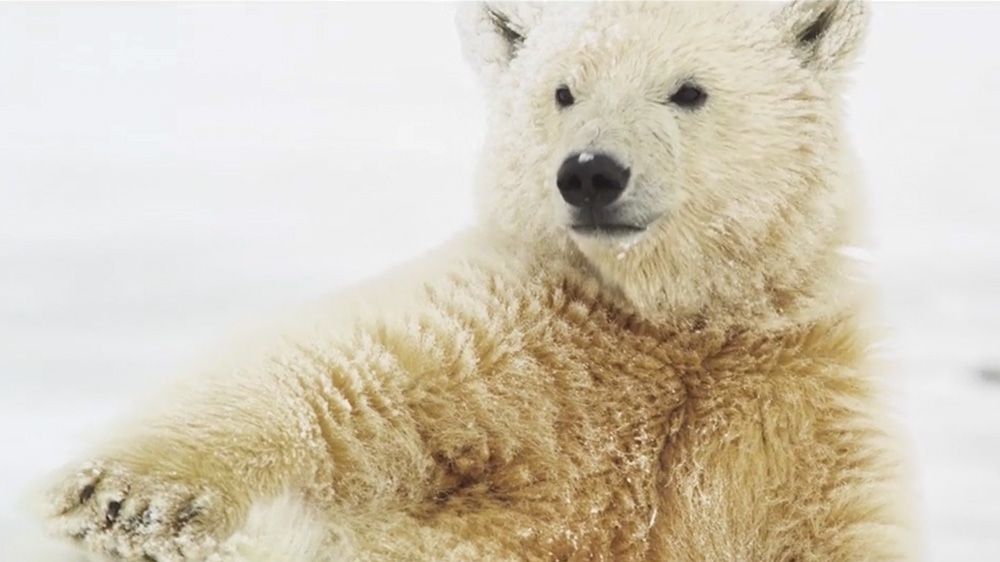
"Polar bears are the most amazing animals I've ever witnessed. I'm fortunate to live right in the middle of their habitat. I don't have to go far looking for them because they're here on Barter Island. Some of the best filming opportunities are right out the front door."
In the ten years that Arthur has been filming and studying polar bears, he has drawn unique conclusions based upon his observations. "Polar bears are perhaps the most misunderstood and misrepresented predators in natural history. For example, few people understand that polar bears have a society and are very social animals."
"The representation of polar bears as solitary, wandering killers is an unfortunate stereotype. An even more damaging misconception is that polar bears are a species of recent origin and can only survive on sea ice. This is not only unfortunate, it threatens the future of the bears' survival. Science has established that, as a distinct species, polar bears are at least five million years old."
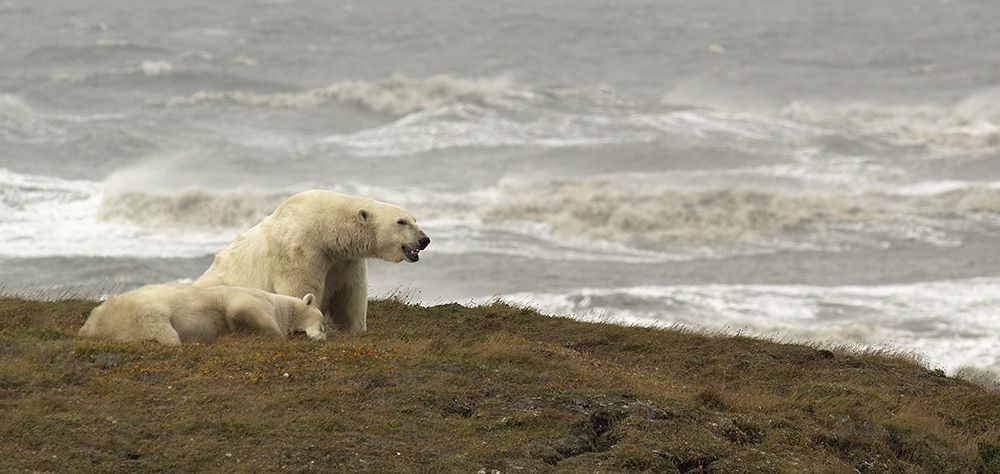
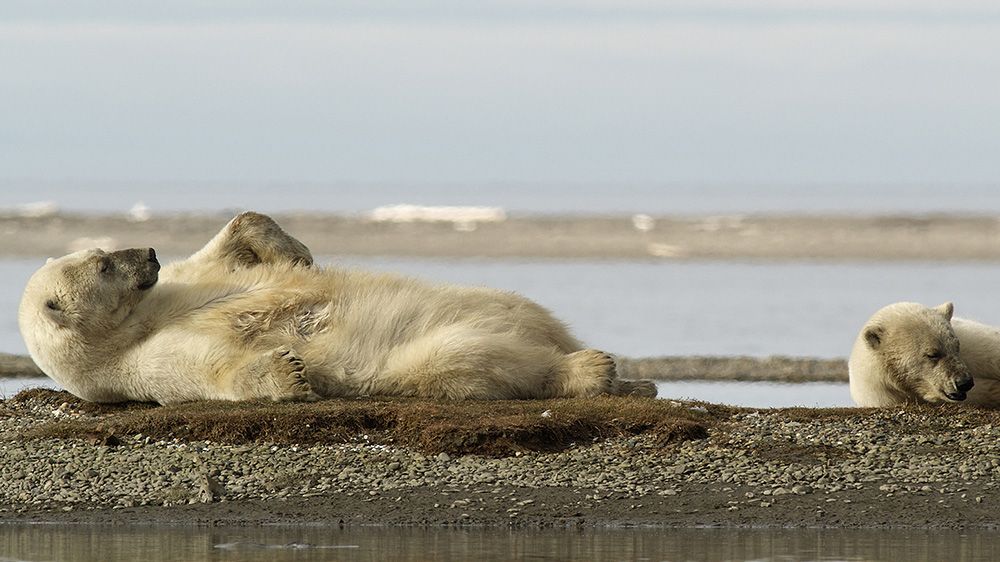
"There is no doubt that over five million years, the polar bears experienced periods of ice-free open water and have depended on land for survival. Here and now, on the north coast of Alaska, I'm observing and filming the process of the bears surviving as they adapt to the loss of sea ice by coming to land."
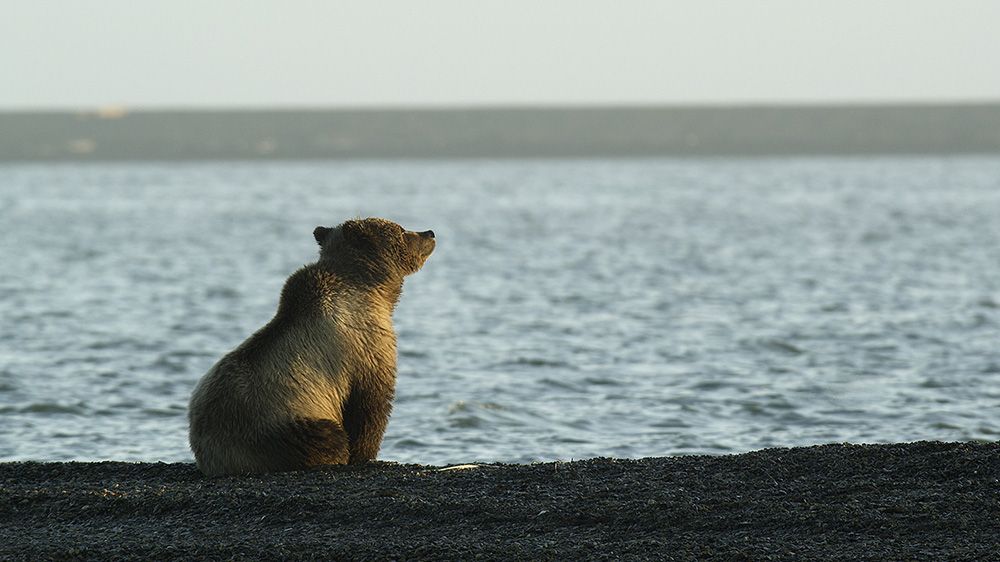
"The bottom line: while polar bears are starving to death due to the lack of ice around Svalbard, the polar bears in Alaska are fat and happy. There is a family that's been here on shore all summer. One can't expect polar bears to survive on land in a high arctic region where no bears can make it on land. But, consider the low arctic, where bountiful resources are such that grizzlies flourish, then add the historical record that proves that this is where polar bears have survived in the past."
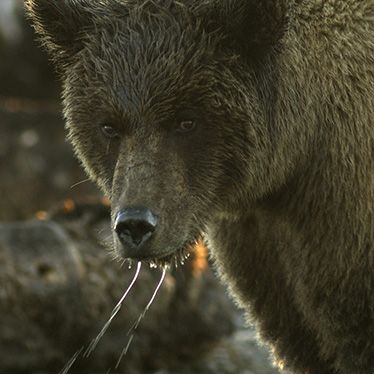
“It's a mistake to paint the entire Arctic with the same brush. The ‘high arctic,’ such as Svalbard, is quite different from the ‘low arctic’ as found in northern Alaska and the Bering Sea. For polar bears, the low arctic is more hospitable and is rich enough to support them, alongside naturally-occurring populations of grizzlies (brown bears). Historically, the low arctic regions are where polar bears have come to land in the past and survived. Further, it’s where polar bears – throughout their evolution – have hybridized with grizzlies."
"For distinct species such as the polar bear and grizzly, five million years is more than enough time for the two to have genetically diverged; hybrid events today should be impossible. This divergence, however, has not happened. Now, a changing climate is again forcing the convergence of polar bears and grizzlies; the two species are hybridizing producing fertile offspring in the wild."
"For this to be possible, there is only one explanation to account for this closeness in their genetics: hybridization must have happened repeatedly throughout the preceding five million years. In addition to the crossbreeding occurring today, science has confirmed multiple polar-grizzly hybrid events during warming periods in the last ice age."
"The entire world's population of today’s polar bears shares the capacity to hybridize with grizzlies. There are no ice-bound populations of genetically distinct polar bears. If they did exist, they were likely lost millions of years ago when the arctic warmed enough to support temperate forests on its shores. The polar bears then stranded in the remote high arctic likely perished. We know that the polar bears that came to land in the low arctic regions survived. We know that they met the grizzly. The existence of polar bears today may be solely due to their repeated retreat to land and hybridization with grizzlies."
"In 2013, U.S. courts threw out polar bear critical habitat, which included the most important on-land denning region in Alaska. Ironically, due to a bizarre alignment of special interests, the consideration of land resources for polar bear conservation does not exist. Faced with a future of ice-free open water in the arctic, polar bears will no longer find refuge on land. Yet, suitable regions of land refuge in the low arctic may be the polar bears’ only hope for survival.”
Jennifer and Arthur are on the front line, witnessing and documenting a reality, fighting for a cause that is not yet part of the public consciousness.